
Quick answer: movable partition stacking pocket approach
Review focus: movable partition stacking pocket approach.
A movable partition stacking pocket approach sightline ambulant decision point audit helps project teams test how people will move, see and decide around a subdivided space before drawings are frozen. It is not a performance calculation. It is a structured drawing review that connects the maintained product facts of a top-hung, individually movable panel system with the circulation reality of the room. Because panels are suspended from a top track, cross the opening without a floor track and park at a planned stacking position, the audit focuses on overhead routes, approach geometry and what a person can see at each decision point.
Use the framework below as a coordination tool for contractors, architects, interior designers, owners and renovation teams. Every recommendation still depends on project-specific support, acoustic and dimensional confirmation.
Why a Circulation Audit Belongs in the Partition Drawing Set
Project review term: movable partition stacking pocket approach.
Movable walls are often reviewed as a product selection rather than a movement system. The suitability of each route and parking arrangement depends on the approved layout, circulation, ceiling interfaces and operating sequence.
A circulation audit asks three plain questions. Where does each panel travel? What does a person see before entering the opening? What decision must that person make, and is there enough room to make it comfortably? These questions apply whether the space is a hotel ballroom, a school hall, an office training suite or another flexible room.
What the audit is not
It does not confirm acoustic values, load capacity or installation method. It simply exposes coordination gaps early enough to be resolved by the responsible parties.
The Stacking Pocket Approach: Route Logic Before Dimensions
Coordination scope: movable partition stacking pocket approach.
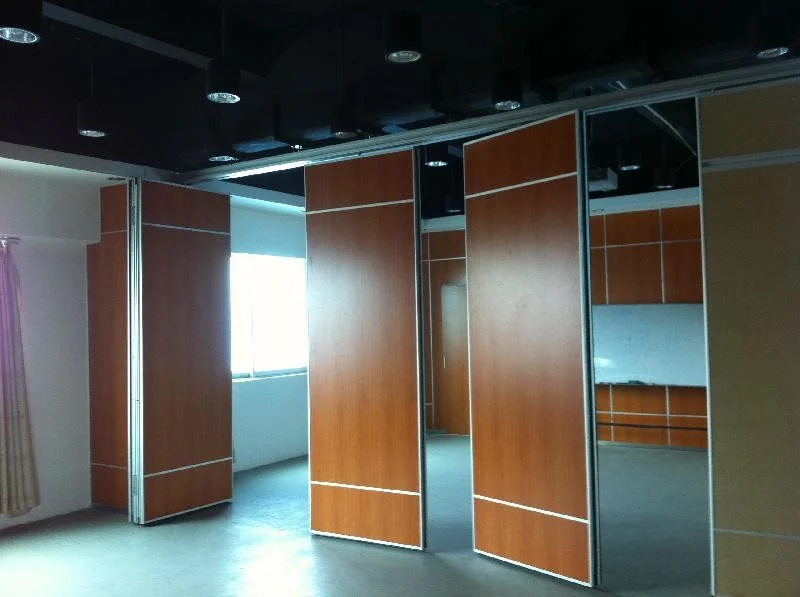
Straight, turning and stacking routes are reviewed from the layout. That means the audit starts with the route, not with a pocket size. A panel may move in a straight line, turn through a junction or travel to a parking position, but every proposed movement path requires a continuous connected overhead route and project-specific support review.
The exact route, junction arrangement, continuous overhead path and parking position must be confirmed from the coordinated project drawings. If the route drawing shows a break, the audit should flag it as an open item rather than a solved condition.
Pocket approach checklist
- Is the full travel route from closed position to parking position shown on the layout?
- Does the route remain continuously connected at every turn or junction?
- Is the parking position coordinated with adjacent doors, services, furniture or fixed joinery?
- Does the approach to the pocket conflict with any circulation path or emergency route?
- Has the project-specific support condition been referred to the responsible structural or engineering party?
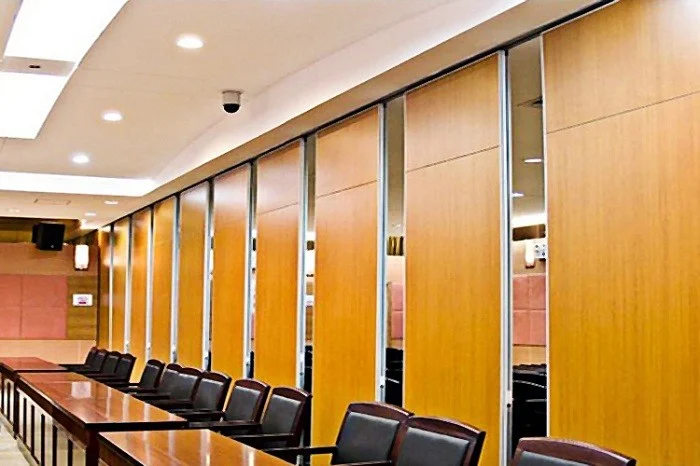
Sightline Review at the Opening and the Pocket
Checklist focus: movable partition stacking pocket approach.
Sightlines matter because people navigate by what they can see. A person approaching a subdivided space should be able to understand where the opening is, whether it is open or closed, and where the stacking pocket sits.
Review sightlines from both sides of the partition line and from the main approach direction. Consider a person walking with a tray, pushing a trolley, using a wheelchair or supervising a group. The audit does not set dimensions, but it should record where visibility is obstructed and who needs to resolve it.
Evidence note
Visible geometry in a drawing or photograph does not prove acoustic performance, structural capacity, cleaning compatibility or a application reference. Treat each of those as a separate confirmation item with matching evidence.
Ambulant Decision Points: Where People Pause and Choose
Review focus: movable partition stacking pocket approach.
An ambulant decision point is any place where a person must choose a direction, wait, turn or adjust their movement. In a subdivided space, these points cluster near the opening, the stacking pocket, corridor junctions and service doors.
The audit should mark each decision point on the layout and ask what information a person needs there. If the answer depends on signage, a staff member or a line of sight that is blocked when panels are parked, that is a coordination item.
Decision point review sequence
- Mark every entry, exit and route junction on the layout.
- Mark the closed, open and parked positions of the partition.
- Identify where a person must pause, turn or choose a direction.
- Check whether the sightline to the next decision point remains readable.
- Record conflicts with doors, furniture, services or fixed elements.
- Assign each open item to the responsible project party for confirmation.
Coordinating Finishes, Pass Doors and Documentation
Project review term: movable partition stacking pocket approach.
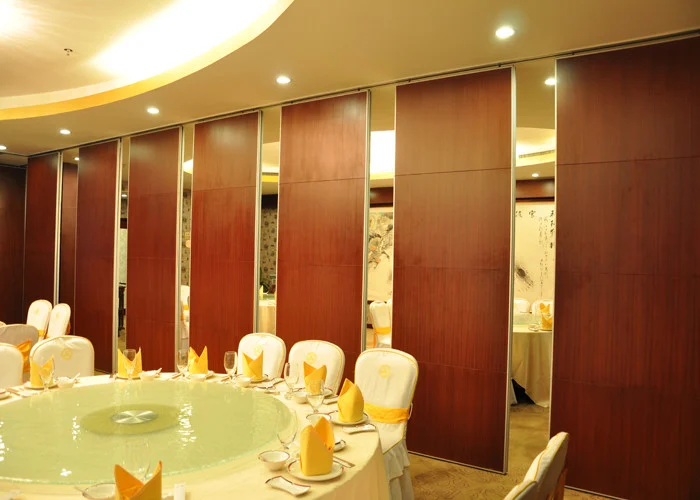
Confirmed finish options include laminate, melamine, fabric, leather, glass and other approved surfaces. Finish selection affects appearance and maintenance planning, but it does not by itself confirm acoustic, fire or durability performance. Keep those questions in the evidence track.
Pass-door requirements and project documentation can be discussed with the supplier. Where a pass door is proposed, review its position against the ambulant decision points and the stacking pocket approach so that it does not create a new circulation conflict.
Compact comparison: review focus by project stage
| Stage | Primary review focus | Confirmation boundary |
|---|---|---|
| Concept layout | Route logic, opening position, parking intent | Project-specific support and dimensions |
| Design development | Sightlines, decision points, finish direction | Acoustic and dimensional requirements |
| Construction coordination | Overhead continuity, services, adjacent trades | Engineering and installation review |
| Handover planning | Documentation, pass doors, operating sequence | Project-specific confirmation |
Documentation and Evidence Boundaries
A useful audit produces a marked-up layout, a list of open items and a record of who confirmed what. It should not convert a drawing into a performance claim.
Open item register
- Route continuity at every turn and junction.
- Support condition referred to the responsible party.
- Sightline obstructions at each decision point.
- Parking position coordination with adjacent elements.
- Pass-door position and documentation requirements.
- Acoustic and dimensional confirmation status.
Frequently Asked Questions
What is a movable partition stacking pocket approach sightline ambulant decision point audit?
It is a drawing-based review that checks how panels travel to their parking position, what people can see at the opening and where they must pause or choose a direction. It coordinates circulation and visibility without claiming performance.
Does a top-hung movable partition need a floor track?
EBUNGE movable partition panels are individually movable, suspended from a top track, cross the opening without a floor track and park at a planned stacking position.
Can panels move across a gap in the overhead route?
No. Every proposed movement path requires a continuous connected overhead route and project-specific support review. A break in the route should be treated as an open coordination item.
Which finish options can be considered?
Confirmed finish options include laminate, melamine, fabric, leather, glass and other approved surfaces. Finish choice does not confirm acoustic, fire, durability or maintenance performance.
How should acoustic questions be handled?
Discuss acoustic intent with the project team and confirm project-specific requirements with matching evidence.
What documentation should be prepared?
Prepare a marked-up layout showing routes, parking positions and decision points, plus an open item register. Pass-door requirements and project documentation can be discussed with the supplier.
Conclusion and Next Step
A circulation audit turns a movable partition layout into a coordinated movement plan. Review the stacking pocket approach, the sightline into the opening and every ambulant decision point before drawings are finalised, and keep performance questions in a separate evidence track.
To discuss your layout, route drawings and documentation requirements, contact the EBUNGE team. You can also review the movable wall product context and the project resources before the next coordination meeting.