
Quick answer: architect coordination interface assumption verification
Review focus: architect coordination interface assumption verification.
An architect coordination interface assumption verification board movable partition is a shared design-phase register that records every track, stack and ceiling assumption before drawings are frozen. The suitability of each route and parking arrangement depends on the approved layout, circulation, ceiling interfaces and operating sequence. The board does not replace drawings; it prevents unverified assumptions from becoming coordinated-looking details. Because EBUNGE movable panels are individually movable, suspended from a top track, cross the opening without a floor track and park at a planned stacking position, the board must cover the full overhead route and the parking zone, not only the opening line.
Why a Verification Board Beats a Coordination Meeting
Project review term: architect coordination interface assumption verification.
Coordination meetings produce minutes, but minutes rarely show which assumption is still open. A board makes status visible. Each row carries an assumption, a discipline owner, a required confirmation and a status. When a ceiling zone changes, the board shows which track and stack entries are affected.
The board also protects the design intent. A partition that appears resolved on plan can still hide an unconfirmed support condition, an unresolved stacking position or a ceiling interface that another discipline has not accepted. The board keeps those items open until evidence arrives.
Board Structure: Rows, Owners and Status Values
Coordination scope: architect coordination interface assumption verification.
Use one board per partition line or per room cluster. Keep the structure simple enough to update weekly.
| Field | Purpose | Example entry |
|---|---|---|
| Assumption ID | Unique reference for drawing callouts | TRK-01 |
| Zone | Track, stack or ceiling | Track |
| Assumption | What is currently believed | Overhead route is continuous across the opening |
| Owner | Discipline accountable for confirmation | Structural engineer |
| Required evidence | What closes the item | Signed support review or coordinated section |
| Status | Open, in review or confirmed | Open |
Status values should be limited. Open means no evidence yet. In review means evidence is being checked. Confirmed means the named discipline has accepted the assumption in writing. Avoid a done status that hides who confirmed it.
Track Zone Assumptions to Log
Checklist focus: architect coordination interface assumption verification.
The track zone carries the movement path. Every proposed route needs a continuous connected overhead route and project-specific support review. The exact route, junction arrangement, continuous overhead path and parking position must be confirmed from the coordinated project drawings.
Route continuity
Log whether the route is straight, turning or a combination. Each segment needs its own confirmation that the overhead route remains continuous.
Support and ceiling interface
Record who confirms the supporting structure and who confirms the ceiling zone above the track. If the ceiling contains services, the board should note the coordination required. Do not treat a ceiling grid drawing as proof of support capacity.
Stack Zone Assumptions to Log
Review focus: architect coordination interface assumption verification.
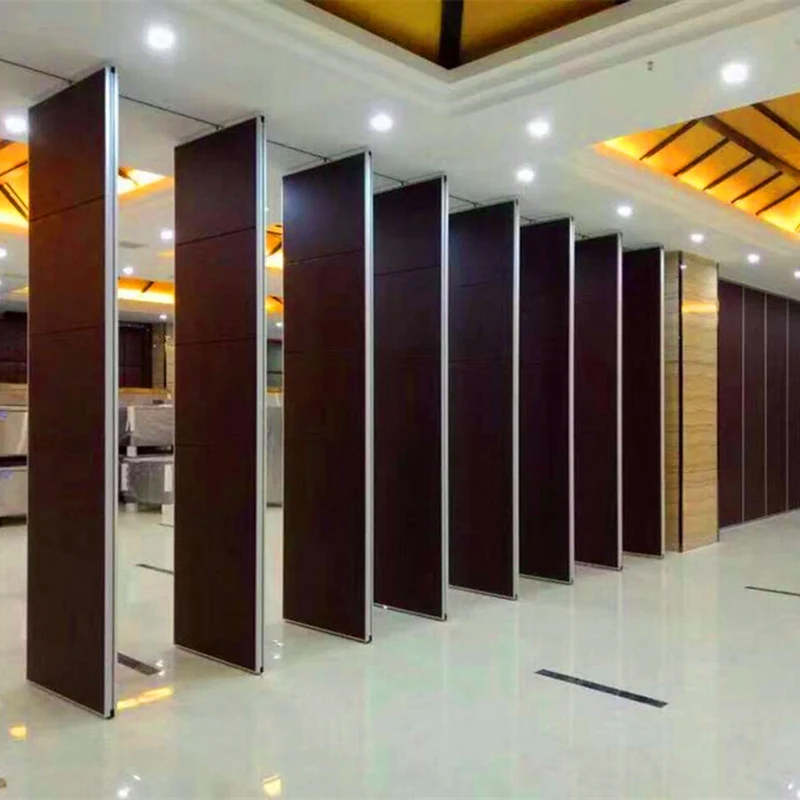
Parking style is customized to the customer layout and project requirements and may support compact stacking when the coordinated design permits it. The board should record the planned stacking position, the approach route into it and any adjacent element that could obstruct movement.
When the layout changes, reopen the stack rows. Confirm that the stacking position remains reachable from the full opening route.
Ceiling Zone Assumptions to Log
The ceiling zone is where disciplines overlap most. Log the ceiling type, the zone above the track, any service penetrations and the inspection access assumed for future adjustment. These are coordination items, not performance claims.
Visible references can support layout discussion but do not verify hidden construction or performance.
A Six-Step Confirmation Workflow
- List every track, stack and ceiling assumption from the current drawings.
- Assign one owner per assumption, not one owner per discipline.
- State the evidence required to close each item.
- Review open items at each coordination meeting and update status.
- Freeze only the rows marked confirmed; keep the rest visible.
- Reopen affected rows whenever the layout or ceiling design changes.
This sequence keeps the board honest. It also gives specialist suppliers a clear point to request missing information rather than infer it.
Evidence Boundaries and Drawing Review
The board records assumptions and confirmations; it does not create performance evidence. A confirmed row means a discipline accepted a coordination condition, not that a performance target has been proven. Finish options such as laminate, melamine, fabric, leather, glass and other approved surfaces are selections, not evidence of acoustic, fire or durability performance.
Pass-door requirements and project documentation can be discussed with the supplier. Dimensional, support and acoustic requirements remain project-specific and should be confirmed against the actual layout, ceiling and structure. Review the movable wall systems and the planning resources before freezing the board.
Frequently Asked Questions
Who should own the verification board?
The architect usually maintains the board, but each row has a discipline owner. The architect coordinates; the owner confirms.
When should the board be started?
Start it as soon as a movable partition line appears in the design. Early assumptions are the ones most likely to be forgotten.
Does a confirmed row guarantee performance?
No. Confirmation means a discipline accepted a coordination condition. Performance still requires project-specific evidence and review.
How do we handle a turning route?
Break it into connected segments and log each one. Every segment needs a continuous overhead route and support confirmation.
Can the board include finish selections?
Yes, as selections. Do not treat a finish choice as evidence of acoustic, fire or durability performance.
What closes a ceiling assumption?
A coordinated section or written acceptance from the responsible discipline, recorded against the assumption ID.
Conclusion and Next Step
A verification board turns scattered assumptions into a tracked, owned and confirmable record. Keep the board live until every row is confirmed or explicitly deferred.
To discuss pass-door requirements, documentation or project-specific coordination, contact the EBUNGE team with your layout and ceiling information.