
Quick answer: track fixing crew shift handover
Review focus: track fixing crew shift handover.
A movable partition track fixing crew shift handover register is the single document that lets an incoming shift inherit unresolved setting-out, tolerance and interface items without repeating work. On multi-shift sites, the risk is rarely the fixing itself; it is the quiet loss of context between crews. This article sets out a structured briefing and carryover log for contractor installation planning, bounded by maintained product facts and project-specific drawing review.
Why a Shift Handover Register Matters on Track Fixing Works
Project review term: track fixing crew shift handover.
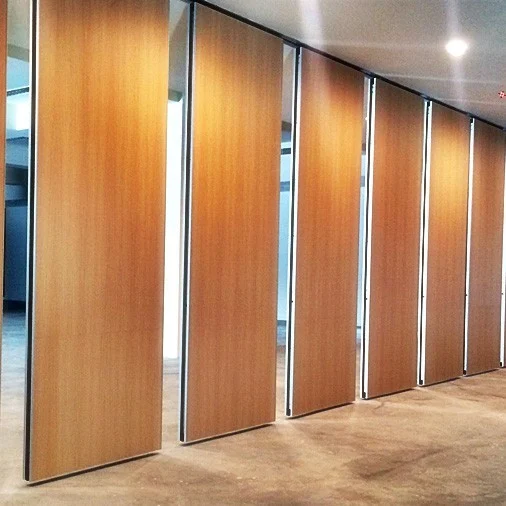
Movable wall panels are individually movable, suspended from a top track, cross the opening without a floor track and park at a planned stacking position. The exact route, junction arrangement, continuous overhead path and parking position must be confirmed from the coordinated project drawings. When crews change mid-route, an undocumented tolerance decision can be read differently by the next team.
The register is not a substitute for drawings. It is a controlled record of what has been checked, what remains open and who owns the next action. Keep it short enough to complete at shift end and specific enough to prevent assumptions.
What the Outgoing Shift Must Record Before Leaving Site
Coordination scope: track fixing crew shift handover.
Record only what has been physically observed or formally agreed. Avoid conclusions about capacity, acoustic outcome or completion that the evidence does not support.
- Route status: straight, turning and stacking routes reviewed against the current layout.
- Setting-out line: datum used, last checked point and any deviation awaiting instruction.
- The suitability of each route and parking arrangement depends on the approved layout, circulation, ceiling interfaces and operating sequence.
- Tolerance queries: items where the drawing and site condition do not yet align.
- Interface items: ceiling, services, finishes or adjacent trades that affect the track zone.
- Open documentation: requests for clarification, pass-door requirements or finish approvals still pending.
Evidence note: a visible track line or finish sample does not confirm acoustic performance, structural capacity or cleaning compatibility. Those require project-specific confirmation.
A Numbered Handover Process for Incoming Crews
Use the same sequence every shift so the briefing stays comparable across the project.

- Incoming supervisor reads the register before entering the work area.
- Walk the route with the outgoing supervisor, starting at the last completed fixing point.
- Confirm the setting-out datum and the next planned fixing position.
- Review each open item and mark it as carryover, closed or awaiting instruction.
- Agree the first task of the new shift and the point at which work must stop for clarification.
- Sign and time-stamp the register; store it with the current drawing set.
This process keeps the movable partition track fixing crew shift handover register project planning aligned with the actual site sequence rather than a generic checklist.
Open-Item Carryover Log: Fields That Prevent Rework
A carryover log works when each line has an owner, a due point and a clear status. The table below is a field guide, not a performance claim.
| Field | Purpose | Status options |
|---|---|---|
| Item reference | Links to drawing or request number | Open / Closed |
| Location | Grid line or room zone | Carryover / Resolved |
| Description | Setting-out, tolerance or interface issue | Awaiting instruction |
| Owner | Person or trade responsible | Named |
| Next action | What must happen before fixing continues | Dated |
Do not use the log to record assumed dimensions or inferred loads. If a value is not confirmed on the current drawing, mark it as awaiting instruction.
Coordinating Interfaces Without Inventing Engineering Conclusions
Track fixing sits between structure, ceiling and services. The register should flag interface items early, but it must not resolve them by assumption. Where a support condition is unclear, the correct entry is a request for project-specific review, not a proposed fix.
Keep finish approvals in a separate column so they are not confused with track readiness.
Acoustic and Sealing Concepts: What the Register Should and Should Not Say
Seals and acoustic concepts can be explained generically, but the register should record only that a requirement exists and that confirmation is pending.
The register is a coordination tool, not a certification.
Documentation and Pass-Door Items to Carry Forward
Pass-door requirements and project documentation can be discussed with the supplier and should appear in the carryover log as open items until resolved. Typical entries include drawing revisions, finish approvals, interface sign-offs and requests for clarification.

For product context, see the movable partition wall page. For broader planning references, use the resources section. When an item needs a project-specific answer, route it through contact rather than resolving it on site by assumption.
Frequently Asked Questions
What is a movable partition track fixing crew shift handover register?
It is a controlled record completed at shift change that lists route status, setting-out checks, tolerance queries, interface items and open documentation so the incoming crew can continue without repeating work.
Should the register include acoustic performance values?
No. Record that an acoustic requirement exists and whether confirmation is pending.
How do we handle an unresolved support condition?
Log it as an open item with a named owner and stop fixing in that zone until project-specific review is provided.
Can the register cover turning and stacking routes?
Yes. Straight, turning and stacking routes are reviewed from the layout, so each route segment can be listed with its own status and any open interface item.
What finish information belongs in the handover log?
Record only approved finish selections such as laminate, melamine, fabric, leather, glass or other approved surfaces, and mark any pending approval as an open item.
Who should sign the register?
Both outgoing and incoming supervisors should sign and time-stamp it. The signed copy should be stored with the current drawing set for the project record.
Conclusion: Handover Discipline Protects the Track Route
A structured shift handover does not replace engineering review, but it prevents avoidable rework by making open items visible. Keep the register factual, route-based and tied to current drawings. Confirm project-specific support, acoustic and dimensional requirements before fixing continues.
To discuss pass-door requirements, documentation or project coordination, contact the EBUNGE team.