
Quick answer: ambulant route handover protocol
Review focus: ambulant route handover protocol.
Every changeover of a movable partition wall changes the shape of the room and, with it, the shape of the walking route around it. A movable partition changeover ambulant route handover protocol gives operations and facilities teams a shared, repeatable way to confirm that the route remains usable before, during and after each reconfiguration. This article sets out trigger points, verification steps and reinstatement confirmation without assuming any project-specific performance.
Why Ambulant Route Continuity Needs Its Own Handover
Project review term: ambulant route handover protocol.
Movable partition panels are individually movable, suspended from a top track, and cross the opening without a floor track. That clear-floor characteristic is useful for circulation, but it does not remove the need to plan where people walk while panels are being moved or parked.
Operations teams usually own the event schedule. Facilities teams usually own the physical condition of the partition system and the surrounding space. If responsibility for route continuity is not explicitly handed over, each team may assume the other has checked it. The protocol below closes that gap using visible checks and drawing-based review, not hidden assumptions.
Trigger Points That Start the Handover
Coordination scope: ambulant route handover protocol.
A handover should be triggered by a defined event, not by memory. The following triggers are practical starting points; project teams should adapt them to their own operating rhythm.
- Pre-event setup: before panels are moved from their parked position.
- Mid-changeover: when panels are in transit across the opening.
- Post-event reinstatement: when the space returns to its default layout.
- Layout change: when a new arrangement is used for the first time.
- Route obstruction report: when any team observes a blocked or unclear path.
Each trigger should have a named owner on the operations side and a named counterpart on the facilities side. The handover is a conversation, not a formality.
What the Handover Should Verify
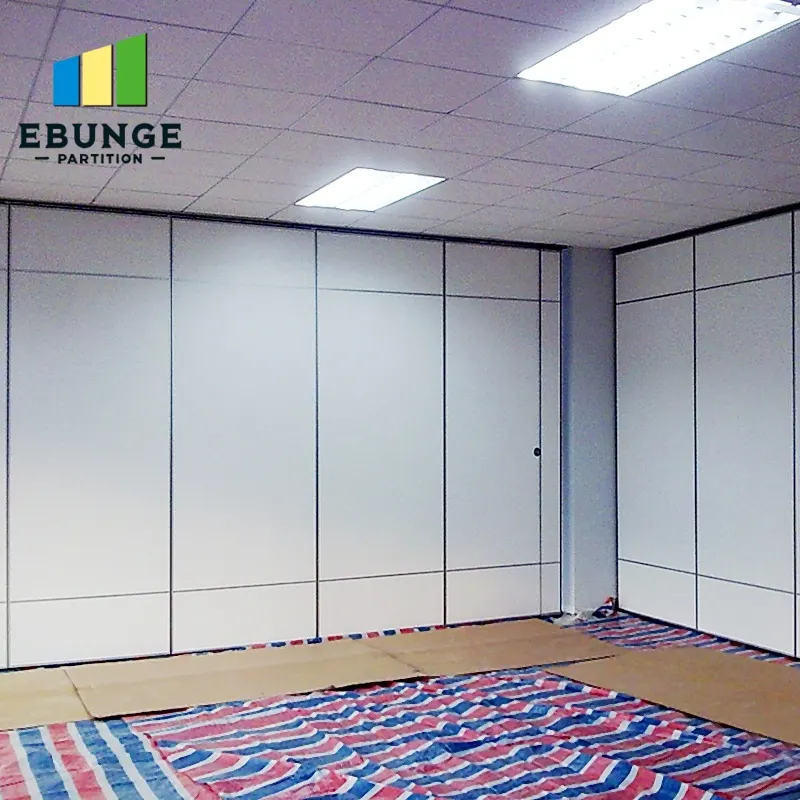
Checklist focus: ambulant route handover protocol.
Verification should focus on what can be seen and confirmed against the layout drawings. The suitability of each route and parking arrangement depends on the approved layout, circulation, ceiling interfaces and operating sequence.
Route and parking position
Confirm that the planned stacking position is clear and that the route to it remains connected. The exact route, junction arrangement, continuous overhead path and parking position must be confirmed from the coordinated project drawings.
Clear-floor condition
Because the system is top-hung, the floor along the partition line should remain free of running track or floor hardware. Check that no temporary object has been placed in a way that narrows the ambulant route during changeover.
Pass-door and access points
Where a pass-door is part of the layout, confirm that its position and swing do not conflict with the route. Pass-door requirements should be discussed with the supplier and confirmed against project documentation.
A Step-by-Step Changeover Handover Process
Review focus: ambulant route handover protocol.
- Review the layout drawing. Confirm the straight, turning and stacking routes shown for the current configuration.
- Walk the route before moving panels. Note any obstruction, temporary furniture or signage that affects the path.
- Confirm the parking position. Verify that the planned stacking area is available and matches the coordinated design.
- Move panels along the reviewed route.
- Verify the completed layout. Check that the opening is closed or open as intended and that the ambulant route around the space is clear.
- Record the handover. Note the trigger, the route checked, any obstruction found and the action taken.
- Reinstate and confirm. At the end of the event, return panels to the parked position and confirm the default route is restored.
Evidence Boundaries for Route and Accessibility Claims
Accessibility and circulation statements should be tied to project-specific drawings and confirmed requirements. A finish sample, photograph or generic layout does not prove route width, turning capacity or compliance with any local accessibility standard.

Evidence note: Confirm project-specific support, acoustic and dimensional requirements with the responsible design team.
Reinstatement Confirmation After Each Changeover
Reinstatement is the point at which the space returns to its default condition. It should be confirmed by both teams, not assumed once the event ends.
Default layout check
Confirm that panels are parked at the planned stacking position and that the default ambulant route is unobstructed.
Documentation check
Confirm that any change to the layout, pass-door use or route obstruction has been recorded for the next changeover.
Escalation path
If a route cannot be restored, escalate to the responsible project contact before the next event rather than relying on a temporary workaround.
Coordination Between Operations and Facilities Teams
Operations can describe the event sequence; facilities can describe the partition system and its parked position. Neither team should be asked to certify performance that requires engineering review.
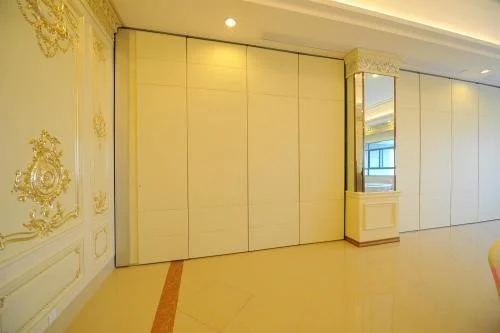
For finish selection, confirmed options include laminate, melamine, fabric, leather, glass and other approved surfaces. Finish choice does not by itself confirm route, acoustic or accessibility outcomes; those remain project-specific.
FAQ: Changeover Route Handover Questions
Who should own the ambulant route handover at each changeover?
Ownership should be named in advance. A common approach is for operations to own the event trigger and facilities to own the physical check, with both signing off on reinstatement.
Can panels be moved across a gap without a track?
No. Panels move on a continuous overhead route.
Does a clear floor guarantee accessibility compliance?
No. A clear floor is a product characteristic, not proof of compliance. Accessibility requirements must be confirmed against project drawings and applicable local standards.
How should pass-doors be handled during changeover?
Pass-door requirements should be discussed with the supplier and confirmed in project documentation. During changeover, confirm that the pass-door position does not obstruct the ambulant route.
What should be recorded in the handover log?
Record the trigger, the route checked, the parking position used, any obstruction observed and the reinstatement confirmation. Keep the log with the layout drawings.
Can the same protocol be used for different room types?
Yes, the structure is generic. Named venues and room types are examples only; the protocol should be adapted to each project’s layout and operating pattern.
Conclusion and Next Steps
A changeover-time ambulant route handover protocol turns a recurring operational risk into a defined routine. The exact overhead route and support arrangement must be confirmed by the responsible project team from coordinated drawings.
To review layout drawings, parking positions, pass-door requirements or finish options for your project, contact the EBUNGE team. You can also review the movable wall product range and browse project planning resources before your next coordination meeting.