
Quick answer: track fixing zone release
Review focus: track fixing zone release.
On many fit-out programmes, the movable partition track fixing zone release ceiling rough-in decision is treated as a date rather than a condition. The exact route, junction arrangement, continuous overhead path and parking position must be confirmed from the coordinated project drawings. Releasing that zone too early creates rework; holding it too long stalls the partition package. This article sets out a planning framework that ties release to defined rough-in completion states, using only maintained product facts and clearly flagged confirmation boundaries.
Why the ceiling interface drives partition rework
Project review term: track fixing zone release.
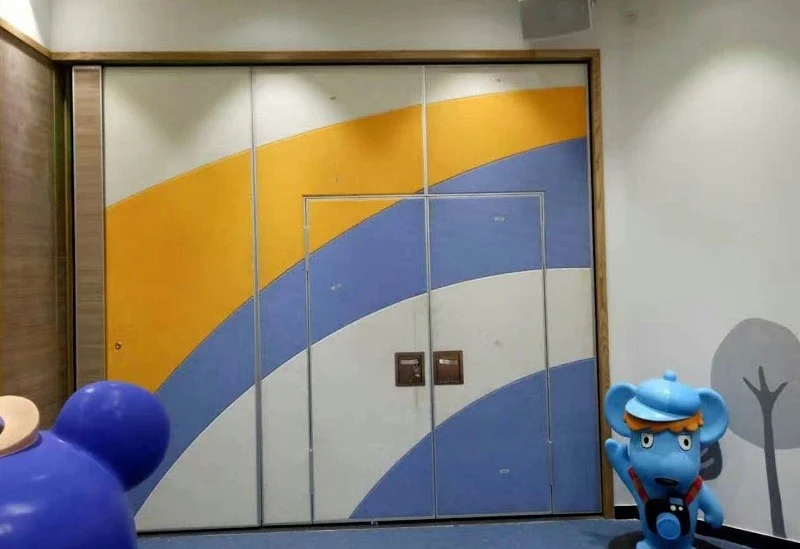
EBUNGE movable partition panels are individually movable and suspended from a top track. They cross the opening without a floor track and park at a planned stacking position.
Ceiling-mounted services — ductwork, pipework, cable containment, sprinkler runs, lighting supports and access panels — compete for the same zone. If the partition track is fixed before those services reach a stable rough-in state, later service adjustments can force track removal, re-fixing or re-survey. The release sequence exists to prevent that cycle.
Define the track fixing zone before sequencing release
Coordination scope: track fixing zone release.
The track fixing zone is the volume and surface area reserved for the overhead route, its supporting structure and the fixing interface. It is not simply a line on a reflected ceiling plan. The suitability of each route and parking arrangement depends on the approved layout, circulation, ceiling interfaces and operating sequence.
Information to confirm from project drawings
- The straight, turning and stacking routes reviewed from the layout, including every point where the overhead route changes direction.
- The planned stacking position and the space reserved for parked panels.
- Ceiling void depth available for the track assembly and any service crossings.
- Service routes that must pass through or near the fixing zone, and their required gradients and clearances.
- Access strategy for inspection and future adjustment above the finished ceiling.
These items are drawing-review prompts, not engineering conclusions. Each project requires its own support, acoustic and dimensional confirmation.
A release sequence tied to rough-in completion states
Checklist focus: track fixing zone release.
The following sequence is a coordination model. It defines completion states as gates, so that release is evidence-based rather than calendar-based. Project teams should adapt the gate definitions to the contract programme and the responsible disciplines.
- Gate 1 — Route and zone agreed.
- Gate 2 — Primary service rough-in stable. Ceiling-mounted services that cross or occupy the fixing zone have reached a rough-in state that is not expected to move. Any remaining service work is outside the zone.
- Gate 3 — Support condition reviewed.
- Gate 4 — Dimensional survey complete. The as-built soffit, void depth and route alignment have been measured against the coordinated drawings, and deviations are recorded.
- Gate 5 — Release recorded. The fixing zone is formally released for track installation, with the gate evidence attached to the inspection record.
Gate 5 should not be issued on verbal assurance alone. A short written release note referencing the survey and the reviewed support condition gives later trades a clear baseline.
Evidence boundaries at the ceiling interface
Review focus: track fixing zone release.
Ceiling coordination generates many assumptions that look like facts on a drawing. The table below separates what can be read from maintained product information from what must be confirmed per project.
| Item | What maintained information supports | What still requires project confirmation |
|---|---|---|
| Panel movement principle | Panels are top-hung, individually movable, cross the opening without a floor track and park at a planned stacking position. | Route geometry, stacking position and clearances for the specific layout. |
| Finish selection | Confirmed finish options include laminate, melamine, fabric, leather, glass and other approved surfaces. | Compatibility with the project’s cleaning, handling and design requirements. |
| Acoustic concept | Seals and acoustic concepts can be explained generically; STC and Rw are rating systems, not a direct count of decibels. | Any project-specific acoustic requirement, which needs its own evidence and review. |
| Pass doors | Pass-door requirements can be discussed as part of the configuration. | Position, size, swing and coordination with the surrounding construction. |
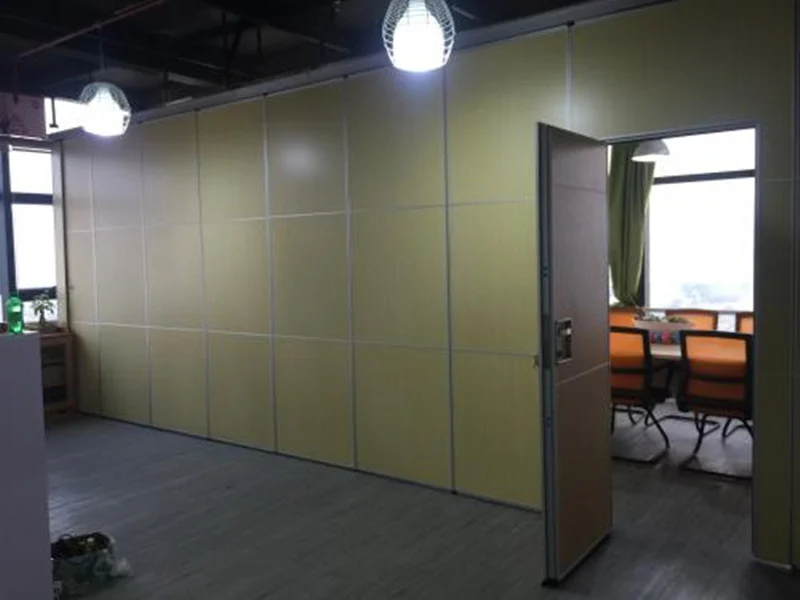
Visible references can support layout discussion but do not verify hidden construction or performance. Those attributes require matching evidence for the actual specification.
Coordination checks before releasing the zone
Project review term: track fixing zone release.
A short pre-release check reduces the chance that the track package and the services package interfere after installation. The checks below are deliberately observable rather than performance-based.
- Confirm that the overhead route is continuous and connected across the full travel path, including turns and the approach to the stacking position.
- Confirm that no service is scheduled to enter the fixing zone after release.
- Confirm that access panels or inspection points remain reachable once the ceiling is closed.
- Confirm that the stacking position is clear of columns, doors, service risers and fixed furniture.
- Confirm that the release note references the survey record and the reviewed support condition.
If any check cannot be confirmed, the zone is not ready for release. Recording the open item is more useful than issuing a conditional release that later trades may treat as final.
Documentation that keeps the interface traceable
Project documentation can be discussed with EBUNGE as part of the coordination process. Useful records include the coordinated ceiling plan and section, the route and stacking layout, the rough-in completion sign-off, the dimensional survey, and the release note. These records do not replace project-specific engineering, acoustic or dimensional confirmation; they make the confirmation trail visible.
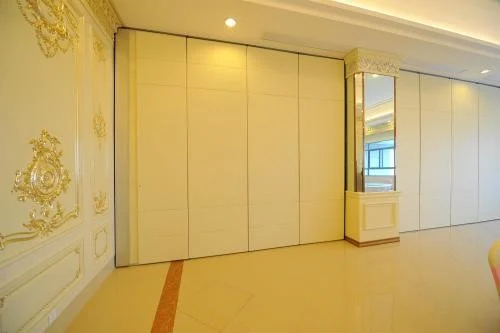
For teams comparing options, the movable wall systems page provides maintained product context, and the resources section supports broader project planning. Where a project has unusual ceiling conditions, early discussion is more productive than a late site instruction.
Frequently asked questions
What does track fixing zone release mean in practice?
It means the project team formally confirms that the ceiling zone reserved for the partition track has reached the agreed rough-in and review state, so track installation can proceed without expected interference from ceiling services.
Can the track be fixed before all ceiling services are installed?
Only if the remaining service work is outside the fixing zone and the support and dimensional conditions have been reviewed for the project. Otherwise, later service adjustments may force rework.
Who should confirm the support condition above the track?
Provide the current layout, opening dimensions, ceiling information, intended room use, and relevant project drawings for review. The exact overhead route and support arrangement must be confirmed by the responsible project team from coordinated drawings.
Does a higher STC or Rw rating guarantee a quiet room?
No. Actual results depend on the complete construction, including junctions, seals and adjacent elements, and require project-specific evidence.
How are turning and stacking routes reviewed?
They are reviewed from the layout. Every proposed movement path needs a continuous connected overhead route, and the stacking position must be planned so parked panels do not obstruct other functions.
What finishes can be considered?
Confirmed finish options include laminate, melamine, fabric, leather, glass and other approved surfaces. Selection should be checked against the project’s design, handling and maintenance requirements.
Conclusion and next step
Releasing the movable partition track fixing zone is a coordination decision, not a date. When release is tied to defined rough-in completion states, reviewed support conditions and a recorded dimensional survey, the ceiling interface becomes traceable and rework risk is reduced. Every project still requires its own support, acoustic and dimensional confirmation.
To discuss pass-door requirements, project documentation or the coordination sequence for a specific layout, contact the EBUNGE team with your drawings and programme information.