
Quick answer: ambulant route reinstatement
Review focus: ambulant route reinstatement.
Movable partition changeover ambulant route reinstatement is the final, often rushed step of reconfiguring a flexible room. Panels are individually movable, suspended from a top track, cross the opening without a floor track, and park at a planned stacking position. That clear-floor design removes one common trip hazard, but it does not remove the need to confirm that walking routes are open and temporary obstructions are gone before the space is handed back to users.
This protocol is written for facility and operations teams who reconfigure rooms regularly. It does not assert any measured performance or compliance outcome. Every recommendation below depends on project-specific drawings, support review and dimensional confirmation. Use it as a repeatable checklist, not as a substitute for project documentation.
Why Changeover-Time Route Reinstatement Deserves Its Own Protocol
Project review term: ambulant route reinstatement.
During a changeover, the room is briefly a work zone. Stacking positions, service corridors and adjacent lobbies may be occupied by panels, carts or temporary barriers. Once the last panel is parked, the space must return to a condition where ambulant users can move predictably.
The suitability of each route and parking arrangement depends on the approved layout, circulation, ceiling interfaces and operating sequence. It is a visible, repeatable check that the circulation paths shown on the approved layout are actually clear. Because the panels travel on an overhead route, the floor itself stays free of a running track, but the movement path still needs a continuous connected overhead route and project-specific support review.
What the protocol can and cannot confirm
It can confirm that planned routes are visually unobstructed, that stacking areas are returned to their designated condition, and that temporary items have been removed. Those require separate project-specific evidence.
Pre-Changeover Preparation: Define the Route Before Panels Move
Coordination scope: ambulant route reinstatement.
Review the approved layout with the operations team and mark the ambulant path, the stacking position and any temporary exclusion zone.
Confirm that the proposed movement path follows a continuous connected overhead route. The exact route, junction arrangement, continuous overhead path and parking position must be confirmed from the coordinated project drawings. If the layout shows a turning or stacking route, review it against the coordinated design rather than improvising on the day.
Information to have on hand
- Approved layout showing straight, turning and stacking routes.
- Designated parking or stacking position for the changeover.
- Pass-door requirements, if the project includes them.
- Contact details for the person authorised to resolve route conflicts.
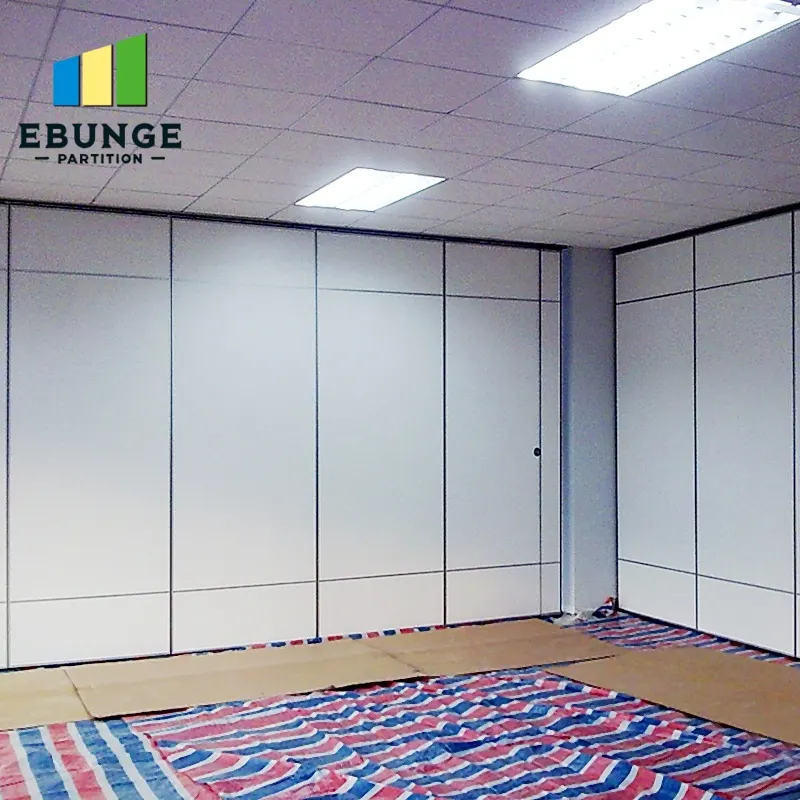
If any of these items are missing, pause and confirm with the project team. A route that is improvised during changeover is harder to reinstate consistently.
A Six-Step Changeover-Time Reinstatement Sequence
Checklist focus: ambulant route reinstatement.
The sequence below is deliberately simple. It is designed to be repeated after every reconfiguration, not only after major events.
- Clear the destination. Confirm the planned stacking position is empty and available before panels are moved.
- Move panels along the reviewed route. Keep the movement path aligned with the approved straight, turning and stacking routes.
- Park panels fully. Confirm each panel is at its planned stacking position and not intruding into a circulation path.
- Remove temporary obstructions. Take away barriers, carts, signage and any temporary items introduced for the changeover.
- Walk the ambulant route. Traverse the full route at walking pace and check for pinch points, blind corners and displaced furniture.
- Record and hand back. Note any unresolved issue and confirm the room is ready for its next use.
Step five is the one most often skipped. A short walk-through catches obstructions that are invisible from the stacking position.
Obstruction Clearance: What to Check and What to Escalate
Review focus: ambulant route reinstatement.
Obstruction clearance is a visible check, not a performance test. Look for items that reduce the usable width of the route or create a sudden change in direction.
| Check | Visible evidence | Action if unclear |
|---|---|---|
| Stacking position | Panels parked within the marked area | Confirm with layout drawings |
| Ambulant path | Continuous clear floor along the route | Remove temporary items or escalate |
| Turning route | Path matches the reviewed turning route | Refer to project-specific review |
| Pass-door area | Door leaf and approach clear | Confirm pass-door requirements |
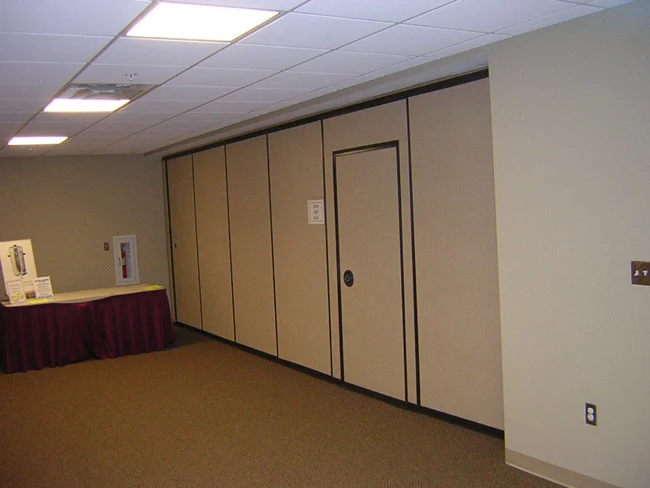
If a check cannot be resolved visually, escalate it rather than guessing.
Evidence note
This protocol relies on visible conditions and approved drawings. It does not generate measured performance data. Any statement about support, acoustics or dimensions must be confirmed for the specific project before it is relied upon.
Coordination With Acoustic and Dimensional Requirements
Route reinstatement sits alongside acoustic and dimensional coordination. This article does not claim any specific rating for any configuration.
Finish options include laminate, melamine, fabric, leather, glass and other approved surfaces. Those remain project-specific questions.
Dimensional requirements, support points and stacking clearances must be confirmed from the coordinated design. The movable wall systems page provides maintained product context, while the resources section supports broader project planning. Neither replaces drawing review.
Roles, Records and Handover Discipline
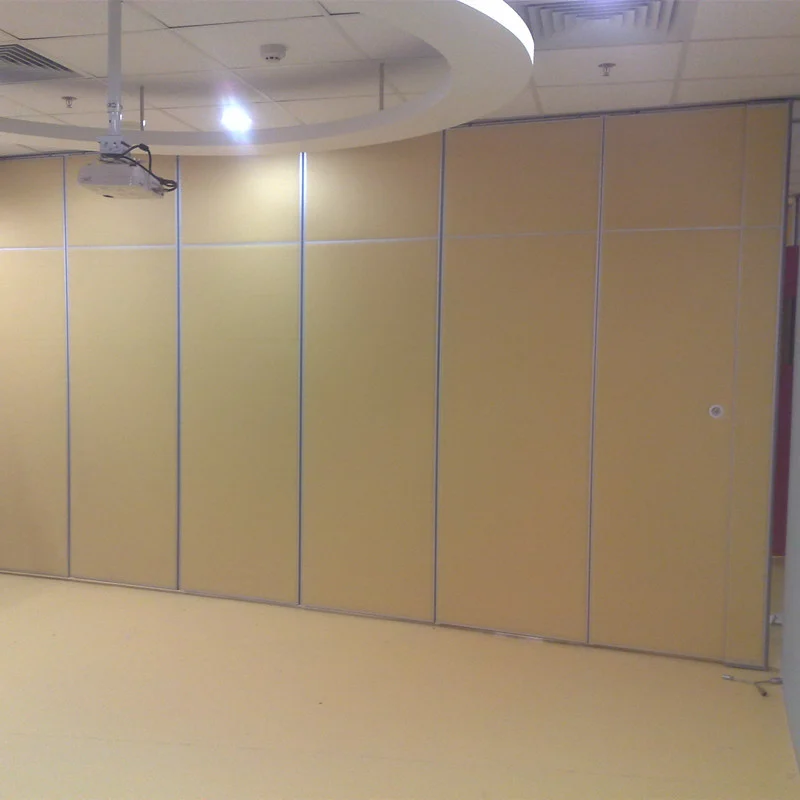
A repeatable protocol needs a named owner. One person should be responsible for confirming the route is reinstated and for recording any exception. That record does not need to be complex; a short note with date, room, changeover and unresolved items is enough.
Handover discipline matters because the next user may not know the room was reconfigured. A brief confirmation that routes are clear and temporary items removed reduces the chance of an obstruction being discovered later.
Questions to confirm with the project team
- Which routes are shown on the approved layout?
- Where is the designated stacking position?
- Are pass-door requirements part of this configuration?
- Who resolves a route conflict during changeover?
Frequently Asked Questions
Does a movable partition need a floor track for ambulant routes?
No. EBUNGE movable partition panels are top-hung and move without a continuous floor running track or floor hardware along the partition line.
Can panels travel across an untracked gap?
No. Every proposed movement path requires a continuous connected overhead route and project-specific support review.
How often should route reinstatement be checked?
After every changeover. The check is short and visible, and it is most useful when repeated consistently rather than only after major events.
Does this protocol confirm acoustic performance?
No. It confirms visible route conditions only.
What if the stacking position conflicts with a circulation route?
Escalate it. The stacking position is part of the coordinated design, and a conflict should be resolved against the approved layout rather than improvised during changeover.
Can finish choice affect route reinstatement?
Finish options include laminate, melamine, fabric, leather, glass and other approved surfaces.
Conclusion: Make Reinstatement the Last Step, Every Time
Movable partition changeover ambulant route reinstatement is a small discipline that protects everyday circulation. Define the route before panels move, follow the six-step sequence, clear temporary obstructions, and record anything unresolved. Keep every claim within visible evidence and approved drawings.
The exact overhead route and support arrangement must be confirmed by the responsible project team from coordinated drawings. Visit the contact page to discuss pass-door requirements, project documentation and layout review.