
Quick answer: priced schedule line item traceability
Review focus: priced schedule line item traceability.
Movable partition wall priced schedule line item traceability is the discipline of linking every priced row in a bid back to the clause, assumption or clarification that authorised it. Without that link, a competitive total can hide scope gaps, duplicated allowances or interface assumptions that no single reviewer owns. This framework helps overseas contractors, architects, interior designers, owners and renovation teams test each row before award, using only the documentation already in the tender pack.
Why Summary Totals Are Not Enough for Award Decisions
Project review term: priced schedule line item traceability.
A priced schedule is a communication instrument, not just a financial one. Each row should answer three questions: what physical work or supply it covers, which drawing or specification clause defines it, and which interface assumption makes it buildable alongside adjacent trades. When those answers are missing, reviewers compare totals that may not describe the same package.
Traceability also protects the clarification process. A bidder query record shows what was asked, what was answered and when. The suitability of each route and parking arrangement depends on the approved layout, circulation, ceiling interfaces and operating sequence. Flagging it early is more useful than discovering the gap after award.
A Four-Layer Traceability Model for Each Priced Row
Coordination scope: priced schedule line item traceability.
Treat every line item as a chain with four layers. The chain is only as strong as its weakest documented link.
- Scope clause layer: the specification, drawing note or bill item that defines the supply boundary.
- Bidder query layer: the question raised, the answer issued and the date both were recorded.
- Priced row layer: the quantity, unit and description that convert the first three layers into a number.
If any layer is absent, mark the row as unresolved rather than accepting the total. This is a review status, not an accusation of error.
Reading the Priced Schedule Against the Layout
Checklist focus: priced schedule line item traceability.
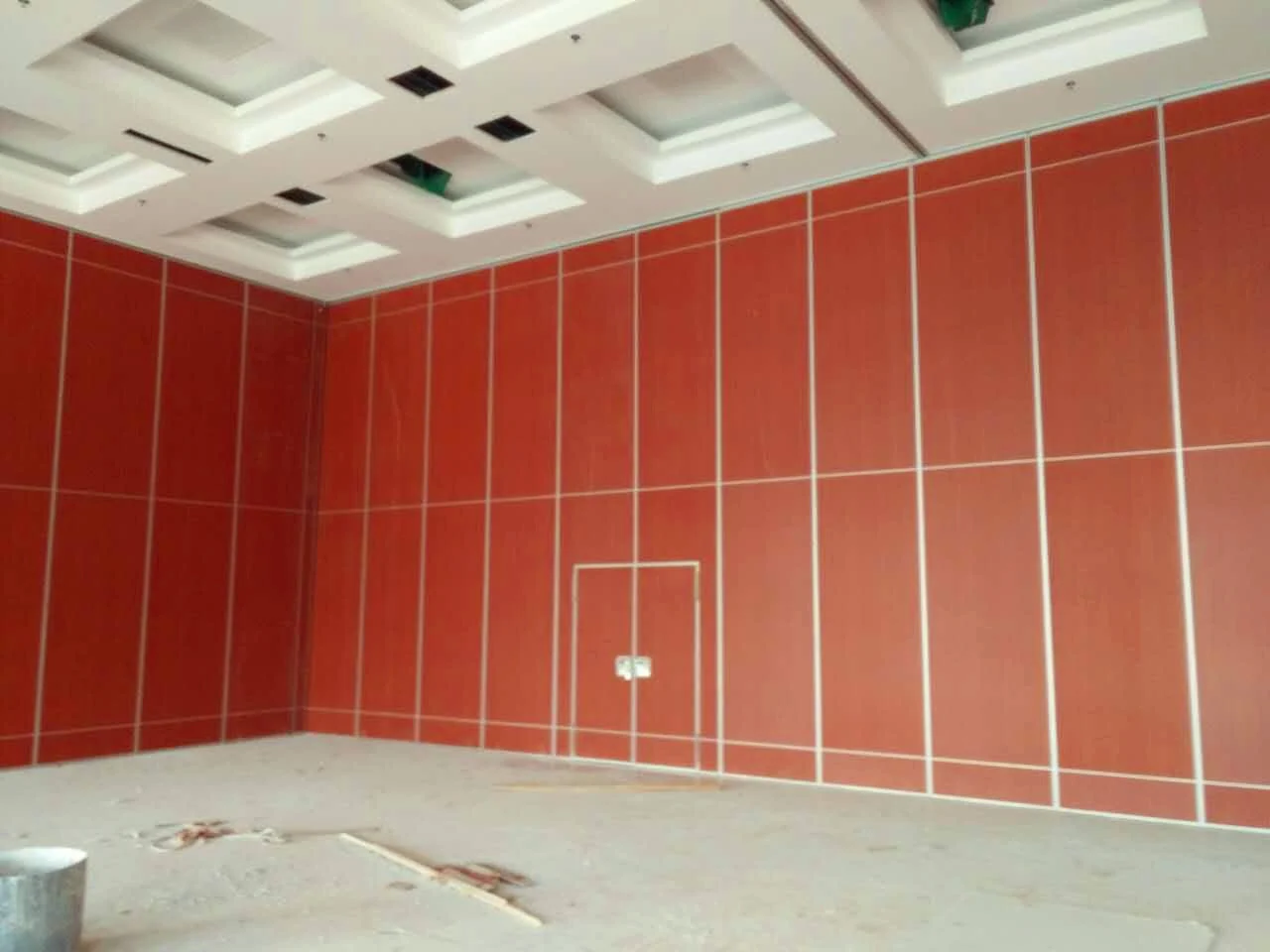
Movable partition panels are individually movable, suspended from a top track, cross the opening without a floor track and park at a planned stacking position. Straight, turning and stacking routes should be reviewed from the layout. A priced row that assumes a route not shown on the layout is an interface assumption waiting to be tested.
Ask whether the schedule distinguishes between the partition line, the parking zone and any turning geometry. These are different physical conditions and may attract different scope clauses. The named venue or room type in a tender is an example only; the same review applies wherever flexible spatial division, combination or reconfiguration is required.

Interface Assumptions That Commonly Need Their Own Row
Review focus: priced schedule line item traceability.
Interface assumptions are the most frequent source of post-award variation because they sit between packages. A reviewer does not need to resolve them, but should confirm each is either priced, excluded or referred to another trade.
| Interface area | What the priced row should state | Evidence to request |
|---|---|---|
| Overhead support condition | Whether support is included, excluded or by others | Structural drawing or ceiling zone note |
| Parking zone | Location, extent and any finish protection assumed | Layout extract showing stacking position |
| Adjacent finishes | Who makes good at the junction | Architectural detail or finish schedule |
| Access for delivery | Route and handling assumption stated in the bid | Site logistics note or query response |
This table is a review prompt, not a statement of what any particular bid contains. Confirm project-specific support, acoustic and dimensional requirements with the responsible designers.
Using the Bidder Query Record as an Audit Trail
Project review term: priced schedule line item traceability.
A query record becomes useful when it is indexed to priced rows. Number each query, record the date issued and the date answered, and note which rows depend on it. Rows with no query reference and no clause reference are the ones most likely to be interpreted differently by different reviewers.

Evidence note: a priced row is traceable only when a reviewer can move from the row to a clause, from the clause to an assumption, and from the assumption to a recorded answer without leaving the tender file.
Where an answer changes a scope boundary, the affected rows should be reissued rather than annotated in isolation.
Finish and Surface Selections in the Priced Schedule
Confirmed finish options include laminate, melamine, fabric, leather, glass and other approved surfaces. A finish selection may appear as a separate row, an allowance or a provisional sum. Reviewers should check that the schedule states which finish category is priced and which selections remain open.
Those are separate project-specific confirmations.
Pass-Doors, Documentation and Scope Boundaries
Pass-door requirements and project documentation can be discussed with the supplier during tender review. If a pass-door is required, the priced schedule should show whether it is within the partition package or a separate door package, and which clause defines its operation and finish.
Documentation requests should be proportionate. A reviewer may ask for layout extracts, interface notes and query records without requesting proprietary design calculations that belong to another discipline. The goal is a verifiable chain, not a redesign.
Pre-Award Checklist for Procurement Reviewers
- Every priced row has a clause, drawing or query reference.
- Interface assumptions are marked as included, excluded or by others.
- Parking and route geometry are consistent with the reviewed layout.
- Finish categories are stated without implying untested performance.
- Open queries are listed with the rows they affect.
- Acoustic and dimensional requirements are confirmed against the project specification.
- Any unresolved row is flagged before award, not after.
For maintained product context, see the movable walls product page. Additional buyer planning material is available in the resources section.
Frequently Asked Questions
What does traceability mean for a movable partition wall priced schedule?
It means each priced row can be linked to the scope clause, interface assumption and bidder query record that authorised it. The link should be visible in the tender file without relying on memory or verbal explanation.
Should every interface assumption have its own priced row?
Not necessarily. It should be clearly stated as included, excluded or by others. The important point is that the assumption is documented and attributed, so reviewers can see where responsibility sits.
How should reviewers treat rows affected by unanswered queries?
Mark them as unresolved and list the query reference. Award decisions should rest on verifiable links, so an unanswered query is a reason to seek clarification rather than to assume a scope position.
Can finish selections be reviewed without acoustic test data?
Yes. Finish categories such as laminate, melamine, fabric, leather and glass can be reviewed as selections.
What layout information supports route and parking review?
The layout should show the partition line, turning geometry and planned stacking position. Straight, turning and stacking routes are reviewed from that layout, and any route not shown should be raised as a query.
Does traceability replace technical review by the design team?
No. It supports procurement review by exposing gaps and assumptions. The exact overhead route and support arrangement must be confirmed by the responsible project team from coordinated drawings.
Conclusion and Next Step
Movable partition wall priced schedule line item traceability turns a bid comparison into an evidence-based review. By linking each row to its clause, assumption and query record, procurement teams can identify unresolved scope before award and reduce the risk of interpreting a summary total as a complete package.
Confirm project-specific support, acoustic and dimensional requirements with the responsible designers, and keep the clarification record indexed to the priced rows throughout evaluation. To discuss pass-door requirements, documentation or finish selections for a specific tender, contact the EBUNGE team.