
Quick project answer
Review focus: movable partition wall.
Movable partition wall closeout record indexing is the discipline of organising handover documents so that a facility team can find the right track, stack or panel information without searching through unlabelled folders. Because EBUNGE movable panels are individually movable, suspended from a top track, cross the opening without a floor track and park at a planned stacking position, the closeout record must reflect those physical realities. This framework helps overseas contractors, architects, interior designers, owners and renovation teams plan an index before the final documents arrive. It does not replace project-specific support, acoustic or dimensional confirmation.
Why Closeout Indexing Matters for Movable Partition Walls
Project review term: movable partition wall.
A movable partition is not a single fixed product. It is a system of panels, a top track, a movement route and a parking zone. Panel handling and the operating sequence must be confirmed for the selected layout and project conditions. A good index separates the route, the stacking position and the panel set so each can be retrieved independently.
Indexing also protects the owner during building operation. When a facility team needs to check a drawing, a finish reference or a pass-door detail, the record should point to the correct document rather than to a folder of undifferentiated files.
Define the Record Scope Before Handover
Coordination scope: movable partition wall.
Before the final document package is assembled, agree what the closeout record will cover. The scope should follow the installed system, not a generic template. For a top-hung movable partition, the record normally needs to describe the track route, the stacking area and the panel set as separate indexed groups.
Core record groups
- Route records: drawings showing straight, turning and stacking routes reviewed from the layout.
- Track records: documentation for the top track and its continuous overhead path.
- Stack records: the planned parking position and any coordination notes for the stacking zone.
- Panel records: panel identification, finish references and pass-door requirements where applicable.
- Project correspondence: approved submittals, meeting notes and confirmation of project-specific requirements.
This grouping keeps the index aligned with how the system actually works. It also makes clear that every proposed movement path requires a continuous connected overhead route and project-specific support review.
Build a Retrieval Path, Not Just a Folder Tree
Checklist focus: movable partition wall.
A folder tree organises storage. A retrieval path organises finding. Facility teams often know what they need to see, such as the stacking position drawing, but not where it was filed. A retrieval path links a real-world question to a document location.
Example retrieval paths
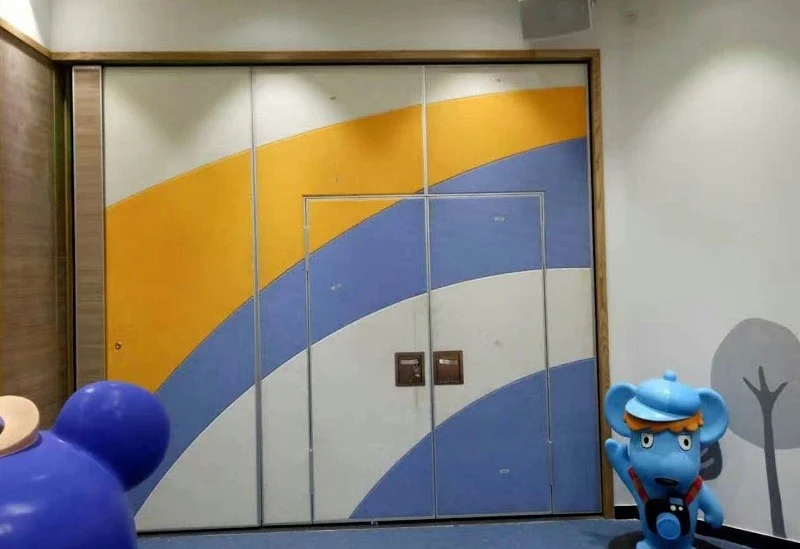
- Question: Where does the partition park? Path: Route records > Stacking position > Approved layout drawing.
- Question: Which finish was approved? Path: Panel records > Finish schedule > Approved sample reference.
- Question: Is there a pass door? Path: Panel records > Pass-door requirements > Confirmed detail.
- Question: Who confirmed the track route? Path: Project correspondence > Approved submittals > Route confirmation.
Each path should be written in plain language and tested by someone who did not assemble the file. If a new team member cannot follow the path, the index needs revision.
Index Track, Stack and Panel Documentation Separately
Review focus: movable partition wall.
Track, stack and panel records have different review cycles. Track documentation may be needed when checking the overhead route. Stack documentation may be needed when the room layout changes. Panel documentation may be needed when a finish or pass-door question arises. Indexing them separately prevents one urgent query from forcing a search through the entire handover package.
| Record group | Typical retrieval trigger | Index field to include |
|---|---|---|
| Route | Layout change or reconfiguration review | Drawing number and revision |
| Track | Overhead path or support question | Approved route reference |
| Stack | Parking position or clearance question | Stacking zone reference |
| Panel | Finish, pass door or panel identification | Panel ID and finish reference |
This table is a planning aid, not a substitute for project-specific documentation. Confirm the actual fields with the project team before finalising the index.
Use Consistent Naming and Metadata
Project review term: movable partition wall.
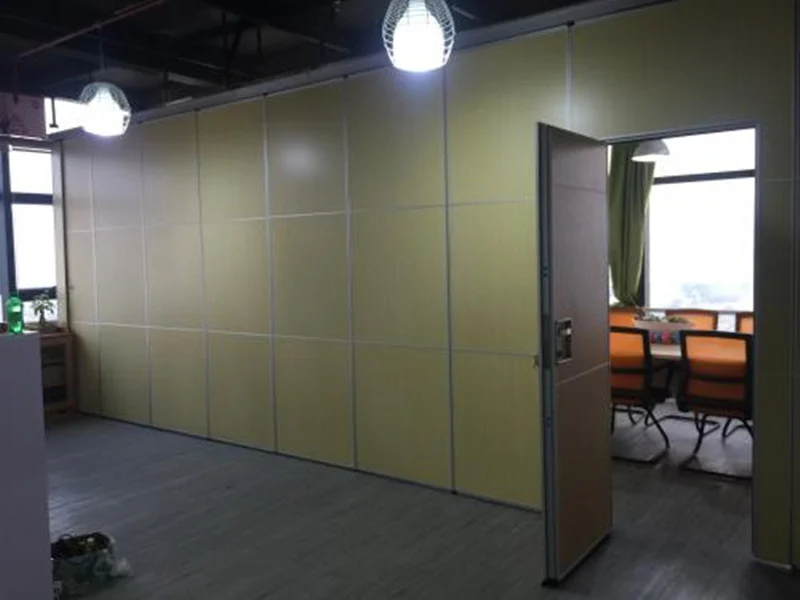
The suitability of each route and parking arrangement depends on the approved layout, circulation, ceiling interfaces and operating sequence. A file named only by date is hard to retrieve. Agree a naming convention before the first closeout document is issued.
Minimum metadata fields
- Record group, such as route, track, stack or panel.
- Location or room reference used in the project.
- Document type, such as drawing, schedule or confirmation.
- Revision or issue status.
- Date of issue and source party.
Metadata should be searchable. If the facility team uses a digital document management system, test that the fields can be filtered. If the record is paper-based, print a master index at the front of each binder.
Coordinate Handover Documentation Across Parties
Coordination scope: movable partition wall.
Closeout records often arrive from several parties. The contractor, the architect, the interior designer and the owner may each hold part of the picture. Handover Documentation coordination means agreeing who supplies which record group and when. Without that agreement, the index may have gaps that only appear after the project team has left site.
Assign a single index owner. That person checks incoming documents against the agreed scope, confirms that route, stack and panel records are present, and updates the retrieval paths. The index owner does not need to be a technical specialist, but should know who to ask when a document is missing or unclear.
Evidence Boundaries for Closeout Records
Closeout records should describe what was confirmed for the project, not what might be assumed from a photograph or a generic specification. Visible references can support layout discussion but do not verify hidden construction or performance. A folder label does not prove that a document was approved.
Index only what the project documentation confirms. Where a requirement is project-specific, record the confirmation boundary rather than an inferred conclusion.
This is especially important for acoustic concepts.
Review and Handover Checklist
Before the closeout record is accepted, run a short review. The checklist below is a planning tool and does not replace project-specific support, acoustic or dimensional confirmation.
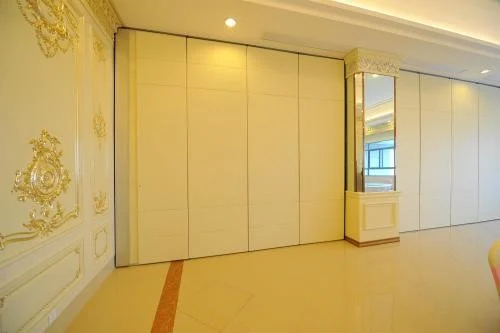
- Route, track, stack and panel records are indexed separately.
- Retrieval paths are written in plain language and tested.
- Naming and metadata fields are applied consistently.
- Pass-door requirements are recorded where applicable.
- Project-specific support and acoustic documentation is referenced, not inferred.
- A single index owner is named for future updates.
After acceptance, store the master index where the facility team can find it without specialist help. Review it after any reconfiguration or layout change.
Frequently Asked Questions
What is movable partition wall closeout record indexing?
The index should reflect the installed top-hung system and its planned movement route.
Which documents should be indexed first?
Start with route, track, stack and panel records. These groups match the main parts of a movable partition system and cover the questions facility teams ask most often.
Can a closeout index include acoustic information?
It can reference project-specific acoustic documentation.
How should pass-door requirements be recorded?
Record pass-door requirements as part of the panel records where the project includes them. Confirm the specific detail with the project team before finalising the index.
Who should own the closeout index after handover?
A named facility or owner representative should own it. That person checks incoming updates and keeps retrieval paths current after any layout change.
Does every project need the same index structure?
No. The structure should follow the project layout, the confirmed route and the agreed documentation scope. Confirm project-specific support, acoustic and dimensional requirements with the project team.
Conclusion and Next Step
A well-planned closeout index turns a handover package into a working tool for facility teams. By separating route, track, stack and panel records, writing retrieval paths in plain language and respecting evidence boundaries, project teams can reduce the time spent searching for information after completion. The framework is adaptable to different venues and room types; the named examples are illustrative and do not limit other suitable flexible-space applications.
To discuss project documentation, pass-door requirements or finish options such as laminate, melamine, fabric, leather or glass, contact EBUNGE. You can also review movable wall products and browse project resources for further planning guidance. Confirm all project-specific support, acoustic and dimensional requirements before finalising the closeout record.