
Quick project answer
Review focus: installation obstruction sweep.
A movable partition post-installation obstruction sweep is the structured walkthrough that confirms circulation routes are fully reinstated after installation or reconfiguration work concludes. It is not a performance test. It is a visible-evidence review of routes, parking positions and access paths against the coordinated layout. Because EBUNGE panels are top-hung and travel without a continuous floor track along the partition line, the floor plane can appear clear while overhead routes, stacking zones or adjacent door swings still need checking. This article gives facility teams a repeatable method.
Why a Post-Installation Obstruction Sweep Matters
Project review term: installation obstruction sweep.
Movable walls change how a room is used, so the end of installation is also the start of a new circulation pattern. The exact route, junction arrangement, continuous overhead path and parking position must be confirmed from the coordinated project drawings. None of these require a performance claim to identify. They require a drawing, a tape measure and a walkthrough.
The sweep also protects the investment in flexibility. If panels cannot reach their planned stacking position without obstruction, the room may not reconfigure as intended. Confirm project-specific support, acoustic and dimensional requirements with the responsible parties before treating any route as final.
Prepare the Evidence Pack Before Walking the Route
Coordination scope: installation obstruction sweep.
Arrive with documents, not assumptions. The sweep compares what is installed with what was coordinated. Without the layout, you cannot judge whether a route is correct or merely convenient.
- Latest coordinated layout showing straight, turning and stacking routes.
- Parking position drawing and any agreed pass-door locations.
- Finish schedule for laminate, melamine, fabric, leather, glass and other approved surfaces.
- Contact list for the installer, designer and facility owner.
- A camera and a method for recording location-tagged observations.
Confirm the Scope of the Walkthrough
Decide which rooms, corridors and shared zones are in scope. A sweep limited to the partition line may miss a route that continues into a lobby or service corridor. Record the boundary so later reviews use the same definition.
Step-by-Step Obstruction Sweep Method
Checklist focus: installation obstruction sweep.
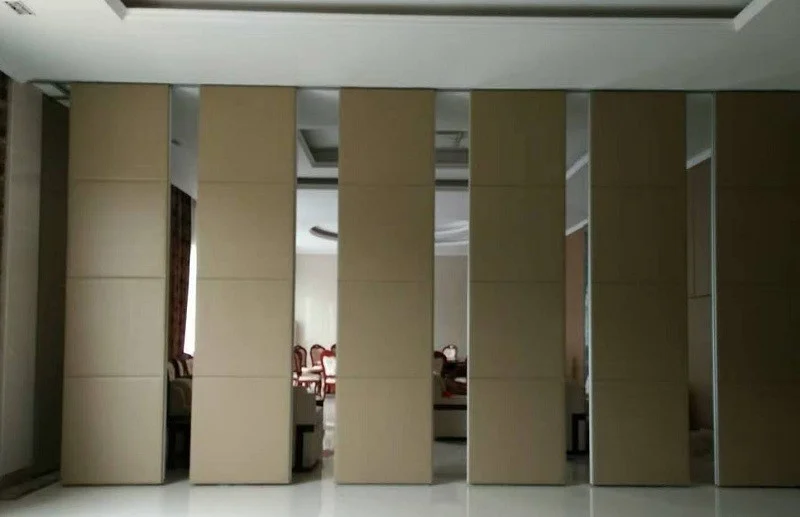
Walk the route in the same order a user would. Start where panels park, move through the opening, and finish at the far side of the reconfigured space. Repeat for each panel group and each approved configuration.
- Verify the parking position is clear and matches the coordinated drawing.
- Walk the straight route and note any fixed or loose obstruction.
- Operate any pass-door and confirm its swing does not conflict with adjacent routes.
- Check that the floor plane is clear along the partition line, remembering that panels are top-hung.
- Photograph each observation with a location reference.
- Log unresolved items for the responsible party.
What Counts as Visible Evidence
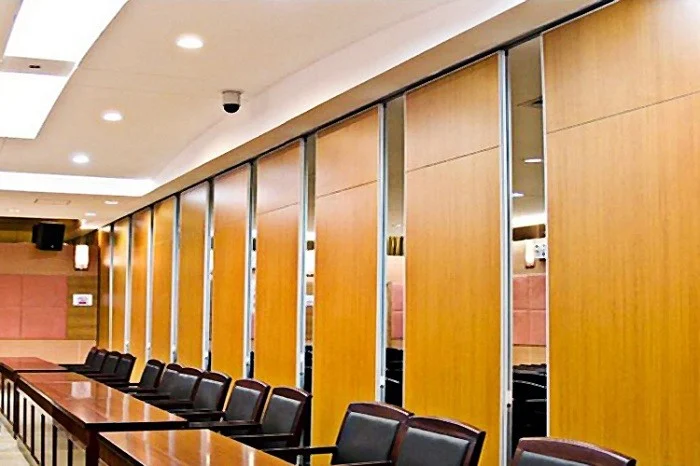
A photograph can show a blocked route or a panel parked outside its marked zone. The suitability of each route and parking arrangement depends on the approved layout, circulation, ceiling interfaces and operating sequence. Keep those questions separate and route them to the project-specific documentation.
Route Reinstatement Checklist for Facility Teams
Reinstatement means the space returns to a safe, usable circulation pattern after work ends. Use the checklist below as a compact record. Adapt it to the project and confirm any item that depends on local regulation or design intent.
| Check | Evidence to Record | Owner |
|---|---|---|
| Parking position clear | Photo and drawing reference | Facility team |
| Straight route unobstructed | Walkthrough note | Facility team |
| Turning route clear | Photo at corner | Facility team |
| Pass-door swing clear | Observation note | Installer / designer |
| Floor plane clear | Visual check | Facility team |
| Open items logged | Issue list | Project lead |
Handling Items Outside the Sweep
Some observations belong to other reviews. Visible references can support layout discussion but do not verify hidden construction or performance. If a question concerns acoustic separation, support capacity or dimensional tolerance, record it and request project-specific confirmation.
Coordination With Installers, Designers and Owners
The installer knows how panels were set; the designer knows the intended route; the owner knows how the room is used daily. A short joint walkthrough reduces disputes about whether an obstruction is temporary or permanent.
Use the movable wall product context to align vocabulary, and the resources library for general planning material. Neither replaces the coordinated layout for your project.
Documenting Decisions
Record who agreed each change, when, and against which drawing. If a route is modified on site, update the layout so the next sweep uses the current version. Confirm project-specific support, acoustic and dimensional requirements before closing any item.
Common Sweep Mistakes and How to Avoid Them
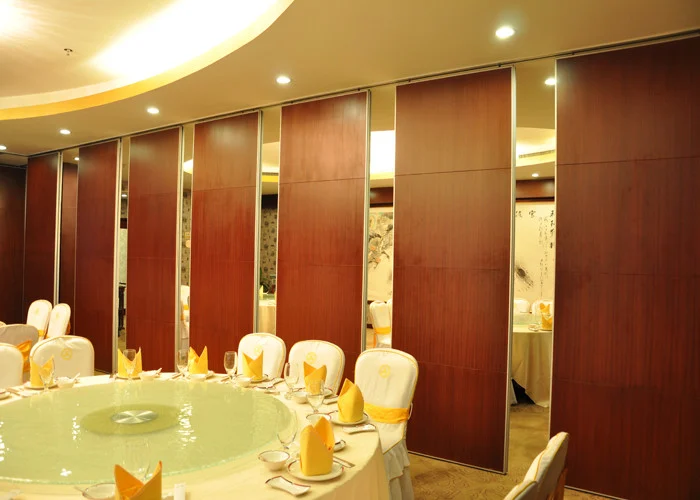
Most failures are procedural, not technical. Teams skip the parking position, assume a clear floor means a clear route, or treat a finish sample as proof of something it cannot show.
- Walking only the open configuration and ignoring stacked states.
- Ignoring overhead routes because the floor looks clear.
- Recording opinions without location references.
- Closing items without the responsible party’s confirmation.
Keep the Sweep Repeatable
Store the checklist, photos and issue log together. A repeatable record helps the next reconfiguration start from evidence rather than memory.
Frequently Asked Questions
What is a movable partition post-installation obstruction sweep?
It is a structured walkthrough that confirms circulation routes, parking positions and access paths are reinstated and free of visible obstructions after installation or reconfiguration work concludes.
Does a clear floor mean the route is fully clear?
No. EBUNGE panels are top-hung and move without a continuous floor track along the partition line, so the floor can look clear while overhead routes, turning paths or stacking zones still need review.
Can the sweep confirm acoustic performance?
No. A visual sweep cannot confirm acoustic separation.
Who should attend the walkthrough?
Include the facility team, the installer and a representative of the design or ownership side. Each brings different knowledge of intended routes and daily use.
What should be recorded for each observation?
Record the location, a photograph, the drawing reference, the responsible party and the agreed action. Avoid unsupported conclusions about performance or compliance.
How often should the sweep be repeated?
Repeat it after each installation or significant reconfiguration, and whenever the layout changes. Confirm project-specific requirements with the responsible parties.
Conclusion and Next Steps
A disciplined movable partition post-installation obstruction sweep gives facility teams a clear, evidence-bounded way to confirm that circulation routes are reinstated after work concludes. Prepare the layout, walk the routes in user order, record visible evidence, and route performance questions to the correct documentation. Confirm project-specific support, acoustic and dimensional requirements before treating any configuration as final.
To discuss pass-door requirements, project documentation or a coordinated layout review, contact the EBUNGE team.