
Quick project answer
Review focus: changeover labor pool depth.
Movable partition changeover labor pool depth is a facility operations planning decision, not a product specification. It determines whether a multi-room venue can still reconfigure rooms when one trained operator is absent. This article sets out an evidence-bounded framework for planning that depth, using maintained product facts and project-specific drawing review. It does not promise acoustic outcomes, service life or financial returns.
Why Changeover Labor Pool Depth Matters in Multi-Room Venues
Project review term: changeover labor pool depth.
A venue with several combinable rooms depends on repeated reconfiguration. Each changeover involves moving individually movable panels that are suspended from a top track, crossing the opening without a floor track, and parking at a planned stacking position. If only one person understands the sequence, an absence can stop the room from being reset.
Labor pool depth is therefore a resilience question. It asks how many trained people are available, how they are scheduled, and whether the venue can absorb a single absence without cancelling or delaying a reconfiguration. The answer depends on the venue’s operating pattern, not on a generic staffing formula.
What the Maintained Product Facts Allow Us to Plan
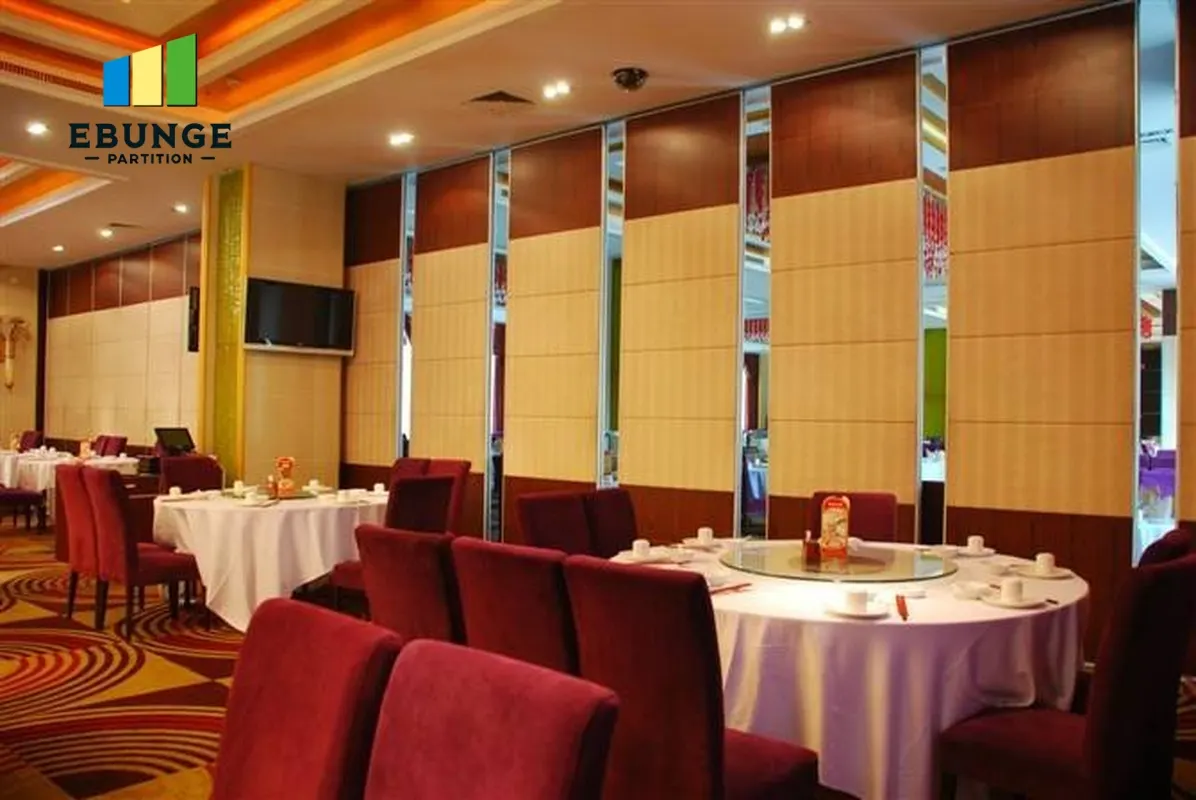
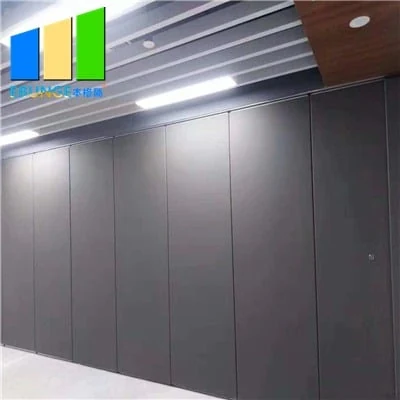
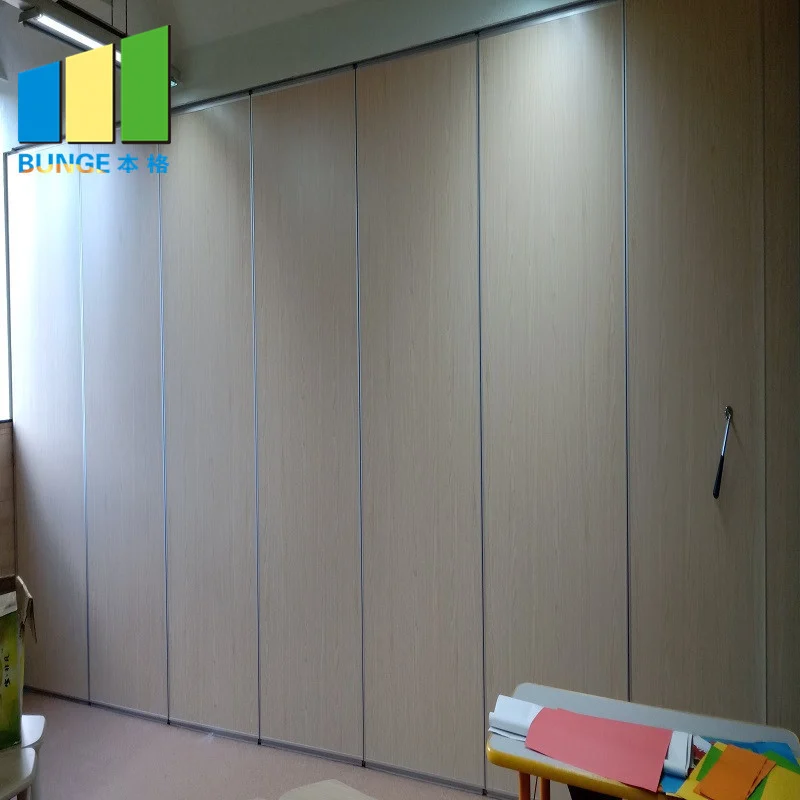
EBUNGE movable wall panels are individually movable, top-hung and clear of the floor along the partition line. Straight, turning and stacking routes are reviewed from the layout. Confirmed finish options include laminate, melamine, fabric, leather, glass and other approved surfaces. Pass-door requirements and project documentation can be discussed.
These facts support route and access planning. Visible references can support layout discussion but do not verify hidden construction or performance. Any statement beyond the maintained facts requires matching project evidence.
Evidence note: what a drawing can and cannot show
An overhead route drawing can show a proposed path and a parking position. It cannot, by itself, prove acoustic performance, support adequacy or changeover time. Those items require project-specific confirmation.
A Single-Point-of-Failure Coverage Framework
Coverage planning starts by naming every changeover task that must happen for a room to be usable. Then ask which tasks currently depend on one person. The goal is not to eliminate specialist knowledge; it is to ensure that no single absence halts reconfiguration across the venue.
- List the room combinations the venue actually uses.
- Map each combination to its panel movement and parking route.
- Identify the tasks that must be completed before the room is handed over.
- Mark every task currently held by only one trained person.
- Define a minimum coverage level for each task and each shift pattern.
- Review the plan against the layout drawings and the venue calendar.
This process produces a coverage map, not a headcount promise. The number of trained people needed is a project-specific conclusion that should be confirmed with the venue operator and the partition supplier.
Changeover Labor Pool Depth Planning Checklist
Use this checklist during early facility operations planning coordination. It keeps the discussion on observable requirements rather than assumed performance.
- Room combinations and expected frequency of changeover.
- Straight, turning and stacking routes reviewed from the layout.
- Parking position and whether compact stacking is coordinated.
- Pass-door requirements and their effect on the changeover sequence.
- Shift patterns, handover times and peak event windows.
- Which tasks are currently single-person dependent.
- Documentation available for training and reference.
- The exact overhead route and support arrangement must be confirmed by the responsible project team from coordinated drawings.
Coordinating with Contractors, Architects and Owners
Changeover planning crosses several responsibilities. The architect or interior designer defines the room strategy. The contractor coordinates the opening and the overhead route. The owner or operator defines the event calendar and staffing reality. A distributor or construction team may hold the installation and handover information.
Bring these parties together before the layout is fixed. Route decisions made late can reduce the options for parking and access. For product context, see the movable walls product page and the resources section.
Compact comparison: shallow versus deep coverage planning
| Planning approach | What it assumes | Main risk |
|---|---|---|
| Shallow coverage | One trained person is always available | A single absence can halt reconfiguration |
| Deep coverage | Multiple trained people and documented sequences | Requires more coordination and training records |
Neither approach is automatically correct. The right depth depends on the venue’s room count, event pattern and tolerance for delayed changeover.
Documentation, Training and Handover Boundaries
Project documentation can be discussed with EBUNGE, but the content of that documentation depends on the confirmed configuration. Training should be based on the actual layout, the reviewed routes and the parking arrangement. The suitability of each route and parking arrangement depends on the approved layout, circulation, ceiling interfaces and operating sequence.
Confirm project-specific acoustic requirements with the responsible acoustic consultant.
Common Planning Mistakes to Avoid
- The exact route, junction arrangement, continuous overhead path and parking position must be confirmed from the coordinated project drawings.
- Treating a visible finish as proof of performance.
- Planning parking without reviewing the full route.
- Leaving pass-door requirements until after the layout is fixed.
- Relying on one person without a documented backup.
Each mistake can turn a manageable changeover into a single point of failure. Review the layout drawings and confirm project-specific support, acoustic and dimensional requirements before finalizing the operations plan.
FAQ: Changeover Labor Pool Depth
What is movable partition changeover labor pool depth?
It is the planned number and availability of trained people who can complete a room reconfiguration. It is a facility operations planning decision, not a fixed product specification.
How do I know if my venue has a single point of failure?
Map each changeover task and mark any task that depends on one trained person. If that person is absent and the room cannot be reset, you have identified a single point of failure.
Can EBUNGE confirm the number of operators needed?
No. Operator numbers depend on the confirmed layout, routes, parking arrangement and venue procedures. These are project-specific and should be confirmed with the responsible parties.
Do movable partitions need a floor track for changeover?
EBUNGE movable wall panels are top-hung and cross the opening without a floor track. Straight, turning and stacking routes are reviewed from the layout.
What documentation should be prepared for training?
Prepare documentation based on the confirmed layout, reviewed routes and parking position. Project documentation can be discussed, but content depends on the final configuration.
How does acoustic planning relate to changeover staffing?
Acoustic requirements are separate from staffing depth. Confirm project-specific acoustic requirements with the responsible consultant.
Conclusion: Plan Coverage Before You Need It
Changeover labor pool depth is a resilience decision. Start with the room combinations, review the routes from the layout, identify single-person dependencies, and define a coverage level that fits the venue’s operating pattern. Keep every recommendation tied to maintained product facts and project-specific drawing review.
To discuss pass-door requirements, project documentation or layout review for your venue, contact EBUNGE.