
Quick answer: movable partition wall addendum acknowledgment
Review focus: movable partition wall addendum acknowledgment.
When a tender package for movable partition walls changes after issue, the risk is not only the change itself. It is the chance that one bidder prices the original scope while another prices the revised scope. Movable partition wall addendum acknowledgment receipt verification is the control step that closes that gap. It confirms, before bid opening, that every invited bidder has received, understood and formally acknowledged each addendum affecting the partition package. This article sets out a reviewer’s framework for that check, using only maintained product facts and visible evidence limits.
Why addendum acknowledgment matters in movable partition procurement
Project review term: movable partition wall addendum acknowledgment.
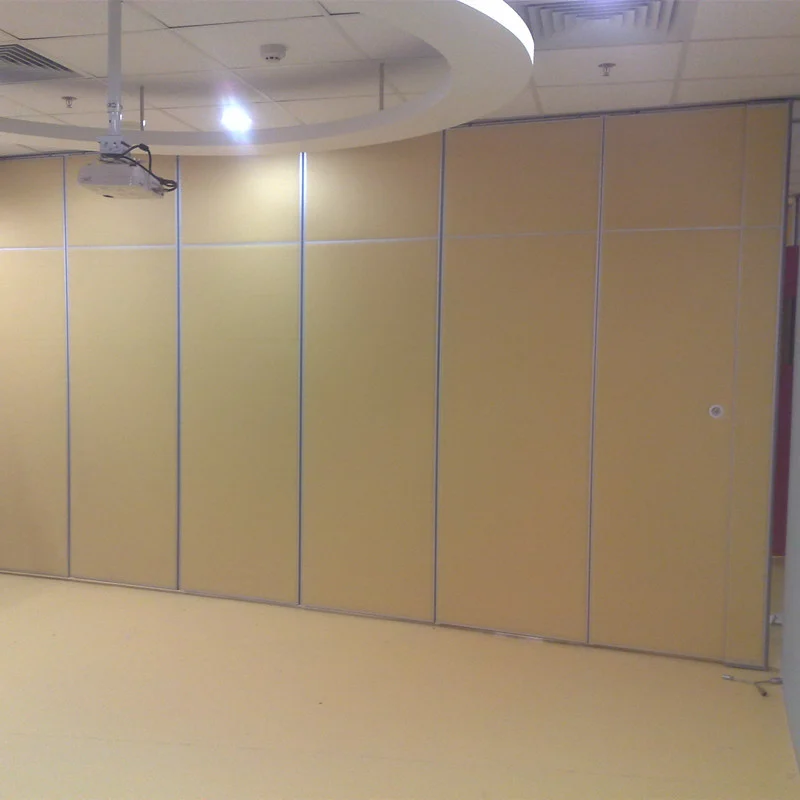
Movable partition packages are sensitive to scope changes because the product is configured around the room, the opening and the parking position. Panels are individually movable, suspended from a top track, cross the opening without a floor track, and park at a planned stacking position. Straight, turning and stacking routes are reviewed from the project layout. A late addendum that shifts a room boundary, a stacking zone or a finish schedule can therefore change what each bidder must price.
If acknowledgment is not verified, a submission may look compliant while resting on a superseded drawing. The reviewer’s task is not to judge the commercial effect of the change. It is to establish a documented link between the addendum, the bidder and the submitted bid.
A five-step verification sequence before bid opening
Coordination scope: movable partition wall addendum acknowledgment.
- Build the addendum register. List every addendum issued for the movable partition package, with its issue date, revision number and the drawing or specification sections it touches.
- Match each addendum to a receipt. For every bidder, confirm a returned acknowledgment that names the addendum and revision. A general statement of receipt is weaker than a specific reference.
- Check the acknowledgment channel. Confirm the receipt came through the channel stated in the tender instructions, such as the procurement portal or the nominated contact.
- Compare the bid against the latest revision. Check that the priced scope, finish schedule and layout references in the bid align with the acknowledged revision.
- Record exceptions before opening. If a receipt is missing or ambiguous, document the gap and follow the tender’s clarification procedure rather than assuming awareness.
What a valid acknowledgment receipt should contain
Checklist focus: movable partition wall addendum acknowledgment.
A usable receipt is specific enough to survive later review. It should identify the addendum by number and revision, name the bidder entity, carry a date, and be traceable to an authorized signatory or portal record. Where the addendum includes revised drawings, the receipt should reference those drawings rather than only the cover letter.
Reviewers should also distinguish between receipt and acceptance. Acknowledgment confirms awareness of the change; it does not automatically mean the bidder agrees with every technical or commercial consequence. That distinction keeps the verification factual and avoids unsupported conclusions about a bidder’s intent.
Scope areas most likely to be affected by a partition addendum
Review focus: movable partition wall addendum acknowledgment.
Not every addendum touches the same part of the package. The table below groups common change areas and the evidence a reviewer can reasonably check. It does not replace project-specific confirmation of support, acoustic and dimensional requirements.
| Change area | What may be affected | Reviewer check |
|---|---|---|
| Room boundary or opening width | Panel count and travel route | Bid references the acknowledged layout revision |
| Stacking position | Parking zone and route review | Receipt names the revised stacking drawing |
| Finish schedule | Laminate, melamine, fabric, leather, glass or other approved surfaces | Bid finish list matches the acknowledged schedule |
| Pass-door requirement | Access within the partition line | Receipt confirms the revised requirement was received |
| Documentation or submittal list | Project documentation deliverables | Bid submittal list reflects the acknowledged revision |

Evidence limits every reviewer should state in the record
Project review term: movable partition wall addendum acknowledgment.
A verification record should say what was checked and what remains open. It can confirm that a receipt exists, that it names a revision, and that the bid references that revision. The suitability of each route and parking arrangement depends on the approved layout, circulation, ceiling interfaces and operating sequence.
A rating is not a promise of site performance, and no receipt verification step can substitute for project-specific acoustic review.
Common gaps that weaken acknowledgment verification
- Receipts that name only the project, not the addendum number and revision.
- Acknowledgment collected verbally or outside the stated tender channel.
- Bids that reference an older drawing set while the receipt names the latest revision.
- Addenda issued after the stated clarification deadline without a documented extension.
- No single register linking addendum, bidder, receipt date and bid reference.
Each gap is a documentation issue, not proof of bad faith. The reviewer’s response is to record it and follow the tender rules, not to infer a bidder’s technical understanding.
How to document the verification outcome
A concise verification memo can carry the addendum register, a receipt matrix by bidder, and a short note on any exception. Keep the language factual: state which addenda were issued, which receipts were returned, and which bids reference the acknowledged revision. Avoid language that implies the bidder has accepted performance, cost or schedule consequences beyond the acknowledgment itself.
For teams coordinating across design and procurement, it also helps to align the verification memo with the project’s drawing review record. If a revised layout changes a turning or stacking route, the route review should be traceable to the same revision the bidder acknowledged.
Frequently asked questions

What is movable partition wall addendum acknowledgment receipt verification?
It is the process of confirming that each bidder has formally received and acknowledged every addendum affecting the movable partition wall scope before bids are opened. It links the addendum, the bidder and the submitted bid.
Does an acknowledgment receipt prove the bidder priced the change correctly?
No. A receipt confirms awareness of the issued revision. It does not prove that the bidder interpreted every technical or commercial consequence correctly, and it does not replace bid evaluation.
Which addenda should be included in the verification register?
Include every addendum that touches the movable partition package, including changes to room boundaries, opening widths, stacking positions, finish schedules, pass-door requirements and project documentation lists.
Can a reviewer verify acoustic performance from a receipt?
No. The exact route, junction arrangement, continuous overhead path and parking position must be confirmed from the coordinated project drawings. A receipt verification step confirms awareness of a document, not measured or promised site performance.
What should happen if a receipt is missing before bid opening?
Record the gap and follow the tender’s clarification or extension procedure. Do not assume awareness. The verification record should show what was checked and what remains unresolved.
How does this framework handle finish changes?
If an addendum revises the finish schedule, the receipt should name that revision and the bid finish list should match it. Confirmed finish options include laminate, melamine, fabric, leather, glass and other approved surfaces.
Conclusion: a receipt trail is a scope-control tool
Addendum acknowledgment verification is not paperwork for its own sake. It protects the integrity of the tender by showing, before opening, that every bidder is working from the same revised scope. For movable partition packages, that means the acknowledged revision should align with the layout, the stacking position, the finish schedule and any pass-door requirement the project has confirmed.
Reviewers should keep the record evidence-bounded. Confirm what the receipt shows, note what it does not show, and route technical questions to the project-specific review process. For support with movable partition scope, documentation or tender coordination, contact the EBUNGE team. You can also review the movable wall product range and the project resources for further planning context.