
Quick project answer
Review focus: changeover labor demand forecasting.
Movable partition changeover labor demand forecasting is a facility operations planning exercise, not a product performance claim. It helps multi-room venues estimate how much staff time a reconfiguration may require and how shift coverage should be arranged. The model below is deliberately evidence-bounded: it uses confirmed product facts, visible layout information and project-specific drawing review. The suitability of each route and parking arrangement depends on the approved layout, circulation, ceiling interfaces and operating sequence. For product context, see the movable walls range.
Why Changeover Labor Demand Forecasting Matters in Multi-Room Venues
Project review term: changeover labor demand forecasting.
Multi-room venues often host different event sizes on the same day. A ballroom may split into smaller meeting rooms in the morning and return to a single hall for an evening function. Each changeover consumes staff attention, coordination and time. Without a forecasting model, operations teams may overstaff quiet periods or understaff peak transitions.
The goal is not to predict exact minutes. It is to build a repeatable planning structure that links room layout, panel movement routes and shift patterns. That structure should be reviewed against project-specific drawings before it is used for scheduling.
Confirmed Product Facts That Shape the Forecasting Model
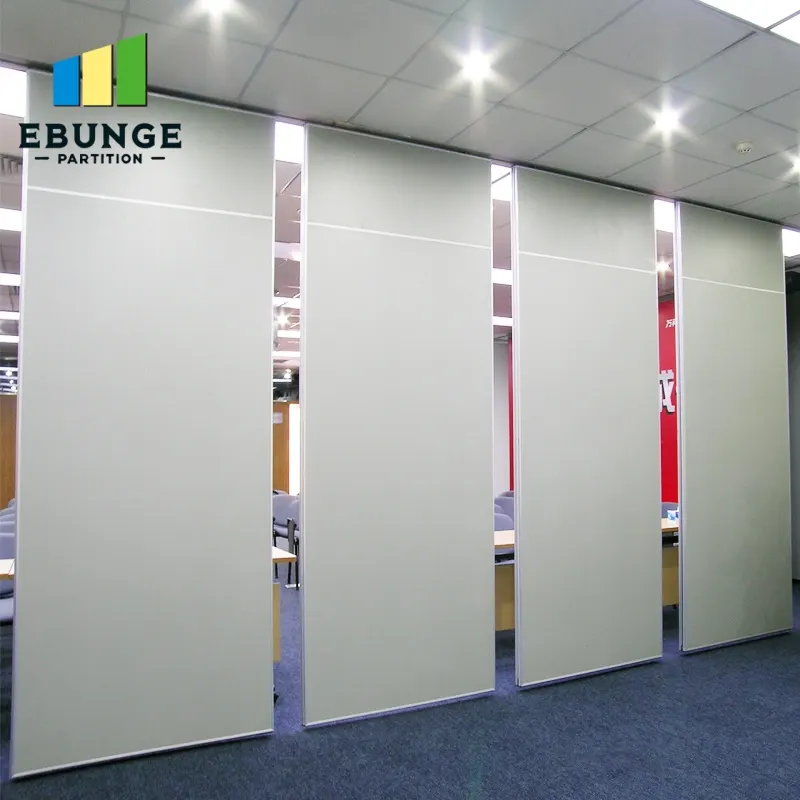
EBUNGE movable wall panels are individually movable and suspended from a top track. They cross the opening without a floor track and park at a planned stacking position. Straight, turning and stacking routes are reviewed from the layout. These facts matter because they define the physical path a changeover follows.
Finish options include laminate, melamine, fabric, leather, glass and other approved surfaces. Pass-door requirements and project documentation can be discussed. The model below uses only these confirmed points and treats all other performance questions as project-specific.
What the Model Does Not Assume
Where acoustic separation matters, confirm project-specific requirements with the relevant documentation.
A Step-by-Step Changeover Labor Demand Forecasting Process

- Map the room states. List every configuration the venue uses, from fully open to fully divided, including partial splits.
- Trace each movement route. For every state change, identify the straight, turning and stacking routes shown on the layout.
- Identify the parking position. Confirm where panels stack and whether that position interferes with adjacent room use.
- Group changeovers by shift. Assign each transition to a time window and a responsible team.
- Estimate relative effort. Rank changeovers by route complexity, not by invented time values.
- Review against drawings. Validate support, acoustic and dimensional requirements before publishing a schedule.
- Set a review cycle. Revisit the forecast after layout changes, event mix changes or operational feedback.
Shift Coverage Model for Multi-Room Operations
A shift coverage model translates changeover demand into staffing patterns. It should be built around the venue’s event calendar, not around a generic assumption about how long panels take to move. The model below uses relative demand bands rather than fixed durations.
| Demand band | Typical trigger | Coverage consideration |
|---|---|---|
| Low | One simple split or merge | Standard shift may absorb the changeover |
| Medium | Multiple splits in one shift | Stagger breaks and confirm route access |
| High | Rapid sequence of different layouts | Dedicated changeover window and pre-brief |
| Peak | Back-to-back events with different room states | Overlap shifts and verify stacking positions |
These bands are planning labels, not measured performance. They help operations managers compare one day against another and decide where to place coverage.
Evidence Boundaries Every Project Team Should Respect
Changeover forecasting can easily drift into unsupported claims. Visible references can support layout discussion but do not verify hidden construction or performance. A venue example does not prove that the same configuration will work elsewhere.
Every proposed movement path requires a continuous connected overhead route and project-specific support review. Do not infer hidden performance from a visible shape, finish or drawing.
When a statement cannot be supported by maintained product facts or project documentation, mark it as requiring confirmation.
Coordinating Forecasting With Design and Construction Teams
Forecasting is strongest when it is coordinated early. Architects and interior designers can share room layouts and intended configurations. Contractors can confirm the overhead route and support conditions. Owners can describe event patterns and peak periods. Distributors and construction teams can align delivery and installation milestones with operational readiness.
This coordination is part of facility operations planning resources and should be documented alongside the partition specification. The forecast is a living document, not a one-time calculation.
Checklist for a Project-Specific Forecasting Review

- Room states and changeover sequences are listed.
- Straight, turning and stacking routes are shown on the layout.
- Parking positions are confirmed and do not block adjacent functions.
- Pass-door requirements are discussed where relevant.
- Support, acoustic and dimensional requirements are confirmed.
- Shift coverage bands are assigned to each changeover window.
- Documentation is stored with the project record.
Frequently Asked Questions
What is movable partition changeover labor demand forecasting?
It is a planning method that estimates the relative staffing effort needed to move top-hung partition panels between room configurations. It uses layout routes, stacking positions and event schedules rather than assumed performance values.
Can this model predict exact changeover times?
No. Exact times depend on project-specific conditions that must be confirmed from drawings and documentation. The model provides relative demand bands for shift planning, not guaranteed durations.
Does the absence of a floor track affect changeover planning?
Yes. Because panels are top-hung and cross the opening without a floor track, the movement route is overhead. The layout must show a continuous connected overhead route and support conditions for review.
How should acoustic requirements be handled in the forecast?
Acoustic requirements are project-specific. Confirm the required separation and supporting documentation before making any operational assumption.
What information should be shared with the supplier?
Share room layouts, intended configurations, parking preferences, pass-door needs and any project documentation. This helps the team review straight, turning and stacking routes against the design.
When should the forecast be updated?
Update it whenever the event mix, room layout or operational priorities change. A periodic review keeps shift coverage aligned with actual venue use.
Conclusion and Next Steps
Movable partition changeover labor demand forecasting gives multi-room venues a structured way to plan shift coverage without inventing performance claims. Start with confirmed product facts, map every route, respect evidence boundaries and confirm project-specific support, acoustic and dimensional requirements. For project-specific guidance, contact the EBUNGE team.