
Quick project answer
Review focus: track zone release.
On many fit-out programmes, the movable partition track zone release ceiling grid milestone is treated as a date rather than a condition. That single assumption creates most of the rework between ceiling trades and partition installers. A movable partition is top-hung: each panel is individually movable, suspended from a top track, crosses the opening without a floor track, and parks at a planned stacking position. Because the track is overhead, its zone cannot be released until the ceiling grid above that zone is complete enough to define the support and alignment context. This article sets out a milestone-driven release sequence for contractors, architects and construction teams.
Why Calendar Dates Fail the Track Zone Release Decision
A calendar date tells you when a zone was expected to be ready. It does not tell you whether the ceiling grid is complete, whether the overhead route is continuous, or whether the support condition has been reviewed. When a track zone is released on a date alone, the partition installer may arrive to find grid sections missing, services still being repositioned, or the ceiling line not yet set out.
The result is predictable: partial installation, protection problems, and a second mobilisation. A milestone-driven release replaces the date with a verifiable condition. The condition is not a performance claim about the partition; it is a statement about the state of the ceiling grid and the coordination information available at that moment.
Define the Ceiling Grid Completion Milestones That Matter
Not every ceiling grid milestone is relevant to track zone release. The useful milestones are the ones that change what the partition installer can verify on site. Agree these with the ceiling contractor and the main contractor before the programme is fixed.
Milestone A: Grid Set-Out Confirmed
The grid lines, levels and perimeter conditions for the zone are set out and visible. The suitability of each route and parking arrangement depends on the approved layout, circulation, ceiling interfaces and operating sequence. It does not confirm support capacity or acoustic requirements.
Milestone B: Grid Installed Along the Track Route
The grid is installed along the full proposed track route, including turning and stacking routes. Because panels are suspended from a top track and cross the opening without a floor track, every proposed movement path requires a continuous connected overhead route. A gap in the grid along that route is a release blocker, not a minor snag.
Milestone C: Services Coordinated Above the Route
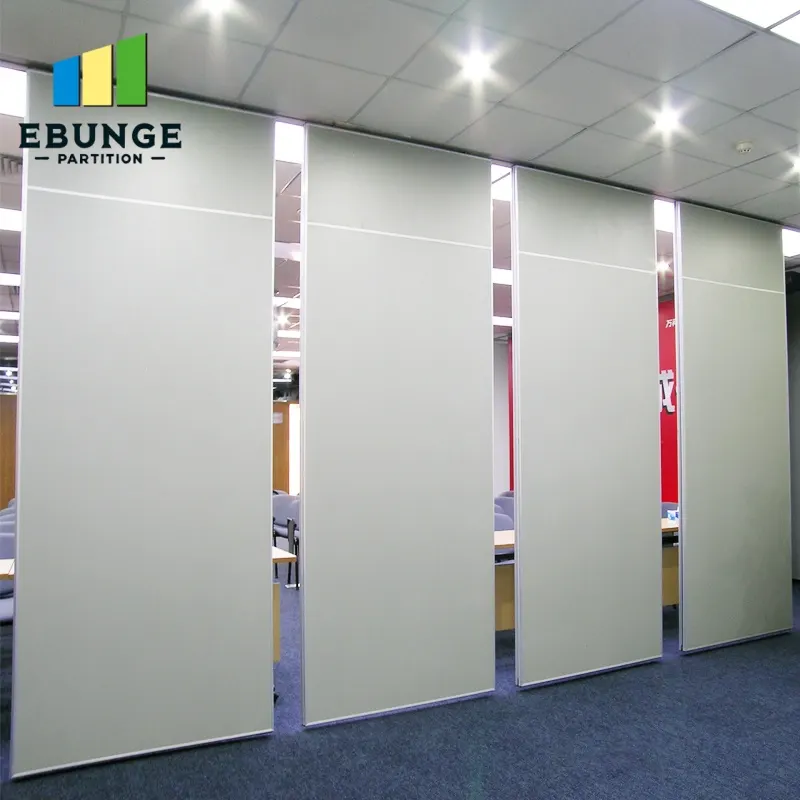
Services that occupy the same ceiling void have been coordinated so the track route is not obstructed. This is a coordination milestone, not a performance milestone. Confirm it against the latest drawings rather than assuming the first fix is final.
A Track Zone Release Sequence for Contractors
Use a numbered sequence so the release decision is repeatable across zones and floors. The sequence below is a planning method, not an engineering approval.
- The exact route, junction arrangement, continuous overhead path and parking position must be confirmed from the coordinated project drawings.
- Map each zone to the ceiling grid milestones that affect it, rather than to a single programme date.
- Confirm the overhead route is continuous and connected for every proposed movement path.
- Check that the coordinated support and dimensional requirements have been reviewed for that zone.
- Release the zone only when the mapped milestones are verified on site and recorded.
- Hold the release if any milestone is incomplete, and re-sequence rather than install partially.
Step three is where most disputes originate. That is a layout and support issue to resolve before release, not something to solve during installation.
Decision Checklist Before Releasing a Track Zone
This checklist is deliberately evidence-bounded. It asks for confirmation, not for assumed performance.
- Ceiling grid installed and visible along the full track route, including turning and stacking routes.
- Track route compared against the latest coordinated ceiling and services drawings.
- Support and dimensional requirements confirmed for the specific zone by the responsible parties.
- Parking position and stacking arrangement agreed against the customer layout.
- Pass-door requirements discussed where the layout includes them.
- Project documentation and finish selections recorded for the zone.
- Any acoustic requirement identified as project-specific and referred for confirmation.
Confirmed finish options include laminate, melamine, fabric, leather, glass and other approved surfaces.
Coordinating Trades Around the Release Milestone
Track zone release sits between ceiling completion and partition installation. That position makes it a coordination milestone as much as a construction one. The ceiling contractor needs to know which grid sections gate the release. The services trades need to know which overhead routes must remain clear. The main contractor needs a single record of what was verified.
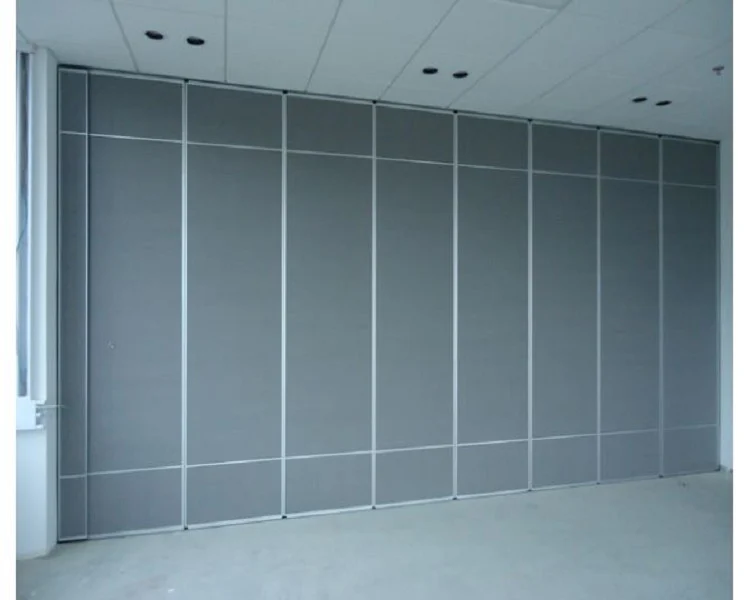
Where the programme is compressed, the temptation is to release zones early and complete the grid later. This usually moves the problem rather than solving it.
What Can and Cannot Be Confirmed at Release
If a project requires a specific acoustic outcome, that requirement should be identified during planning and confirmed against project-specific documentation. Do not infer performance from a finish, a photograph or a drawing. Equally, do not treat a generic application example as evidence of a application reference.
Documentation That Supports the Release Decision
Keep the release record simple and tied to the zone. A useful record includes the zone reference, the milestones verified, the date of verification, the drawings used, and any open items. This record supports later coordination and helps avoid re-arguing the same release decision.
Project documentation and pass-door requirements can be discussed with the supplier during planning.
Frequently Asked Questions
What is a track zone release in movable partition planning?
It is the point at which a defined zone of the overhead track route is cleared for installation. In this method, release is tied to verified ceiling grid completion milestones rather than to a calendar date.
Why tie release to ceiling grid milestones instead of programme dates?
The exact overhead route and support arrangement must be confirmed by the responsible project team from coordinated drawings. A date does not confirm that condition; a verified milestone does.

Can a track zone be released before the whole ceiling is finished?
Yes, if the zone is defined so that its own milestones are met. The grid must be installed and visible along the full track route for that zone, including turning and stacking routes, and the coordination information must be current.
Does release confirm acoustic performance?
No. Release confirms ceiling grid condition and coordination readiness. Acoustic requirements are project-specific and must be confirmed against matching evidence for the project.
What happens if the overhead route is not continuous?
The route must be resolved in the layout and support review before the zone is released.
Which finishes can be considered?
Confirmed finish options include laminate, melamine, fabric, leather, glass and other approved surfaces. Finish choice does not confirm performance, which remains project-specific.
Conclusion: Release on Evidence, Not on Optimism
A milestone-driven track zone release sequence gives contractors a defensible way to coordinate ceiling and partition work. It reduces rework because the release decision is based on what is verified on site, not on what the programme hoped would be true. It reduces trade conflict because each trade knows which condition gates the next step.
Keep every decision tied to maintained product facts, visible evidence limits and project-specific drawing review. Confirm support, acoustic and dimensional requirements for each project before release. Where the layout includes turning routes, stacking positions or pass-door requirements, raise them during planning so they can be reviewed with the drawings.
To discuss project documentation, finish options or a track zone release approach for your next fit-out, contact the EBUNGE team. You can also review the movable wall product range and the planning resources before your coordination meeting.