
Quick project answer
Review focus: movable partition wall.
A movable partition wall handover document numbering scheme is a planning framework that assigns consistent identifiers to every closeout record so facility teams can trace any track, stack or panel item back to its source drawing and manual section. Because EBUNGE movable panels are individually movable, suspended from a top track, cross the opening without a floor track and park at a planned stacking position, the closeout record set must connect layout routes, panel records and maintenance information without implying performance that has not been confirmed for the project. This article outlines a numbering and cross-reference approach for overseas project teams.
Why a numbering scheme matters for movable partition handover
Project review term: movable partition wall.
Closeout documentation for movable partitions often arrives as separate packages: as-built drawings, O&M manuals, track zone records and finish schedules. Without a shared numbering logic, a facility team looking at a track zone label may not know which drawing revision or manual section applies. A numbering scheme creates a common language across those packages.
The scheme does not replace project-specific support, acoustic or dimensional confirmation. The suitability of each route and parking arrangement depends on the approved layout, circulation, ceiling interfaces and operating sequence. For product context, see the movable wall product page.
Core document families to include
Coordination scope: movable partition wall.
Start by listing the document families that will carry numbers. A practical set for movable partition projects includes:
- As-built general arrangement drawings showing straight, turning and stacking routes.
- Track zone records identifying each overhead route segment and its support review status.
- Panel records linking each panel or panel type to its finish and location.
- O&M manual sections covering operation, parking and routine checks.
- Pass-door schedules where pass-door requirements have been discussed.
- Finish schedules for laminate, melamine, fabric, leather, glass and other approved surfaces.
Each family should have a unique prefix so a number alone signals the document type.
Designing the numbering structure
Checklist focus: movable partition wall.
Prefix and discipline codes
Use a short project code followed by a discipline or system code. For example, a track zone record might use a prefix such as TZ, while an as-built drawing uses AB. Keep prefixes stable across revisions.
Zone and level identifiers
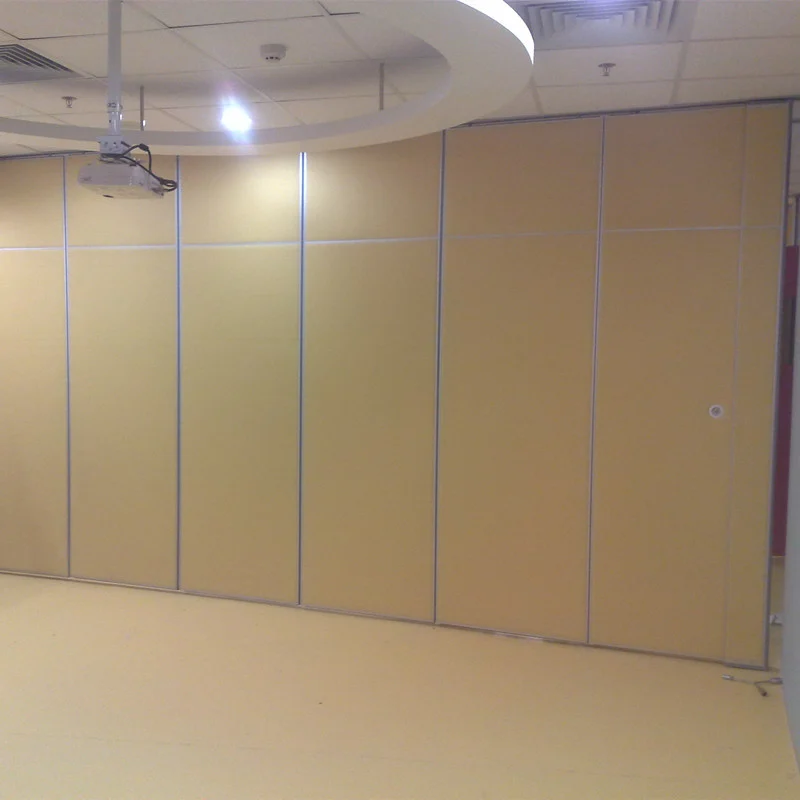
If the layout is divided into zones, embed the zone identifier in the number. The exact route, junction arrangement, continuous overhead path and parking position must be confirmed from the coordinated project drawings. Do not invent zone boundaries that are not shown on the reviewed layout.
Sequence and revision fields
Reserve a sequence number and a revision field. The sequence keeps records sortable; the revision field prevents superseded documents from being mistaken for current ones. Define who issues revisions and how they are logged.
Cross-referencing drawings, manuals and track zone records
Review focus: movable partition wall.
Cross-references turn separate documents into a traceable set. On each as-built drawing, add a reference block listing the related track zone record numbers and O&M manual section numbers. In the O&M manual, include a table that maps each section to the relevant drawing sheet and zone record.
A compact cross-reference table can look like this:
| Record type | Example number | Cross-reference target |
|---|---|---|
| As-built drawing | AB-Z01-001 | TZ-Z01-001; O&M 3.2 |
| Track zone record | TZ-Z01-001 | AB-Z01-001; O&M 3.2 |
| Panel record | PN-Z01-014 | AB-Z01-001; finish schedule FS-02 |
| O&M section | O&M 3.2 | AB-Z01-001; TZ-Z01-001 |
Use the same zone and sequence logic in every row so the table remains readable as the project grows.
Track zone records and layout routes
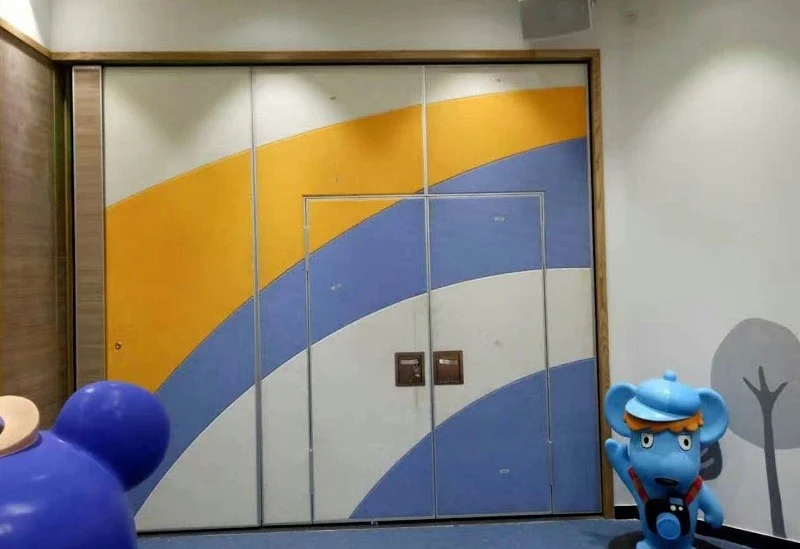
Track zone records should reflect the reviewed layout. Because panels are top-hung and cross the opening without a floor track, the overhead route must be continuous and supported according to project-specific review. A track zone record can document the route segment, its relationship to turning points and its connection to the planned stacking position.
Those items require separate project-specific confirmation. The record’s purpose is traceability, not performance certification.
Evidence boundaries for handover documentation
Handover documents should record confirmed project information. They should not infer hidden acoustic, structural, durability or commercial performance from a drawing, finish or photograph.
Any acoustic claim must be confirmed for the specific project assembly, including the surrounding structure and interface details.
Similarly, finish options such as laminate, melamine, fabric, leather and glass describe surface categories.
Step-by-step numbering workflow
- Confirm the document families required for the project closeout.
- Assign stable prefixes for drawings, track zones, panels, O&M sections and schedules.
- Define zone and level identifiers based on the reviewed layout.
- Create a master register listing every number, title, revision and cross-reference.
- Add cross-reference blocks to drawings and manual sections before issue.
- Review the register against the as-built set to catch missing or duplicate numbers.
- Hand over the register with the closeout package and explain how to use it.
This workflow is a planning aid. It does not replace the project’s own document control procedures.
Common coordination pitfalls
Teams often create numbers independently in each package, leading to duplicates or gaps. Another pitfall is using a drawing number as the only identifier for a track zone, which makes it hard to trace a zone record back to its manual section. A third is failing to update cross-references after a revision.
To reduce these risks, keep one master register and treat it as the single source of numbering truth. Review it at each documentation milestone. For additional planning resources, see the resources page.
FAQ: movable partition wall handover document numbering
What is a movable partition wall handover document numbering scheme?
It is a planning framework for assigning consistent identifiers to closeout records such as as-built drawings, O&M manuals and track zone records, so each item can be traced back to its source.
Does the numbering scheme need to match the architect’s drawing numbers?
It should align with the project’s document control conventions where possible. If the architect uses a different numbering system, define a cross-reference mapping rather than forcing a single number.
How should track zone records be numbered?
Use a dedicated prefix, a zone identifier and a sequence number. Link each track zone record to the relevant as-built drawing and O&M section in the master register.
Can the same scheme be used for straight, turning and stacking routes?
Yes. The scheme can cover all route types as long as the zone identifiers reflect the reviewed layout and each record is cross-referenced to its drawing and manual section.
What should not be included in handover documents?
Record only confirmed project information and note where project-specific confirmation is still required.
Who should maintain the master register?
The project’s document control lead or appointed coordinator should maintain it, with input from the installation and commissioning teams. The register should be reviewed before each issue.
Conclusion and next steps
A consistent numbering and cross-reference scheme helps facility teams trace any track, stack or panel record back to its source drawing and manual section. Start with the document families, assign stable prefixes, build a master register and review cross-references before handover. Confirm project-specific support, acoustic and dimensional requirements with the relevant specialists.
To discuss pass-door requirements, project documentation or finish options for your movable partition project, contact EBUNGE.