
Quick project answer
Review focus: changeover zone capacity ledger.
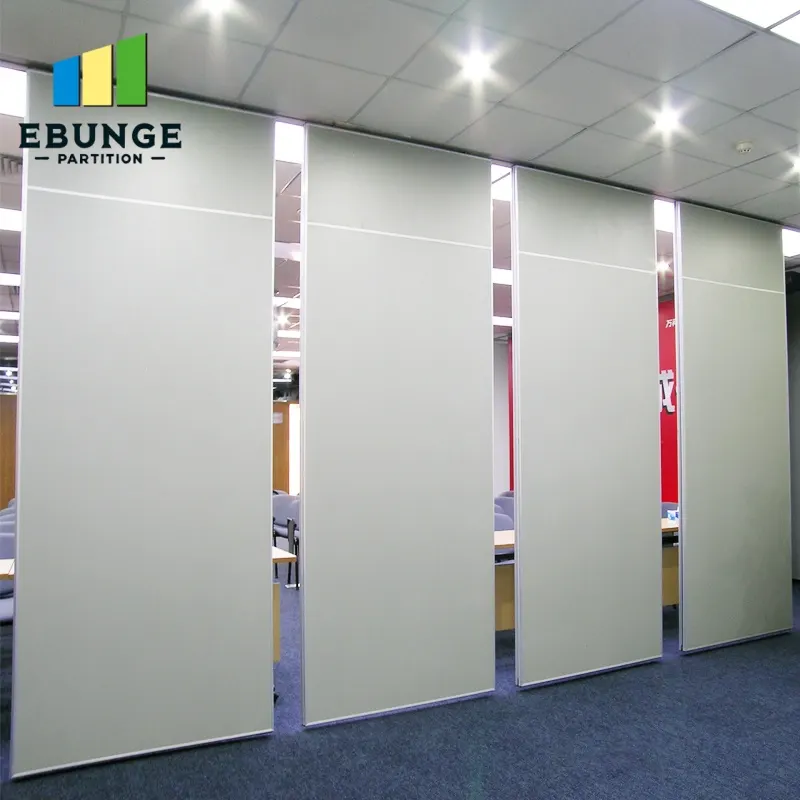
A movable partition changeover zone capacity ledger is the operating record that links each room release decision to the physical movement path of top-hung panels. EBUNGE movable wall panels are individually movable, suspended from a top track, cross the opening without a floor track, and park at a planned stacking position. Because the panels travel overhead, the ledger must describe routes, stacking space and release timing rather than assume a clear floor is the only constraint. This article sets out a planning framework for facility teams, contractors and designers who need to govern changeovers without inventing performance, cost or engineering outcomes.
Why a Changeover Zone Capacity Ledger Matters
Project review term: changeover zone capacity ledger.
Flexible rooms are often scheduled as if reconfiguration were instantaneous. In practice, a changeover depends on where panels park, how straight, turning and stacking routes are reviewed from the layout, and whether the next event can begin while panels remain in a stacking zone. A ledger converts those dependencies into a shared operating picture.
The suitability of each route and parking arrangement depends on the approved layout, circulation, ceiling interfaces and operating sequence. It is a coordination tool that records what has been confirmed, what remains open, and which room release decisions depend on project-specific review. That distinction keeps operations planning honest and prevents optimistic assumptions from becoming commitments.
What the ledger should contain
- Room or zone identifier and the intended flexible configuration.
- Planned stacking position and the route panels follow to reach it.
- Whether the route is straight, turning or a combination reviewed from the layout.
- Release priority: which room must be cleared first and why.
- Open items requiring drawing review, support confirmation or dimensional checks.
Evidence Boundaries Before You Publish a Ledger
Coordination scope: changeover zone capacity ledger.
Every entry should be traceable to maintained product facts or to project drawings. EBUNGE confirms that panels are top-hung, move without a continuous floor running track along the partition line, and park at a planned stacking position. Parking style is customized to the customer layout and project requirements and may support compact stacking when the coordinated design permits it.
Anything beyond those statements requires matching evidence. Visible references can support layout discussion but do not verify hidden construction or performance.
Evidence note for reviewers
If a ledger cell cannot be supported by a maintained fact or a reviewed drawing, mark it as open rather than filling it with an assumption. Confirm project-specific support, acoustic and dimensional requirements before relying on any entry.
Building the Room Release Priority Framework
Checklist focus: changeover zone capacity ledger.
Room release priority is the order in which spaces become available during a changeover. It should follow the movement route, not the event schedule alone. A room that sits behind a stacking zone may need to release earlier than a room closer to the entrance.
Start by mapping each configuration to its parking position. Then rank rooms by how directly they depend on that position. Rooms that share a stacking zone should be grouped so the operating team can see conflicts before they occur.
Numbered process for setting priorities
- List every room and its flexible configurations.
- Mark the planned stacking position for each configuration.
- Trace the straight, turning and stacking routes from the layout.
- Identify rooms whose release depends on the same route or stacking zone.
- Assign a release order that respects route dependencies.
- Record open items for drawing review and project-specific confirmation.
- Review the ledger with the design and operations teams before publication.
Coordinating Finishes, Pass Doors and Documentation
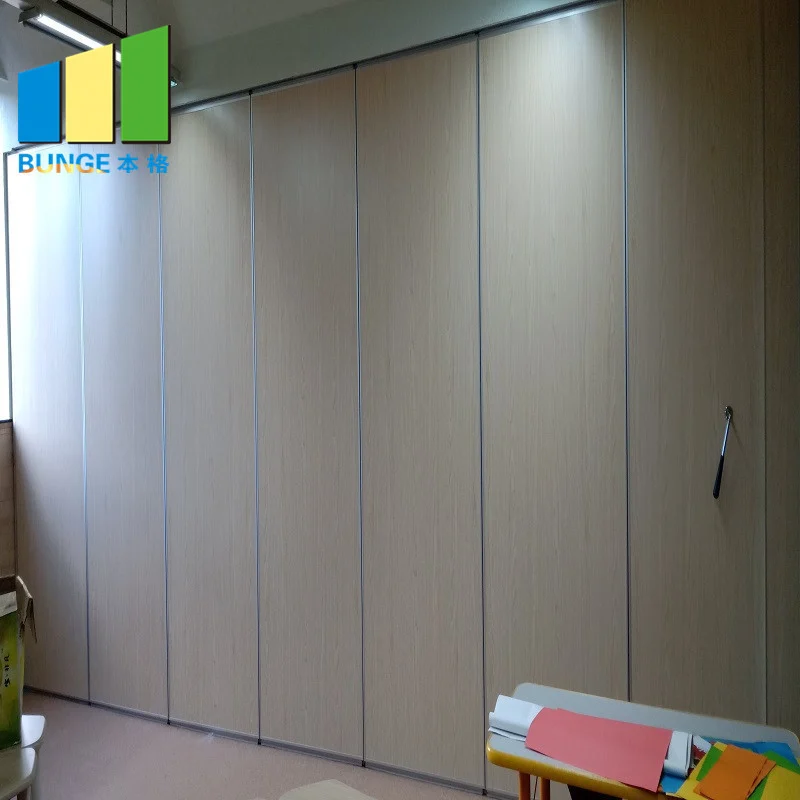
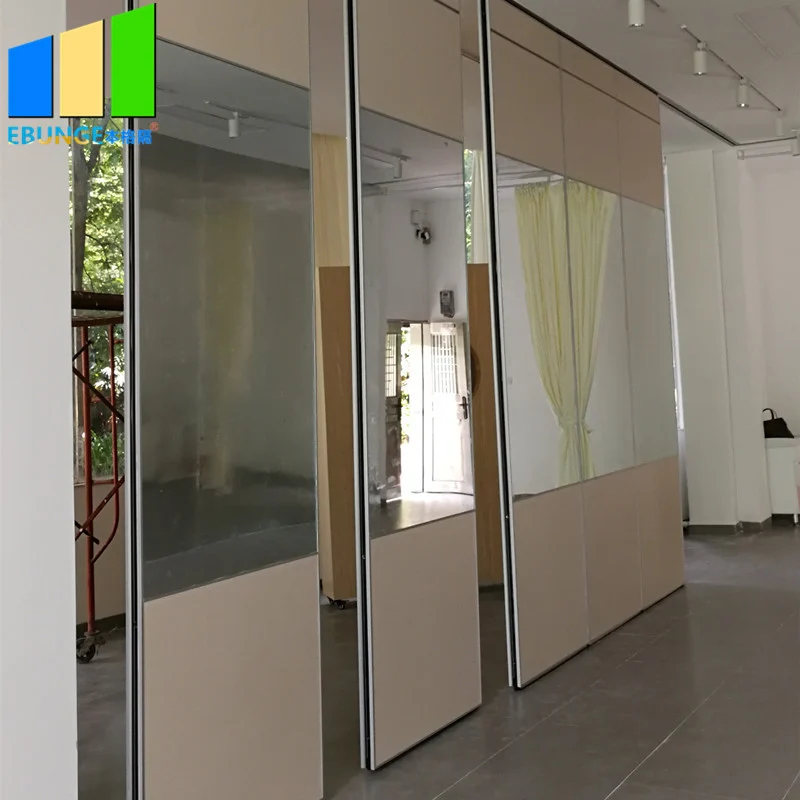
Confirmed finish options include laminate, melamine, fabric, leather, glass and other approved surfaces. Keep finish selections in a separate column from performance-related open items.
Pass-door requirements and project documentation can be discussed with the EBUNGE team. Where a pass door is proposed, record it as a coordination item and confirm dimensions, swing and route implications through the project drawings.
Compact comparison for ledger columns
| Ledger column | Purpose | Evidence status |
|---|---|---|
| Room or zone | Identifies the space being released | Project drawing |
| Stacking position | Shows where panels park | Layout review |
| Movement route | Records straight, turning and stacking paths | Layout review |
| Release priority | Sets the order of room availability | Operations decision |
| Open items | Tracks confirmations still required | Project-specific |
Acoustic Concepts Without Decibel Claims
A higher rating generally indicates more sound reduction in a tested configuration, but the rating does not describe every site condition. Seals, junctions and adjacent construction can influence real-world results.
For that reason, the ledger should record acoustic requirements as project-specific items to be confirmed, not as values inferred from a panel description. Confirm project-specific acoustic requirements with qualified specialists and the EBUNGE team before finalizing any specification.
Operating the Ledger After Handover
A ledger is most useful when it stays current. Assign an owner for each changeover zone and review the ledger before major events. When a room release priority changes, update the route and stacking notes so the next changeover starts from accurate information.
Use the movable wall product page for maintained product context and the resources section for general planning material. Neither replaces project-specific drawing review.
Decision checklist for each changeover
- Is the stacking position confirmed for this configuration?
- Has the movement route been reviewed from the layout?
- Are release priorities consistent with route dependencies?
- Are acoustic and dimensional requirements marked for confirmation?
- Are pass-door and documentation items recorded?
- Has the ledger been updated since the last changeover?
FAQ: Planning and Governing Changeover Zones
What is a movable partition changeover zone capacity ledger?
It is an operating record that links room release decisions to the movement routes and planned stacking positions of top-hung movable panels. It helps teams coordinate changeovers without assuming unsupported performance or timing.
Can the ledger guarantee a specific changeover time?
No. Changeover timing depends on project-specific layout, route review and operating arrangements. The ledger should record dependencies and open items rather than promise a duration.
How should acoustic requirements appear in the ledger?
Record them as project-specific items to be confirmed. Confirm acoustic requirements with qualified specialists.
Do panels need a floor track for the route?
EBUNGE movable wall panels are top-hung and cross the opening without a continuous floor running track along the partition line. Every proposed movement path still requires a continuous connected overhead route and project-specific support review.
Which finishes can be recorded in the ledger?
Confirmed finish options include laminate, melamine, fabric, leather, glass and other approved surfaces. Finish selection should be recorded separately from performance-related open items.
When should the ledger be reviewed?
Review it before major events, after any change to room release priorities, and whenever the layout or stacking position changes. Keep an owner responsible for each changeover zone.
Conclusion and Next Steps
A changeover zone capacity ledger turns flexible-space operations into a traceable planning record. By tying room release priorities to reviewed routes and planned stacking positions, teams can coordinate changeovers while keeping unsupported performance, engineering and commercial conclusions out of the plan.
Confirm project-specific support, acoustic and dimensional requirements before finalizing any specification. To discuss pass-door requirements, project documentation or layout review, contact the EBUNGE team.