
Quick answer: movable partition post-deployment circulation verification
Review focus: movable partition post-deployment circulation verification.
Movable partition post-deployment circulation verification is the routine of observing a reconfigured room after panels have been moved, rather than assuming the original design still matches daily use. Because EBUNGE movable wall panels are individually movable, suspended from a top track, cross the opening without a floor track, and park at a planned stacking position, the circulation picture changes each time the layout changes. Facility teams need a repeatable way to check what is actually happening on the floor.
This guide is for overseas contractors, architects, interior designers, owners, renovation companies, distributors and construction teams who need an evidence-bounded review routine. It does not replace project-specific support, acoustic or dimensional confirmation. Instead, it helps teams document visible conditions and raise questions before small circulation problems become daily friction.
Why Post-Deployment Verification Differs From Design Assumptions
Project review term: movable partition post-deployment circulation verification.
Design drawings show intended routes. Post-deployment verification records what users actually experience after panels are moved, parked and used across a working day. A route that looks clear on a plan may be narrowed by temporary furniture, service carts, queuing or storage. The verification routine focuses on observation, not on inferring hidden performance from a drawing.
Movable partitions are top-hung and cross the opening without a floor track. The exact route, junction arrangement, continuous overhead path and parking position must be confirmed from the coordinated project drawings. Teams should confirm project-specific support, acoustic and dimensional requirements with the responsible parties. The review below is about visible circulation evidence.
What the routine is not
The suitability of each route and parking arrangement depends on the approved layout, circulation, ceiling interfaces and operating sequence. It is not a substitute for approved drawings or engineering review. It does not confirm that a layout complies with local accessibility rules. Those matters require project-specific documentation and qualified review.
Prepare the Observation Walk Before Panels Move
Coordination scope: movable partition post-deployment circulation verification.
Start with the current approved layout and the planned reconfiguration. Identify the straight, turning and stacking routes that the panels will follow. Confirm that every proposed movement path has a continuous connected overhead route and that support conditions have been reviewed for the project.
Walk the room before deployment and note fixed objects, columns, door swings, service points and permanent circulation spines. Mark the planned parking position and the space around it. This pre-walk gives the team a baseline for comparison after the panels are moved.
Simple preparation checklist
- Current layout drawing and proposed reconfiguration drawing available on site.
- Planned stacking position identified and accessible for observation.
- Fixed obstructions and permanent routes noted.
- Responsible person named for recording observations.
- Project-specific support, acoustic and dimensional questions listed for confirmation.
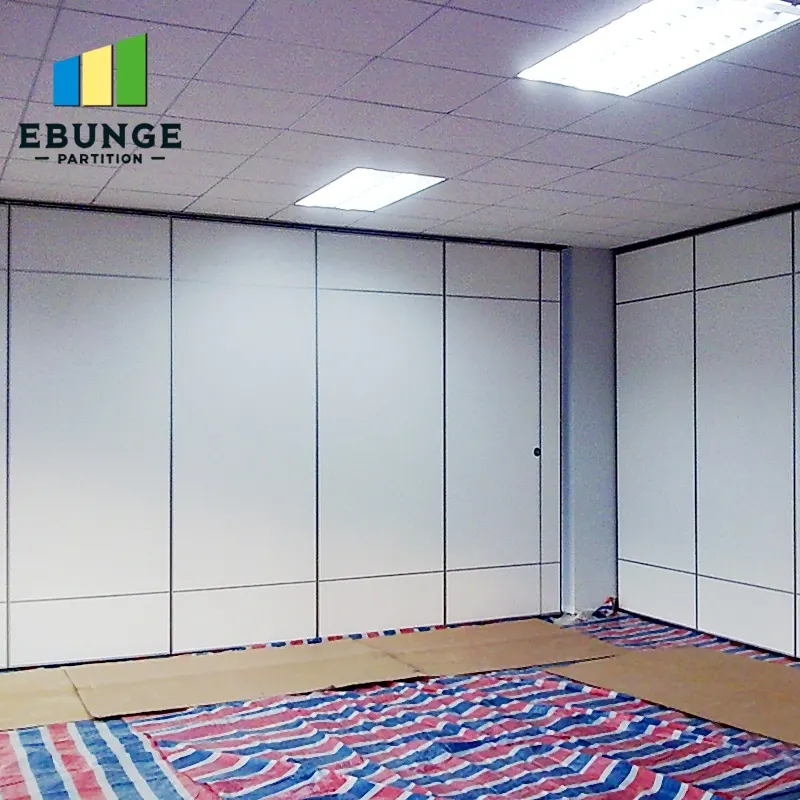
Observe the Deployed Layout in Real Use
Checklist focus: movable partition post-deployment circulation verification.
After deployment, observe the room during a normal activity period, not only when it is empty. Watch how people enter, move between zones and leave. Note where they slow down, turn back or move furniture to pass. These visible behaviours are useful evidence for the facility team.
Check the route from the main entrance to the furthest occupied point. Check secondary routes used by service staff or people with mobility aids. Check the space around the parking position, because stacked panels occupy floor area even when the opening is clear.
What to record
| Observation point | What to note | Evidence limit |
|---|---|---|
| Main approach route | Width available in daily use, temporary obstructions | Does not confirm compliance with accessibility standards |
| Turning and crossing points | Whether users can pass without moving furniture | Does not confirm structural or acoustic performance |
| Parking position | Clear space around stacked panels, access for operation | Does not confirm panel handling requirements |
| Secondary routes | Service, emergency or accessible route conditions | Requires project-specific review |
Review the Straight, Turning and Stacking Routes
Review focus: movable partition post-deployment circulation verification.
The layout review should cover three route types: straight travel across the opening, turning movements at corners or junctions, and the path into the stacking position. Each route depends on the coordinated design and the actual room conditions. A route that works when the room is empty may need adjustment when tables, chairs or equipment are in place.
For the straight route, observe whether the clear opening remains usable during events. For stacking routes, confirm that the planned parking position is reachable and that stacked panels do not block a required circulation path.

Questions to raise with the project team
- Does the deployed layout match the approved reconfiguration drawing?
- Are any temporary items regularly placed in a route that should remain clear?
- Is the parking position being used as intended, or is it becoming storage?
- Have users reported difficulty moving between zones?
- Do any observations require project-specific support, acoustic or dimensional confirmation?
Document Evidence Without Overclaiming Performance
Photographs, sketches and short notes can show visible conditions.
Confirmed finish options include laminate, melamine, fabric, leather, glass and other approved surfaces. Keep the verification record factual and separate from performance claims.
Evidence note
Record what you see: route width in use, obstructions, parking condition and user behaviour. Mark anything that needs project-specific confirmation rather than concluding it from appearance.
Coordinate With Project Documentation and Stakeholders
Share observations with the contractor, designer or facility manager responsible for the layout. If a route is consistently obstructed, the team can decide whether the issue is operational, furniture-related or a design coordination matter.
Pass-door requirements and project documentation can be discussed with the supplier or project team. Where a pass door is part of the layout, its position and swing should be observed in daily use alongside the main routes. Do not assume a pass door resolves every circulation issue.
For maintained product context, review the movable walls product page and the resources section. These pages support general planning, but project-specific configuration still requires confirmation.
Build a Repeatable Facility Routine

A repeatable routine helps facility teams compare layouts over time. Use the same observation points, the same recording format and the same review questions after each reconfiguration.
Schedule the review after major layout changes and periodically during normal operation. Keep the record with the layout drawings so future teams can see what was observed. The routine should remain simple enough to be completed consistently.
Routine steps
- Confirm the deployed layout against the approved drawing.
- Walk the main, secondary and parking routes during normal use.
- Record visible obstructions, narrowing and user adjustments.
- Flag items requiring project-specific support, acoustic or dimensional confirmation.
- Share findings with the responsible project or facility contact.
Frequently Asked Questions
What is movable partition post-deployment circulation verification?
It is an observation routine that checks whether circulation paths remain usable after movable partition panels have been deployed into a reconfigured layout. It focuses on visible conditions and user experience rather than design assumptions.
Does a clear floor mean circulation is automatically adequate?
No. EBUNGE movable partitions are top-hung and cross the opening without a floor track, but clear floor space alone does not confirm that every route is adequate. Furniture, queuing, parking position and daily use can all affect circulation.
Can this routine confirm acoustic or structural performance?
No. The routine records visible circulation conditions.
What should be recorded during the review?
Record route conditions, obstructions, parking position use and any user adjustments observed. The exact overhead route and support arrangement must be confirmed by the responsible project team from coordinated drawings.
How often should the review be repeated?
Repeat it after major layout changes and periodically during normal operation. A consistent routine helps teams identify recurring circulation issues rather than treating each one as isolated.
Who should be involved in the review?
Facility teams, contractors, designers and owners can all contribute observations. The responsible project contact should receive the findings and confirm any project-specific requirements.
Conclusion and Next Step
Movable partition post-deployment circulation verification gives facility teams a practical way to observe what happens after panels are moved. By checking straight, turning and stacking routes, documenting visible evidence and flagging project-specific questions, teams can keep circulation review grounded in real use.
To discuss pass-door requirements, project documentation or layout coordination for your next reconfiguration, contact the EBUNGE team. Confirm project-specific support, acoustic and dimensional requirements before finalising any layout.