
Quick project answer
Review focus: track envelope tolerance budget.
A movable partition track envelope tolerance budget is the shared allowance for dimensional variation at the track-to-ceiling interface. It is not a single number owned by one trade. It is a split of allowable deviation between the structure above, the ceiling system below, and the partition track that sits between them. When that split is agreed before installation, each team knows what it must deliver and what it can rely on from others. When it is left to the field, the last trade on site usually absorbs the conflict. This article explains how to allocate the budget in a way that is evidence-bounded and reviewable.
Why the Track Envelope Needs a Shared Budget
Project review term: track envelope tolerance budget.
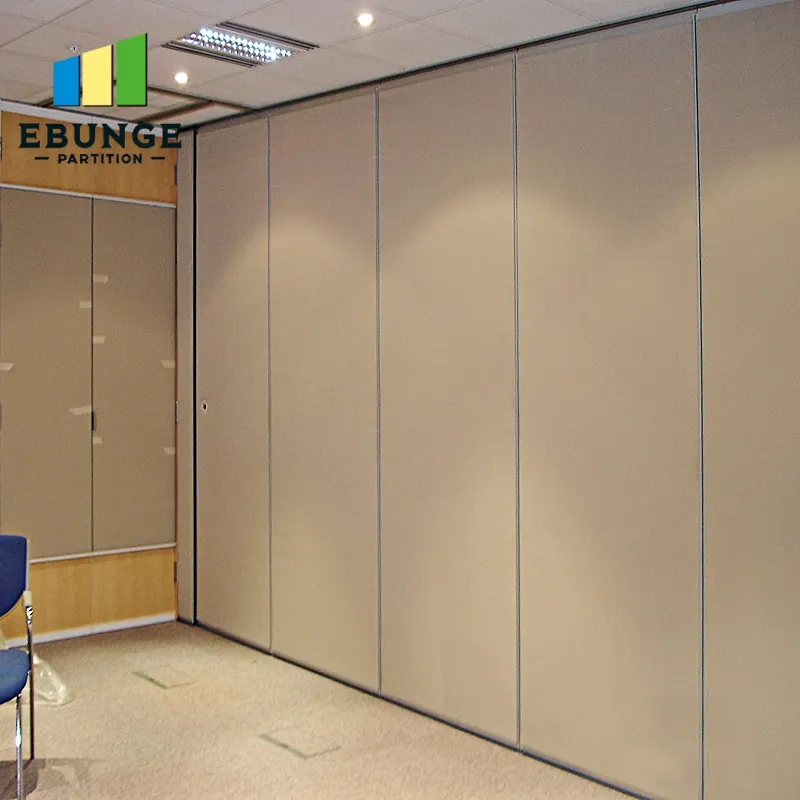
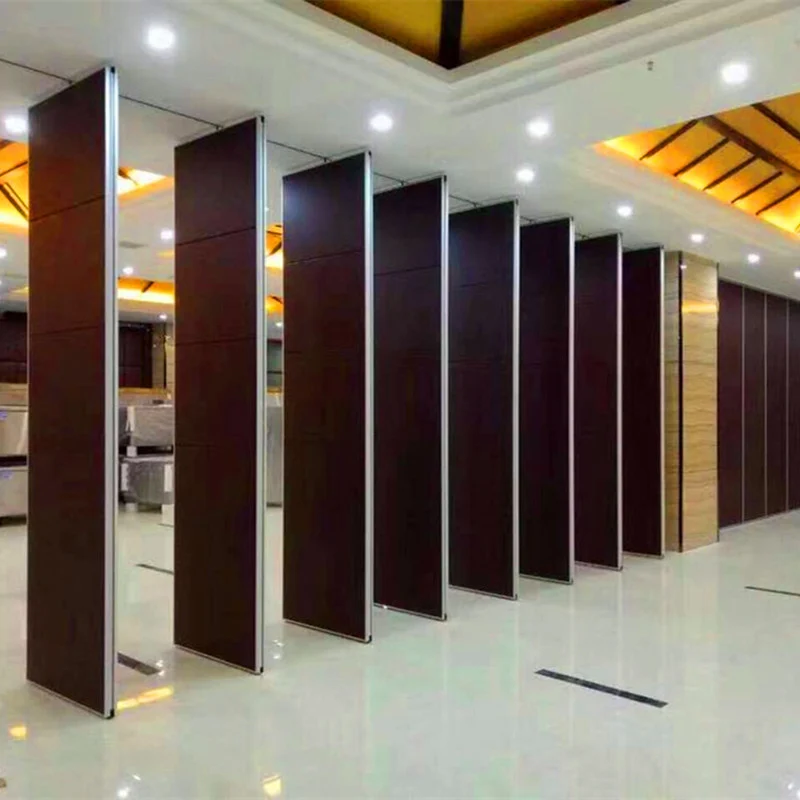
EBUNGE movable partition panels are individually movable, suspended from a top track, cross the opening without a floor track, and park at a planned stacking position. That operating concept places the entire interface demand at the ceiling. The track must follow a continuous connected overhead route, and straight, turning and stacking routes are reviewed from the layout.
Because the panels do not run on the floor, the ceiling zone is doing two jobs at once: it carries the track and it closes the visual gap above the panels. The suitability of each route and parking arrangement depends on the approved layout, circulation, ceiling interfaces and operating sequence. A shared budget makes those three sources visible instead of hidden.
Define the Envelope Before Dividing It
Coordination scope: track envelope tolerance budget.
The envelope is the three-dimensional zone reserved for the track, its supports and the ceiling closure. It has a vertical component, a horizontal component along the route, and a component across the route. Each needs its own allowance because each is affected by different trades.
Vertical allowance
Vertical variation comes from the structure soffit, the ceiling framing depth and the track fixing zone. If the ceiling plane is set without reference to the structure, the track zone can be squeezed or opened unexpectedly.
Horizontal allowance along the route
The route must remain continuous and connected; a gap in the overhead route is not a tolerance issue, it is a design issue.
Allowance across the route
Across the route, variation affects how the ceiling closure meets the track line. This is often the least discussed dimension and the one most likely to cause visible misalignment.
A Three-Trade Allocation Framework
Checklist focus: track envelope tolerance budget.
The framework below assigns responsibility without assigning unsupported numbers.
- Ceiling trade: confirm the ceiling framing depth, the plane of the finished ceiling and the openings or reinforcement zones required at the track line. The ceiling team owns the deviation of the ceiling plane.
- Partition trade: confirm the track route, the fixing interface and the stacking position. The partition team owns the deviation of the installed track relative to the agreed datum.
- Shared datum: all three teams measure from one agreed datum, not from each other’s finished work.
- Reserved zone: the envelope is shown on the coordinated ceiling drawing and protected from other services.
Evidence Notes: What Must Be Confirmed, Not Assumed
Do not infer support capacity, acoustic performance, fire performance or dimensional limits from a finish, a photograph or a generic detail. Every one of those items requires project-specific confirmation.
Where acoustic separation matters, the ceiling interface, the track detail and the surrounding construction all form part of the assembly to be reviewed.
Pass-door requirements and project documentation can also be discussed as part of the same review.
Coordination Sequence for Project Teams
The sequence matters because each step depends on the previous one. Skipping a step usually moves the problem to installation.
Step 1: Issue the layout
Share the partition layout showing straight, turning and stacking routes. The stacking position must be planned, not discovered on site.
Step 3: Allocate allowances
Agree which trade owns which deviation and record it in the coordination notes. This is the tolerance budget.
Step 4: Review before closure
Inspect the structure and ceiling framing before the ceiling is closed, while adjustment is still possible.
Common Coordination Failures and How to Avoid Them
| Failure pattern | Typical cause | Preventive action |
|---|---|---|
| Track zone too shallow | Ceiling plane set without structural review | Confirm envelope depth before ceiling framing |
| Route discontinuity | Stacking position not planned | Review all routes from the layout |
| Visible misalignment | No shared datum | Agree one datum for all trades |
| Late conflict with services | Envelope not protected | Mark the reserved zone on coordinated drawings |
Documentation and Review Boundaries
Project documentation can be discussed with the supplier, but documentation does not replace project-specific review. Support requirements, acoustic requirements and dimensional requirements must be confirmed for the actual structure, ceiling and layout. Where a condition is outside the reviewed scope, it should be raised before installation rather than resolved by assumption.
For product context, see the movable walls range. For general planning material, see the resources section. To discuss a specific project, use the contact page.
FAQ: Track Envelope Tolerance Budget Questions
What is a movable partition track envelope tolerance budget?
It defines who owns which variation before installation begins.
Why can’t one trade simply absorb all the tolerance?
Because the interface is shared. If one trade absorbs everything, the result is either a squeezed track zone or a visible ceiling misalignment. A shared budget makes the risk visible early.
Do movable partitions need a floor track?
No. EBUNGE movable partition panels are top-hung and move without a continuous floor running track or floor hardware along the partition line. The interface demand is at the ceiling.
Can the stacking position be changed later?
Parking style is customized to the customer layout and project requirements. A change to the stacking position affects the route and the envelope, so it should be reviewed before installation.
Does a finish choice affect the tolerance budget?
No. Finish options such as laminate, melamine, fabric, leather, glass and other approved surfaces are separate from dimensional coordination.
What should be confirmed before ceiling closure?
These are project-specific and must be verified against the actual drawings and site conditions.
Conclusion: Agree the Budget Before the Ceiling Closes
A movable partition track envelope tolerance budget works when it is written down, drawn on the coordinated ceiling plan and reviewed before the ceiling is closed. The operating concept is simple: panels are individually movable, suspended from a top track, cross the opening without a floor track, and park at a planned stacking position. The coordination effort is what keeps that concept achievable on site.
Confirm project-specific support, acoustic and dimensional requirements with the project team and the partition supplier before work proceeds. To discuss a specific layout, route or interface condition, contact EBUNGE.