
Quick project answer
Review focus: drawing markup round trip.
An architect coordination drawing markup round trip is the disciplined exchange of marked-up drawings, comments and responses between the design team, the contractor and the movable partition supplier. On overseas projects, the round trip often crosses time zones, languages and document platforms. Without a clear framework, comments lose their owner, revisions lose their reason, and the same question returns in a later issue. This article sets out a practical, evidence-bounded workflow for keeping the round trip traceable from first markup to issued-for-construction set.
Why the Drawing Markup Round Trip Breaks Down on Partition Projects
Project review term: drawing markup round trip.
Movable partition coordination touches architecture, structure, ceiling design, finishes and operations. Each discipline may mark up the same plan for different reasons. The suitability of each route and parking arrangement depends on the approved layout, circulation, ceiling interfaces and operating sequence. When the comment has no attribution, the response may answer the wrong question.
The round trip also fails when drawings imply performance that has not been confirmed. A line on a plan shows a route, not a support condition. A finish tag shows a surface option, not a cleaning or acoustic outcome. The framework below keeps those boundaries visible.
Define the Round-Trip Roles Before the First Markup
Coordination scope: drawing markup round trip.
Before any drawing is marked up, agree who issues, who comments and who closes each item. A simple role map prevents the same comment being answered twice or not at all.
- Originator: the party that raises the markup item and owns the question.
- Reviewer: the party that must respond, such as the architect, contractor or supplier.
- Closer: the single person who confirms the item is resolved and records the decision.
- Document controller: the person who controls revision numbers, issue dates and distribution.
For movable partitions, the supplier is usually a reviewer on route, parking and interface questions, while the architect remains the closer on design intent. Confirm this split in writing at kickoff.
A Numbered Process for the Markup Round Trip
Use a repeatable sequence so every revision can be traced back to a comment and a decision.
- Issue the current architectural plan with a clear revision number and date.
- Mark up the partition line, the opening, the turning points and the intended parking position.
- Attribute every comment to one role and one question, not to a general note.
- Return the markup to the reviewer with a response deadline and a response format.
- Log each response as accepted, rejected or requiring further information.
- Reissue the drawing with the closed items shown and open items listed separately.
- Freeze the coordinated set before procurement or installation planning proceeds.
This sequence keeps the round trip finite. Without a freeze point, comments continue after the drawing has effectively been built.
Comment Attribution: The Core Discipline of the Round Trip
Comment attribution means every markup item carries an owner, a reason and a required action. A comment such as “check partition” is not attributable. A comment such as “confirm stacking position against column grid and ceiling zone” can be assigned and closed.
Separate design intent from coordination questions
Design intent comments belong to the architect. Coordination questions about route, parking and interfaces belong to the project team and supplier. Mixing them in one comment thread is a common source of delay.
Use a status field, not a colour alone
Colour markup is useful visually but weak as a record. Pair every colour with a status field such as open, answered, closed or superseded. This makes the round trip auditable even when drawings are printed in black and white.
Route, Turning and Stacking Review in the Drawing Set
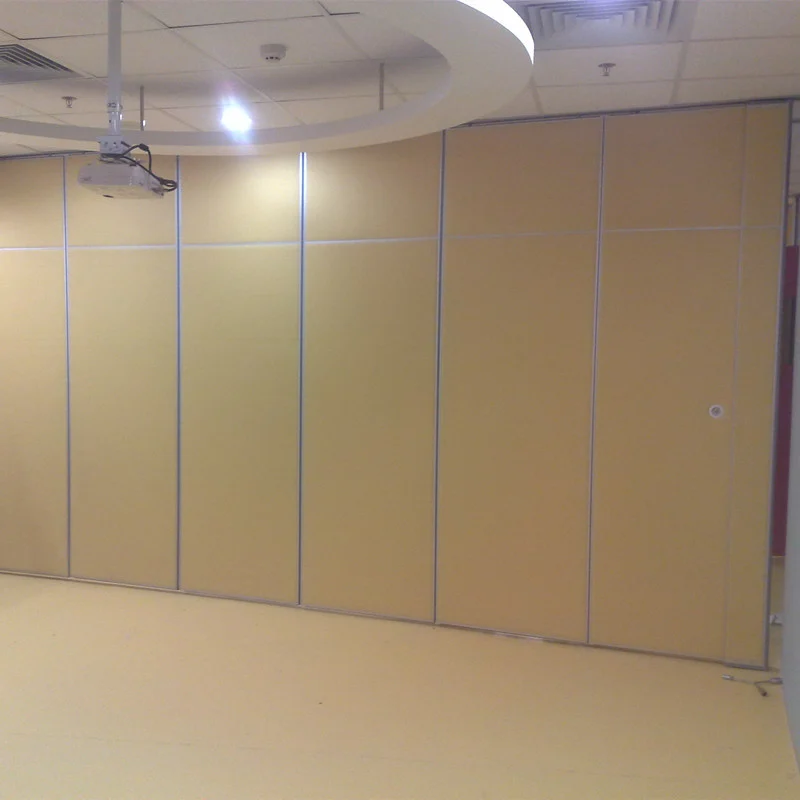
Movable wall panels are individually movable, suspended from a top track, cross the opening without a floor track and park at a planned stacking position. The drawing must therefore show a continuous connected overhead route, not a series of disconnected lines.
Review straight runs, turning points and stacking routes together. The layout review should identify where the route is supported and where the parking position sits. The exact overhead route and support arrangement must be confirmed by the responsible project team from coordinated drawings.
Evidence note: a visible route on a plan confirms intended movement only. It does not confirm support, acoustic performance, fire performance or dimensional fit. Those items require separate project-specific review and matching documentation.
Finish, Pass-Door and Documentation Comments
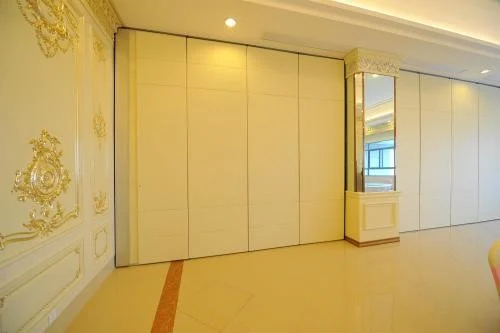
Confirmed finish options include laminate, melamine, fabric, leather, glass and other approved surfaces. When a finish is marked up, the comment should state the surface family and the area, not an assumed performance outcome. A finish tag is not evidence of acoustic, durability or cleaning performance.
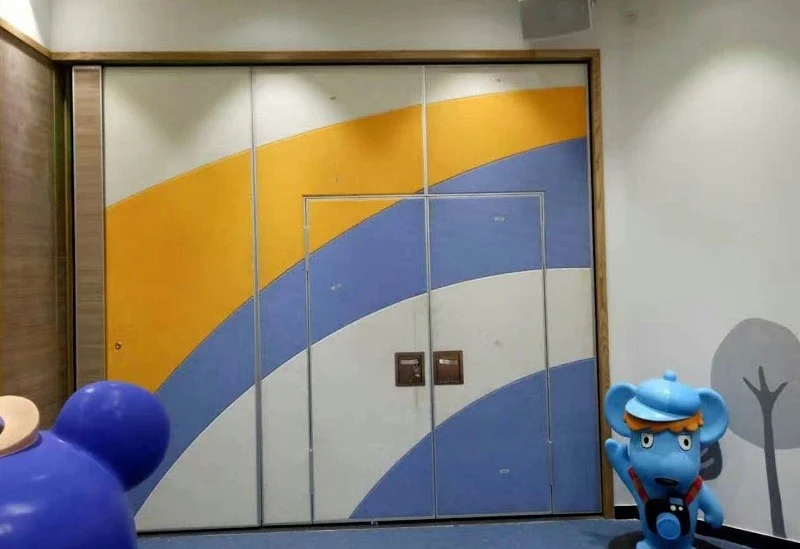
Pass-door requirements should be raised early because they affect panel layout and route planning. Project documentation can be discussed with the supplier so that the coordinated set reflects the agreed scope. Keep documentation comments separate from design comments so each can be closed by the right party.
Evidence Boundaries for Acoustic and Performance Comments
Visible references can support layout discussion but do not verify hidden construction or performance.
If the evidence is not present in the coordinated set, the comment should remain open rather than being closed by assumption.
Common Round-Trip Failure Modes and How to Avoid Them
| Failure mode | What it looks like | Practical countermeasure |
|---|---|---|
| Unattributed comment | “Please advise” with no owner | Assign one role and one question per item |
| Route gap | Disconnected lines at a turn | Require a continuous connected overhead route on the plan |
| Assumed performance | Acoustic or structural outcome inferred from a tag | Keep the item open until matching evidence is provided |
| Late pass-door request | Door added after layout freeze | Raise pass-door requirements during early markup |
FAQ: Architect Coordination Drawing Markup Round Trip
What is an architect coordination drawing markup round trip?
It is the controlled exchange of marked-up drawings and attributed comments between the design team, contractor and supplier, ending with a coordinated set that records each decision.
Who should own each comment in the round trip?
Each comment should have one originator, one reviewer and one closer. Design intent normally stays with the architect, while route, parking and interface questions are reviewed with the supplier.
Can a drawing confirm acoustic performance?
No. A drawing shows layout intent.
Why does the partition route need a continuous overhead path?
Panels are top-hung and travel along a connected overhead route. The exact route, junction arrangement, continuous overhead path and parking position must be confirmed from the coordinated project drawings.
When should pass-door requirements be raised?
Raise them during early markup, because they affect panel layout, route planning and the coordinated drawing set.
How should finish comments be written?
State the surface family and area, such as laminate, melamine, fabric, leather or glass, without implying performance outcomes that have not been confirmed.
Conclusion and Next Step
A disciplined architect coordination drawing markup round trip keeps movable partition projects moving without inventing performance or hiding open questions.
To discuss your layout, route review or documentation requirements, contact the EBUNGE team. You can also review movable wall products and browse further project resources before your next markup cycle.