
Quick project answer
Review focus: changeover resource leveling.
Movable partition changeover resource leveling is the operations discipline of matching panel movement, room reset and event turnover demands against the people, time and space available in a facility. Visible references can support layout discussion but do not verify hidden construction or performance. It is to build a repeatable planning method that uses confirmed product facts, visible layout evidence and project-specific drawing review. This article offers a framework for staggering peak demand and leveling changeover resources without inventing performance, manpower or commercial results.
Why Changeover Resource Leveling Matters in Flexible Facilities
Project review term: changeover resource leveling.
Flexible rooms often share one set of movable panels across multiple event types. When several bookings end at the same time, the demand for changeover attention can spike. Resource leveling spreads that demand across the operating window instead of concentrating it. Peak demand staggering is the scheduling side of the same idea: adjusting start times, room release times and setup sequences so that changeover work does not collide.
The framework below is deliberately evidence-bounded. It treats the partition system as top-hung panels that move individually, cross the opening without a floor track and park at a planned stacking position. The suitability of each route and parking arrangement depends on the approved layout, circulation, ceiling interfaces and operating sequence. Every recommendation should be checked against the project layout, support conditions and the manufacturer’s confirmed documentation.
Start With the Confirmed Movement Route, Not the Event Calendar
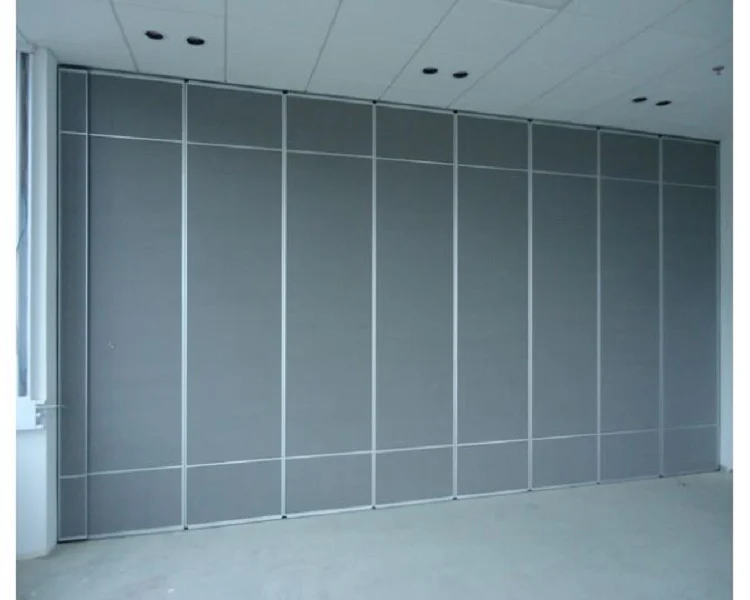
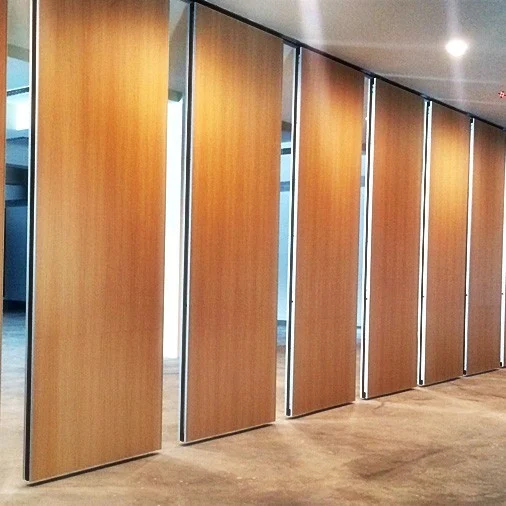
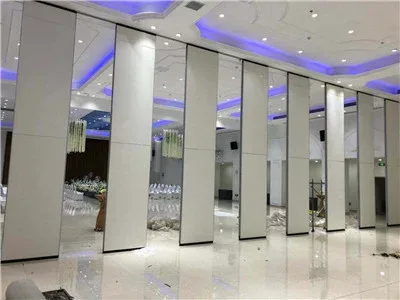
Before leveling resources, confirm how panels are expected to travel. EBUNGE movable wall panels are individually movable, suspended from a top track, cross the opening without a floor track and park at a planned stacking position. Straight, turning and stacking routes are reviewed from the layout. Panel handling and the operating sequence must be confirmed for the selected layout and project conditions.
Route review questions for the project team
- Does the proposed movement path follow a continuous connected overhead route?
- Where is the planned stacking position, and does it remain clear during events?
- Are turning points or intersections shown on the layout and reviewed for support?
- Does the route avoid blocking egress, service corridors or other booked spaces?
These questions are planning prompts, not engineering conclusions. The exact overhead route and support arrangement must be confirmed by the responsible project team from coordinated drawings. A route that looks simple on a floor plan may still need project-specific review before it is treated as operationally practical.
Build a Changeover Demand Profile Before Leveling Resources
A demand profile lists when each room needs to change state, how many panels are involved and which stacking position is required. It should be based on the actual booking pattern, not on an assumed average. Once the profile is visible, peak demand staggering becomes a scheduling conversation rather than a guess.
| Planning input | Why it matters | Evidence boundary |
|---|---|---|
| Booking overlap pattern | Shows when changeover demand clusters | Use actual or forecast bookings, not assumed averages |
| Panel quantity per room | Indicates the scale of each changeover | Confirm from the reviewed layout |
| Stacking position availability | Prevents parking conflicts | Confirm planned stacking positions and clearances |
| Route continuity | Supports realistic movement planning | Requires continuous connected overhead route review |
This table is a planning aid. It does not establish time, cost, manpower or performance outcomes. Those depend on project-specific conditions and should be confirmed with the responsible parties.
Stagger Peak Demand With a Simple Sequencing Rule Set
The rules should be written for the operations team and reviewed with the project team before they become standard practice.
- Release rooms in a planned order rather than all at once.
- Group changeovers that share the same stacking position.
- Keep the movement route clear before the changeover window begins.
- Confirm that the next booking does not conflict with the parking position.
- Record deviations so the demand profile can be updated.
These steps are operational coordination measures. They do not replace project-specific support, acoustic or dimensional confirmation. They also do not imply a fixed changeover duration. The purpose is to reduce avoidable collisions between competing room resets.
Level Resources Without Inventing Manpower or Time Claims
Resource leveling in this context means aligning changeover demand with the resources the facility actually plans to use. Because manpower, tools and timing are project-specific, this article does not prescribe numbers. Instead, it recommends a review cycle.
Evidence note: what must be confirmed per project
Confirm project-specific support, acoustic and dimensional requirements before treating any changeover plan as final. Do not infer performance, manpower, cost or timing from a drawing, finish sample or generic example.
Finish options include laminate, melamine, fabric, leather, glass and other approved surfaces. These options affect appearance and specification discussions, but they should not be used to infer acoustic, durability or maintenance outcomes. Pass-door requirements and project documentation can be discussed with the project team.
Coordinate Stakeholders Around One Changeover Plan
Facility operations planning coordination involves the owner, operations team, contractor, architect and sometimes the distributor. Each party needs the same version of the changeover plan. The plan should show room states, stacking positions, route assumptions and the booking pattern that drives demand.
When the plan changes, the changeover resource leveling specification should be updated. A specification that only describes the partition product but not the operational sequence is incomplete for facility planning. Review the movable wall product context and the planning resources as starting points, then confirm project-specific details with the responsible technical team.
FAQ: Changeover Resource Leveling and Peak Demand Staggering
What is movable partition changeover resource leveling?
It is the practice of spreading changeover demand across the operating window so that room resets do not compete for the same time, route or stacking position. It is a planning method, not a performance guarantee.
How does peak demand staggering differ from resource leveling?
Peak demand staggering adjusts when changeovers start or finish. Resource leveling looks at the overall balance between demand and available operational capacity. The two work together.
Can changeover planning rely on the floor plan alone?
No. The layout is essential, but support, acoustic and dimensional requirements still need project-specific confirmation. Route continuity and stacking positions should be reviewed with the project team.
Do movable partitions need a floor track for changeovers?
EBUNGE movable wall panels are top-hung and cross the opening without a floor track. The movement path still requires a continuous connected overhead route and project-specific support review.
What finish information can be used in planning?
Confirmed finish options include laminate, melamine, fabric, leather, glass and other approved surfaces. Finish selection should not be used to infer acoustic, durability or maintenance performance.
When should the project team be consulted?
Consult the project team before finalizing changeover sequences, stacking positions or any specification. Pass-door requirements and project documentation can be discussed directly.
Conclusion: Plan the Changeover, Confirm the Project
A changeover resource leveling framework helps facility teams plan flexible room use without overstating what the partition system can do. Start with the confirmed movement route, build a demand profile, stagger peak demand and level resources through clear sequencing rules. Keep every claim tied to maintained product facts and project-specific review.
To discuss pass-door requirements, project documentation or layout review for your next flexible-space project, contact the EBUNGE team.