
Quick answer: movable partition wall
Review focus: movable partition wall.
Movable partition wall tender consensus scoring is the structured process a procurement team uses to reconcile divergent evaluator scores before award. When one reviewer scores a bidder highly and another scores the same bidder poorly, the gap is rarely about the panels themselves. It usually reflects different assumptions about the layout, the evidence supplied, or the scope each evaluator believes is included. This framework helps overseas contractors, architects, owners and renovation teams close those gaps without inventing performance claims or forcing a false average.
Why Evaluator Scores Diverge on Movable Partition Packages
Project review term: movable partition wall.
The suitability of each route and parking arrangement depends on the approved layout, circulation, ceiling interfaces and operating sequence. Each evaluator sees only part of that picture. A commercial reviewer may focus on completeness of the offer, while an architect checks whether the proposed movement route matches the drawing. Neither score is wrong; they are answering different questions.
Before any reconciliation meeting, separate the divergence into two categories: evidence gaps and interpretation gaps. An evidence gap means the bidder did not supply a document the evaluator needed. An interpretation gap means the same document was read differently by the assigned operating team. These require different fixes, and treating them as one problem wastes time.
A Four-Step Consensus Process Before Award
Coordination scope: movable partition wall.
- Freeze the evaluation criteria. Confirm that every evaluator is scoring against the same issued criteria set. If criteria changed mid-tender, note the version each evaluator used.
- Log each divergent score with its reason. Record the specific clause, drawing or document that drove the score. Avoid general comments such as ‘weak offer’.
- Classify the reason as evidence or interpretation. Evidence gaps go back to the bidder for clarification. Interpretation gaps go to a joint drawing review.
- Re-score only the affected criteria. Do not reopen the entire evaluation. Consensus should narrow the disagreement, not restart the tender.
Drawing Review: The Most Common Source of Score Gaps

Checklist focus: movable partition wall.
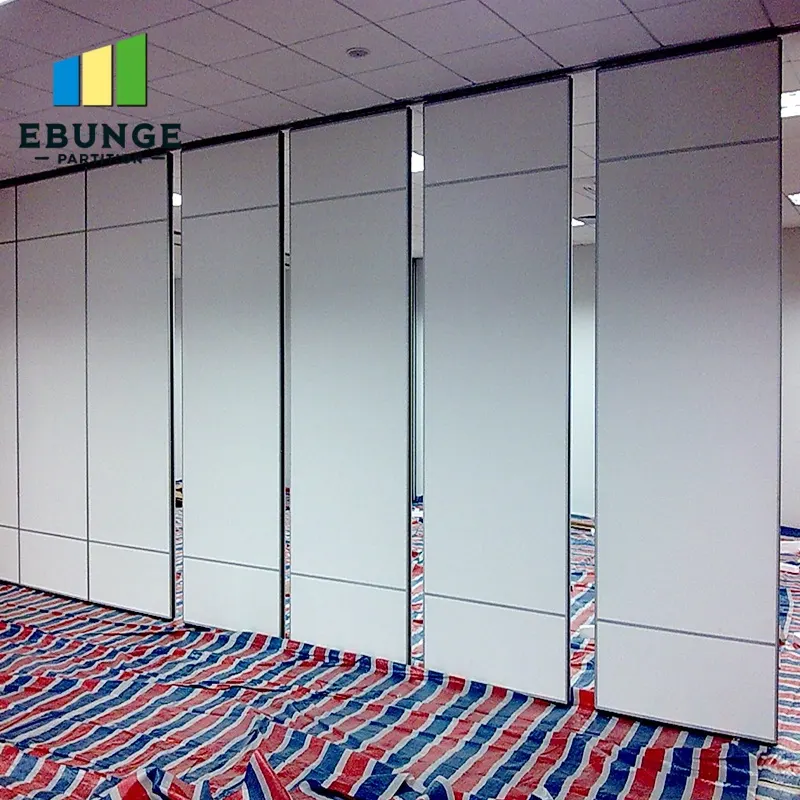
Movable partition panels are individually movable, suspended from a top track, cross the opening without a floor track, and park at a planned stacking position. Straight, turning and stacking routes are reviewed from the layout. When evaluators score movement and parking differently, the cause is often that one reviewer checked the full route and another checked only the opening.
Ask every evaluator to mark the same three things on the same drawing: the opening, the travel path and the intended parking zone. If those marks do not align, the scores cannot align either. This is a drawing coordination issue, not a product performance issue.
Evidence note: what a drawing can and cannot show
A layout drawing can show a proposed route and parking position. It cannot confirm structural support capacity, acoustic performance, finish durability or installation feasibility. Those items require separate project-specific confirmation from the responsible parties.
Reconciling Scores on Finish and Appearance
Finish scoring is subjective unless the tender defines what is being assessed. Confirmed finish options include laminate, melamine, fabric, leather, glass and other approved surfaces. Evaluators may score the same finish differently because one is judging visual consistency and another is judging specification clarity.
To reduce this gap, ask each evaluator to state whether their score reflects the finish category, the sample provided, or the documentation of that finish. A score without that context cannot be compared fairly across bidders.
Handling Pass-Door and Access Requirements in Scoring
Pass-door requirements and project documentation can be discussed with the supplier during tender clarification. If one evaluator assumes a pass door is included and another assumes it is excluded, their scores will diverge on scope rather than quality. Resolve this by listing every access requirement in the clarification log and confirming which bidder has acknowledged it in writing.
Do not treat an unanswered clarification as a negative score. Treat it as an open item that must be closed before award.
Acoustic Scoring Without Inventing Numbers
Evaluators who score acoustic criteria differently are often comparing different rating bases, different test conditions or different assumptions about the surrounding construction.
Keep acoustic scoring tied to the project’s stated requirement and the evidence the bidder actually supplied. Where evidence is missing, record the gap rather than filling it with an assumption. Confirm project-specific acoustic requirements with the responsible acoustic consultant before award.
Decision Checklist for the Consensus Meeting
- Confirm all evaluators used the same criteria version.
- List every score divergence above the agreed threshold.
- Attach a specific document reference to each divergence.
- Separate evidence gaps from interpretation gaps.
- Mark the opening, travel path and parking zone on one shared drawing.
- Confirm pass-door and access requirements in the clarification log.
- The exact overhead route and support arrangement must be confirmed by the responsible project team from coordinated drawings.
- Document the final consensus score and the reason for any remaining minority view.
Documenting the Outcome Without Overstating It
A consensus score is a procurement record, not a performance guarantee. The final documentation should state what was evaluated, what evidence was available, and what remains subject to project-specific confirmation. This protects the evaluation team if requirements change after award.
Where the team cannot reach consensus, record the split score and the reason. A documented disagreement is more useful than a forced average that hides an unresolved risk.
Frequently Asked Questions
What is movable partition wall tender consensus scoring?
It is a structured process for reconciling different evaluator scores on a movable partition tender before award. It separates evidence gaps from interpretation gaps and documents the final position.

Should we simply average divergent scores?
Averaging hides the reason for the difference.
Which drawings should evaluators review together?
At minimum, the layout showing the opening, the intended travel path and the planned parking position. Straight, turning and stacking routes are reviewed from the layout, so all three should be marked on the same drawing.
How should acoustic criteria be scored?
Score against the project’s stated requirement and the evidence the bidder supplied. Confirm project-specific acoustic requirements with the responsible consultant.
Can finish scores be made more objective?
Yes, by requiring each evaluator to state whether the score reflects the finish category, the sample, or the documentation. Confirmed options include laminate, melamine, fabric, leather, glass and other approved surfaces.
What should happen if consensus is not reached?
Record the split score, the reason and the unresolved item. Do not force agreement. Confirm the outstanding support, acoustic and dimensional requirements before award.
Conclusion and Next Step
Divergent scores on a movable partition wall package are a signal to review evidence and drawings, not a reason to restart the tender. A disciplined consensus process keeps the evaluation defensible and the award decision transparent. Every project still requires its own support, acoustic and dimensional confirmation.
To discuss pass-door requirements, project documentation or layout review for your next movable partition package, contact the EBUNGE team. You can also review the movable wall product range or browse the project resources before your consensus meeting.