
Quick answer: movable partition wall
Review focus: movable partition wall.
Movable partition wall handover sign-off authority is not a single signature at the end of a project. It is a planned allocation of document ownership and approval rights across the handover dossier. When overseas teams treat handover as a closing event rather than a coordination process, approvals stall and closeout becomes ambiguous. This framework helps contractors, architects, interior designers, owners and distributors assign who owns each document and who signs what, before the final inspection window.
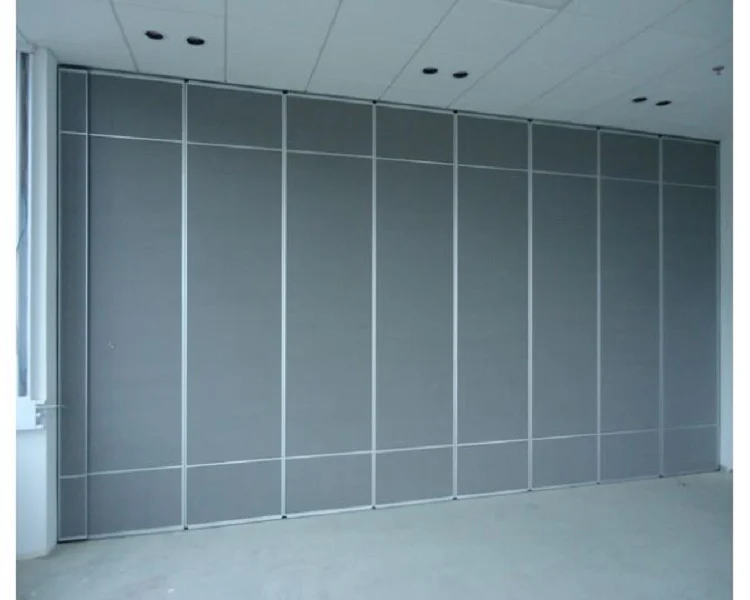
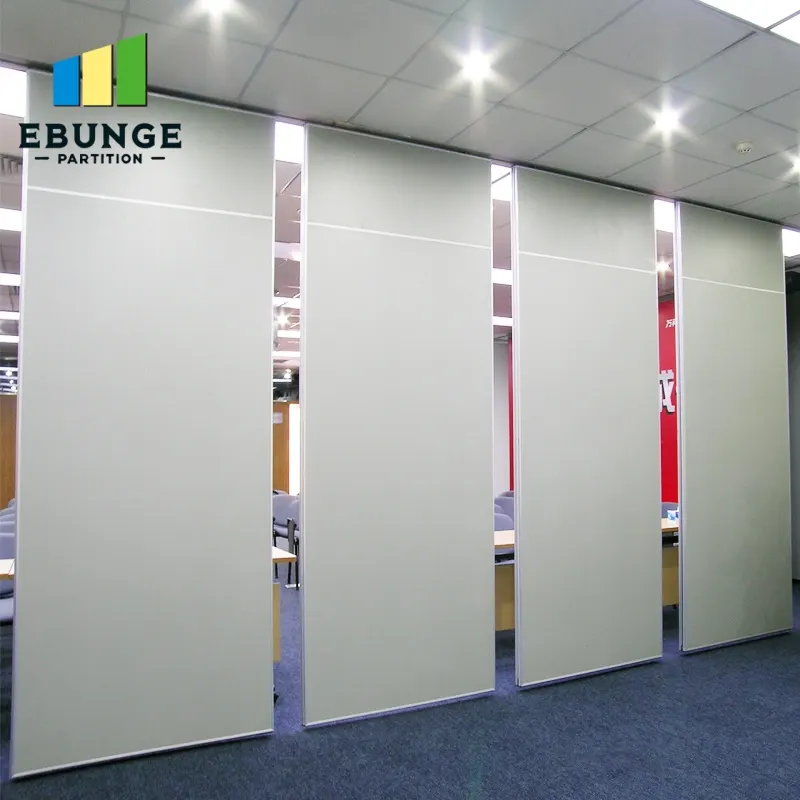
The guidance below stays within confirmed product facts: panels are individually movable, top-hung, cross the opening without a floor track, and park at a planned stacking position. Straight, turning and stacking routes are reviewed from the layout. Finish options include laminate, melamine, fabric, leather, glass and other approved surfaces. Pass-door requirements and project documentation can be discussed. Every project-specific support, acoustic and dimensional requirement still needs separate confirmation.
Why Handover Authority Needs a Matrix, Not a Checklist
Project review term: movable partition wall.
A checklist tells you which documents exist. A matrix tells you who owns each document, who reviews it, and who holds final sign-off authority. On movable partition wall projects, the dossier often spans architectural drawings, finish schedules, route reviews, pass-door coordination and installation records. Without a matrix, the same document can sit with three parties who each assume another will approve it.
The matrix also protects against evidence drift. The suitability of each route and parking arrangement depends on the approved layout, circulation, ceiling interfaces and operating sequence. A signed delivery note does not prove dimensional fit. Assigning authority by document type keeps each approval tied to the evidence that actually supports it.
Separate ownership from approval
Document ownership means the party responsible for producing, updating and circulating a document. Approval authority means the party authorized to accept it. These are rarely the same role. A contractor may own the installation record while the architect holds approval authority for dimensional coordination. Naming both prevents silent gaps.
Define the closeout trigger
Handover should not begin when installation ends. It should begin when the document set is complete enough for review. Define that trigger early so sign-off authority is exercised against a stable dossier, not a moving target.
Core Document Groups in a Movable Partition Handover Dossier
Coordination scope: movable partition wall.
Most movable partition wall handover dossiers fall into five groups. Each group needs a named owner and a named approver. The groups below are planning categories, not a claim about any specific project’s scope.
| Document group | Typical owner | Typical approval authority | Evidence boundary |
|---|---|---|---|
| Layout and route drawings | Design team or contractor | Architect or owner representative | Requires project-specific drawing review |
| Finish and surface schedule | Interior designer or supplier | Owner or architect | Finish selection does not imply performance |
| Pass-door coordination | Contractor or supplier | Architect or owner | Requirements discussed per project |
| Installation and adjustment records | Installation team | Contractor or owner representative | Requires site-specific verification |
| Closeout and warranty documents | Supplier or contractor | Owner or appointed agent | Terms confirmed per project |
Use this table as a starting point, then adapt it to the contract structure. In some projects the owner holds all approval authority. In others, an appointed agent or project manager signs on the owner’s behalf. The matrix should reflect the actual delegation, not an assumed hierarchy.
Assigning Sign-Off Authority Across Overseas Teams
Overseas projects add time zones, languages and contractual distance. Authority that is clear locally can become ambiguous across borders. The matrix should state not only who approves, but also what happens when that party is unavailable.
Name a single approval authority per document
Shared approval authority is a common source of delay. If two parties can each approve a document, neither may act. Name one approval authority per document and list others as reviewers. Reviewers provide input; the approval authority accepts or rejects.
Record delegation in writing

When an owner delegates sign-off to a project manager or agent, record the delegation in the handover plan. Verbal delegation is difficult to verify later. A written delegation line in the matrix keeps the closeout defensible.
Set response expectations
Define how long each approval authority has to respond and what happens if no response is received. This is a process decision, not a performance claim. It simply keeps the dossier moving.
A Numbered Process for Building the Authority Matrix
- List every document expected in the handover dossier, grouped by the five categories above.
- Assign one owner per document, responsible for content and circulation.
- Assign one approval authority per document, with a named backup.
- Record the evidence boundary for each document, stating what it does and does not prove.
- Confirm the closeout trigger and the review sequence.
- Circulate the draft matrix to all parties for correction before installation completes.
- Lock the matrix and use it as the sign-off tracker through handover.
This process works whether the project is a hotel ballroom, a school hall, an office renovation or a conference centre. The named venue is an example only; movable partitions can be considered wherever flexible spatial division, combination or reconfiguration is required.
Evidence Boundaries That Protect the Sign-Off
Handover sign-off authority is only meaningful if each approval is tied to the right evidence. Visible references can support layout discussion but do not verify hidden construction or performance. A route review confirms the planned path, not the support condition.
Every proposed movement path requires a continuous connected overhead route and project-specific support review. Do not treat a generic finish or application example as evidence of acoustic performance, structural capacity or a application reference.
The same discipline applies to dimensional requirements, support conditions and pass-door coordination.
Common Coordination Gaps and How to Close Them
Most handover delays trace back to a small set of gaps. Recognizing them early lets the matrix do its job.
- Unclear ownership: a document exists but no one is responsible for updating it.
- Split authority: two parties believe they can approve the same item.
- Missing evidence boundary: an approval is treated as proof of performance it does not cover.
- Late route changes: the layout changes after the route review, invalidating prior sign-off.
- Undocumented delegation: an agent signs without written authority.
Each gap has a matrix-level fix: name an owner, name one approver, state the boundary, re-trigger review after changes, and record delegation. These are process controls, not product claims.
Frequently Asked Questions
What is movable partition wall handover sign-off authority?
It is the planned allocation of document ownership and approval rights across the handover dossier. It names who produces each document and who is authorized to accept it.
Who should hold final sign-off authority?
The party named in the contract or written delegation. This is often the owner or an appointed agent, but the matrix should reflect the application reference structure.
Does a finish approval confirm acoustic performance?
No. Finish approval confirms surface selection only.
How should route drawings be approved?
Route drawings should be reviewed against the layout, including straight, turning and stacking routes. Approval confirms coordination of the planned path, not support conditions.
What happens if the approval authority is unavailable?
The matrix should name a backup and define response expectations.
Can pass-door requirements be included in the handover dossier?
Pass-door requirements and project documentation can be discussed. They should be coordinated with the layout and confirmed per project.
Conclusion and Next Step
A movable partition wall handover sign-off authority matrix turns closeout from a negotiation into a process. By assigning one owner and one approval authority per document, recording evidence boundaries, and defining the closeout trigger, overseas teams can reduce ambiguity and protect each approval. Confirm project-specific support, acoustic and dimensional requirements before finalizing the dossier.
To discuss your project documentation and handover planning, contact the EBUNGE team. You can also review movable wall systems and browse project planning resources for further coordination guidance.