
Quick answer: architect coordination query routing movable partition
Review focus: architect coordination query routing movable partition.
Architect coordination query routing movable partition decisions rarely fail because one discipline lacks information. They fail because a question reaches the wrong reviewer, or reaches the right reviewer without the drawing context needed to answer it. This framework helps project teams route design-phase queries about top-hung movable walls so that each discipline responds against maintained product facts and project-specific drawings rather than assumptions.
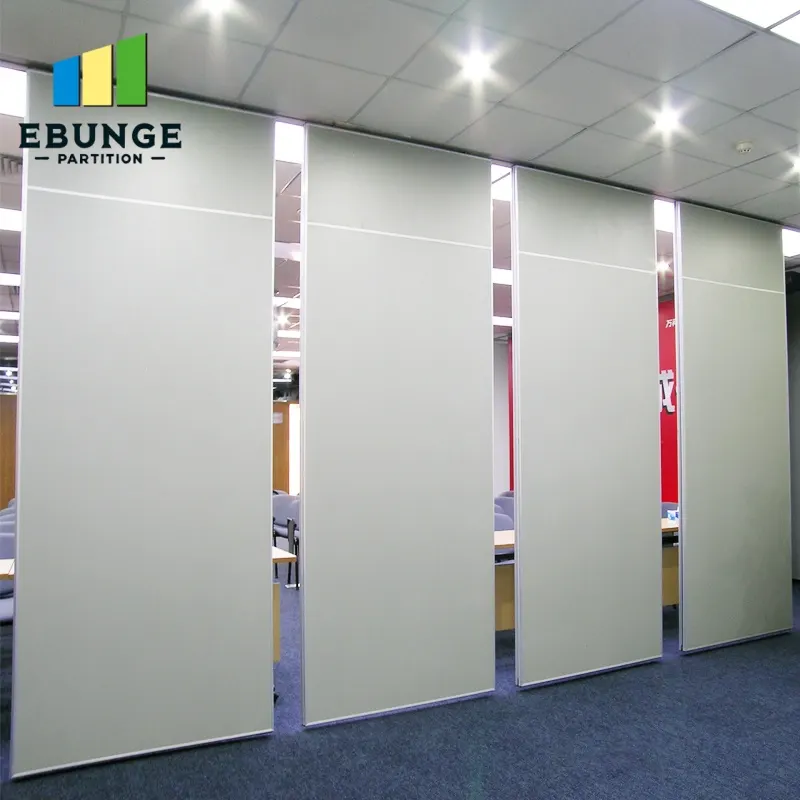
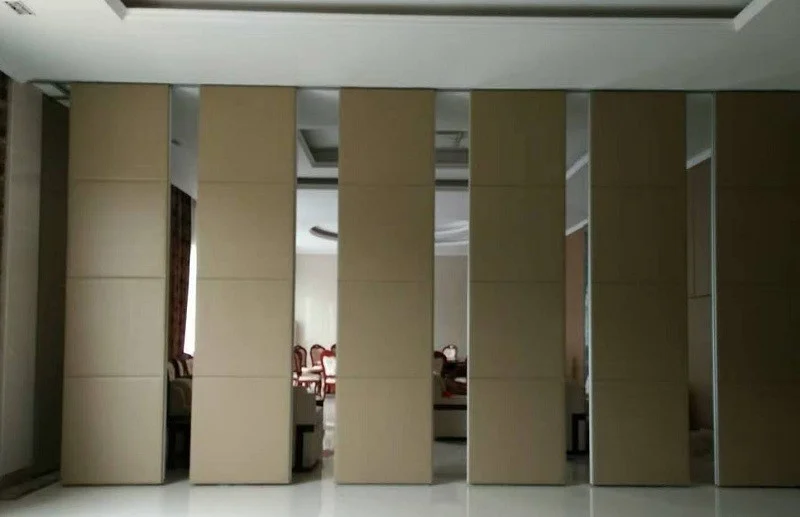
Movable wall panels are individually movable, suspended from a top track, cross the opening without a floor track, and park at a planned stacking position. Straight, turning and stacking routes are reviewed from the layout. Those four facts anchor every query below.
Why Query Routing Matters More Than Query Volume
Project review term: architect coordination query routing movable partition.
A single unresolved interface question can stall a partition package while other trades continue. Routing is therefore a design management task, not an administrative one. The goal is to send each question to the discipline that owns the constraint, with enough context for a bounded answer.
Routing also protects the project from invented certainty. Visible references can support layout discussion but do not verify hidden construction or performance. The suitability of each route and parking arrangement depends on the approved layout, circulation, ceiling interfaces and operating sequence. A query log should record what is confirmed, what is pending, and what must be verified by the project team.
Define the Query Categories Before Design Development
Coordination scope: architect coordination query routing movable partition.
Panel handling and the operating sequence must be confirmed for the selected layout and project conditions. The categories below reflect the confirmed product boundaries and the interfaces that typically surround a movable wall.
- Route and geometry: straight travel, turning points, stacking position and clearance to adjacent elements.
- Overhead support: the continuous connected route and the supporting structure above it, subject to project-specific review.
- Finish and appearance: laminate, melamine, fabric, leather, glass and other approved surfaces.
- Pass-door and access: pass-door requirements discussed with the supplier and reflected in the layout.
- Documentation: drawings, schedules and approvals needed at each design stage.
A Five-Step Routing Process for Design Teams
Checklist focus: architect coordination query routing movable partition.
- Log the query with its source drawing. Reference the plan, elevation or detail that triggered the question.
- Assign a discipline owner.
- Attach the confirmed product boundary. State only what is maintained, such as top-hung movement without a floor track.
- Request a bounded response. Ask for confirmation, a required drawing revision, or an explicit note that project-specific verification is needed.
- Close the loop in the drawing set. Record the outcome where the next reviewer will see it.
Discipline Response Framework
Review focus: architect coordination query routing movable partition.
Each discipline answers a different part of the same question. The table below shows typical ownership; it is a coordination aid, not a substitute for project-specific engineering.
| Query type | Likely lead | Response boundary |
|---|---|---|
| Travel and stacking route | Architect | Confirm layout intent; verify clearances on drawings |
| Overhead support condition | Structural engineer | Confirm support review; do not infer capacity |
| Services near the track line | MEP engineer | Coordinate routing; avoid unverified assumptions |
| Finish selection | Interior designer | Choose from approved surfaces; confirm sample approval |
| Acoustic specification | Acoustic consultant | Define STC or Rw conceptually; require project evidence |
Evidence Boundaries Every Reviewer Should Respect
Coordination improves when reviewers know what they cannot conclude. Comparative or absolute statements require matching evidence; otherwise the query should return a confirmation boundary instead of a conclusion.
The exact route, junction arrangement, continuous overhead path and parking position must be confirmed from the coordinated project drawings. Every proposed movement path requires a continuous connected overhead route and project-specific support review. Parking style is customized to the customer layout and project requirements, and may support compact stacking when the coordinated design permits it.
Drawing Review Checklist for the Partition Interface
- Is the full travel route shown from open position to stacking position?
- Are turning points and stacking zones dimensioned on the plan?
- Is the overhead route continuous and connected across the opening?
- Are pass-door locations and swing clearances coordinated?
- Are finish selections listed against approved surface options?
- Is the acoustic requirement stated as a project-specific specification rather than an assumed result?
- Are open queries logged with an owner and a due stage?
Documentation and Handover Discipline
Project documentation can be discussed with the supplier so that drawings, schedules and interface notes align with the coordinated layout. The aim is a traceable set: what was asked, who answered, which drawing changed, and what remains subject to project-specific confirmation.
Named venues are examples only. Movable partitions can be considered wherever flexible spatial division, combination or reconfiguration is required, from training rooms to conference suites and coworking areas. The venue does not change the routing logic.
Frequently Asked Questions
What information is required to route a movable partition query?
Provide the source drawing, the affected room or opening, the discipline constraint, and the confirmed product boundary. Include the travel route, stacking position and any pass-door requirement so the reviewer can respond against the layout.
Who should own acoustic queries during design?
The acoustic consultant typically leads, with the architect coordinating the specification.
Can the finish selection be confirmed from a sample alone?
No. Confirm project-specific requirements separately.
How should overhead support questions be handled?
Provide the current layout, opening dimensions, ceiling information, intended room use, and relevant project drawings for review. The exact overhead route and support arrangement must be confirmed by the responsible project team from coordinated drawings.
What should happen when a query cannot be answered yet?
Record it as open with an owner and a due design stage. State the exact confirmation boundary rather than filling the gap with an assumption, and revisit it at the next coordination review.
Where can teams review product and resource context?
Start with the movable walls product page and the resources library, then raise project-specific questions through contact.
Conclusion and Next Step
Effective architect coordination query routing for movable partitions depends on clear ownership, maintained product facts and honest evidence boundaries. Classify the query, route it to the right discipline, attach the drawing context, and close it in the document set.
To discuss pass-door requirements, finish options, layout routes or project documentation, contact the EBUNGE team and confirm support, acoustic and dimensional requirements for your specific project.