
Quick answer: movable partition wall
Review focus: movable partition wall.
A movable partition wall document retention schedule is not a filing afterthought. It is the control that keeps design intent, coordination decisions and handover evidence traceable after the building is occupied. For overseas B2B teams, the schedule should connect each document type to a responsible party, a review trigger and a retention period. This article sets out a framework you can adapt to your own project, without assuming performance, cost or engineering outcomes that have not been confirmed for your drawings.
Why a Retention Schedule Matters More Than a Document Pile
Project review term: movable partition wall.
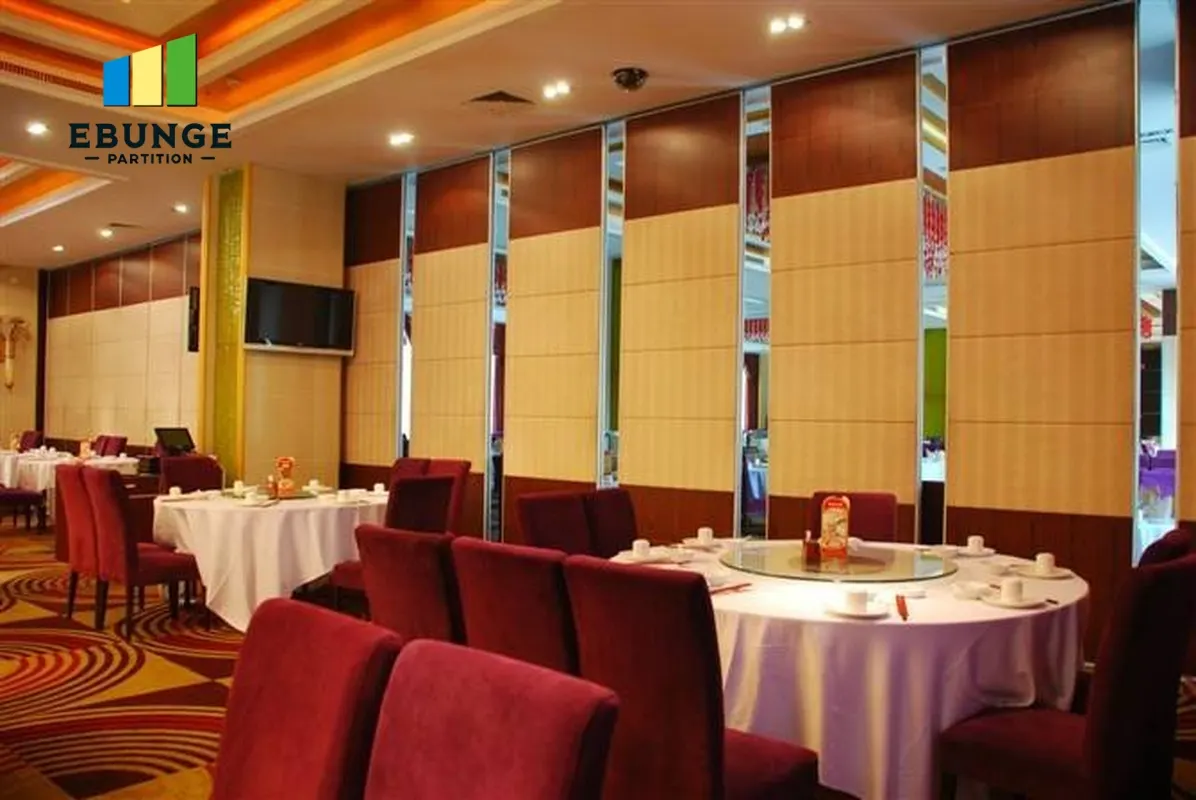
Movable partitions are top-hung systems. Panels are individually movable, suspended from a top track, cross the opening without a floor track, and park at a planned stacking position. That operating logic creates a specific documentation trail: layout drawings, route reviews, finish approvals, pass-door requirements and handover records. If those records are scattered across email threads, later renovation or facility teams cannot reconstruct what was agreed.
A retention schedule turns that trail into a managed asset. It also protects the project team when questions arise about what was specified, what was reviewed and what remains subject to project-specific confirmation.
Document Types You Should Expect to Classify
Coordination scope: movable partition wall.
Start by grouping documents by function rather than by file format. The categories below are generic and should be adjusted to your contract, local practice and project delivery method.
Design and coordination records
These include layout drawings showing straight, turning and stacking routes, opening dimensions, parking positions and interface points with adjacent construction. They also include finish schedules and approved surface selections. Confirmed finish options include laminate, melamine, fabric, leather, glass and other approved surfaces.
Technical and review records
These cover drawing revisions, review comments, request-for-information logs and any project-specific support or acoustic documentation that has been formally issued. The suitability of each route and parking arrangement depends on the approved layout, circulation, ceiling interfaces and operating sequence.
Handover and operational records
These include as-built information, pass-door requirements, maintenance and operation notes where supplied, and contact records for future coordination. They should be indexed so a facility team can find the relevant drawing without searching the whole archive.
A Retention Schedule Framework You Can Adapt
The table below is a starting structure, not a legal retention rule. Confirm periods with your contract, insurer and local authority.
| Document group | Typical owner | Review trigger | Suggested retention logic |
|---|---|---|---|
| Layout and route drawings | Design lead | Any layout change | Retain for life of installation plus agreed project period |
| Finish approvals | Interior designer or owner | Sample approval | Retain with handover pack |
| Review and RFI logs | Contractor or project manager | Each formal response | Retain until final account close |
| Handover and as-built records | Main contractor | Practical completion | Retain for operational life of the space |
How to Build the Schedule Without Overclaiming
A useful schedule is evidence-bounded. It records what was issued, who reviewed it and what remains open. Visible references can support layout discussion but do not verify hidden construction or performance.

Step 1: List document types
Work through the categories above and add any project-specific items, such as pass-door coordination or interface details with other trades.
Step 2: Assign an owner and a trigger
Every document type needs a named role and a clear event that prompts review, such as a layout revision or a finish substitution.
Step 3: Set retention periods
Use contract and local requirements. Where no rule exists, retain until the space is next reconfigured or refurbished.
Step 4: Define the handover pack
Decide which documents travel to the facility team and which remain in the project archive. Keep the index with the pack.
Coordination Points That Often Get Missed
Handover documentation coordination fails most often at interfaces. The exact route, junction arrangement, continuous overhead path and parking position must be confirmed from the coordinated project drawings. If the layout changes, the route review and support review should be repeated.
Parking strategy is another common gap. Parking style is customized to the customer layout and project requirements and may support compact stacking when the coordinated design permits it. The handover pack should show the agreed parking position and any clearance assumptions that were reviewed.
Finish changes also need a paper trail. A finish approved for one room may not have been reviewed for another. Record the approval against the correct room and drawing revision.
Evidence Notes for Reviewers
Do not infer acoustic, fire, durability, load or maintenance performance from a visible finish, photograph or drawing. Those attributes require matching project-specific evidence.
When a document is missing, record it as an open item rather than filling the gap with an assumption. Panel handling and the operating sequence must be confirmed for the selected layout and project conditions.
Frequently Asked Questions
What is a movable partition wall document retention schedule?
It is a controlled list that links each document type to an owner, a review trigger and a retention period, so handover information remains traceable after completion.
Which documents should be retained for the longest period?
Layout drawings, as-built records and handover packs are usually retained for the operational life of the space, but confirm this against your contract and local requirements.
Can a finish sample prove acoustic performance?
No. A finish sample shows surface appearance only.
How should route changes be documented?
Record the revised straight, turning and stacking routes, confirm the overhead route remains continuous and supported, and reissue the affected drawings with a revision note.
Who should own the handover pack?
Typically the main contractor or project manager owns the pack, with design and specialist input. The owner or facility team should receive an indexed copy.
Do pass-door requirements affect the schedule?
Yes. Pass-door requirements and project documentation can be discussed with the supplier and should be recorded as a distinct coordination item.
Conclusion and Next Step
A movable partition wall document retention schedule works when it is simple, owned and reviewed. Classify documents by function, assign a responsible role, set retention periods with your contract in mind, and keep the handover pack indexed. Confirm project-specific support, acoustic and dimensional requirements before treating any document as final.
To review your layout, finish options or pass-door requirements, contact the EBUNGE team. You can also explore movable wall systems and browse further project resources for planning guidance.