
Quick answer: architect acoustic assumption register movable partition
Review focus: architect acoustic assumption register movable partition.
An architect acoustic assumption register movable partition is a simple coordination tool: a living list of every acoustic, dimensional and routing assumption made during design, each tagged with its evidence status. It exists because movable walls are selected early, drawn early, and often specified before the project has confirmed the details that actually determine performance. The register keeps those gaps visible instead of letting them harden into drawings.
This workflow is written for overseas contractors, architects, interior designers, owners and renovation teams who need a defensible way to coordinate top-hung movable partitions without inventing performance. It does not replace project-specific engineering, acoustic or dimensional review. It organises what must be confirmed before those reviews can conclude anything.
Why an Assumption Register Belongs in the Design Phase
Project review term: architect acoustic assumption register movable partition.
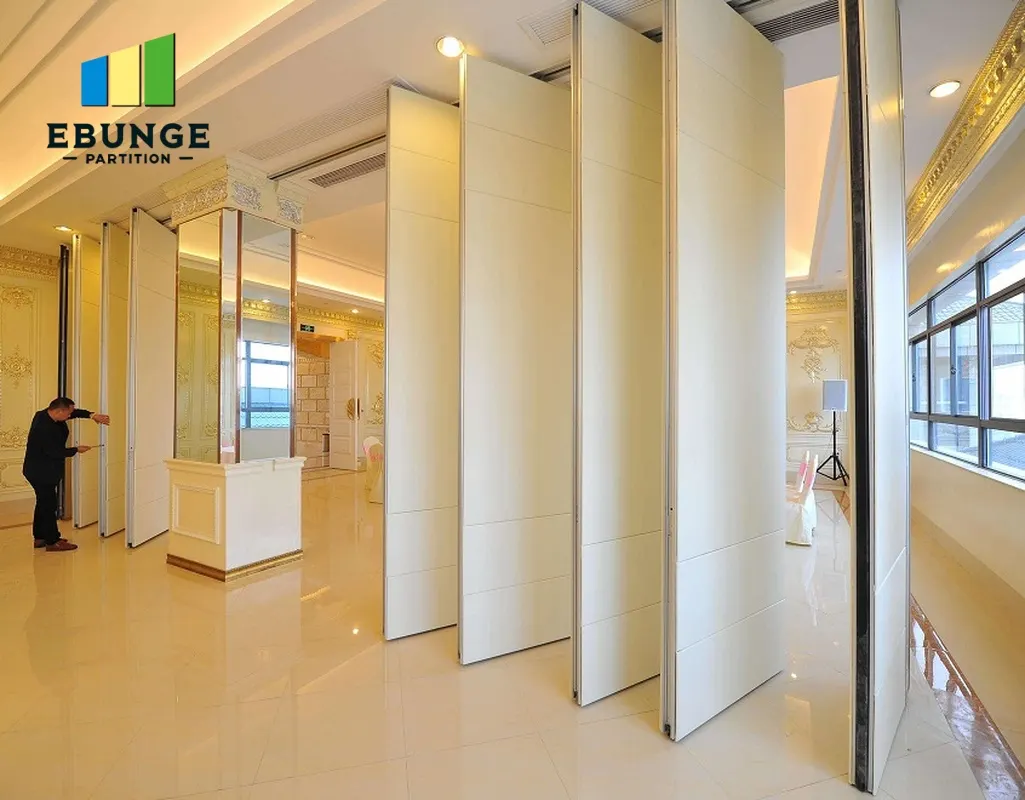
Movable partition panels are individually movable, suspended from a top track, cross the opening without a floor track, and park at a planned stacking position. That description is stable. The suitability of each route and parking arrangement depends on the approved layout, circulation, ceiling interfaces and operating sequence.
When those items live only in meeting notes, they drift. A register fixes them in one place and forces a status label on each one. The label matters more than the value, because it tells the next reviewer whether they are reading a confirmed fact or an open question.
What the register is not
It is not a performance certificate, a test report, or a substitute for drawing review. It is a coordination index. Treating it as evidence would be a category error, and that error is exactly what the register is designed to prevent.
Separating Confirmed Product Facts from Project Assumptions
Coordination scope: architect acoustic assumption register movable partition.
Start by splitting the register into two columns of thinking. On one side sit maintained product facts that apply broadly: top-hung suspension, no continuous floor running track along the partition line, individually movable panels, and parking that is customised to the layout. On the other side sit project assumptions that require confirmation.
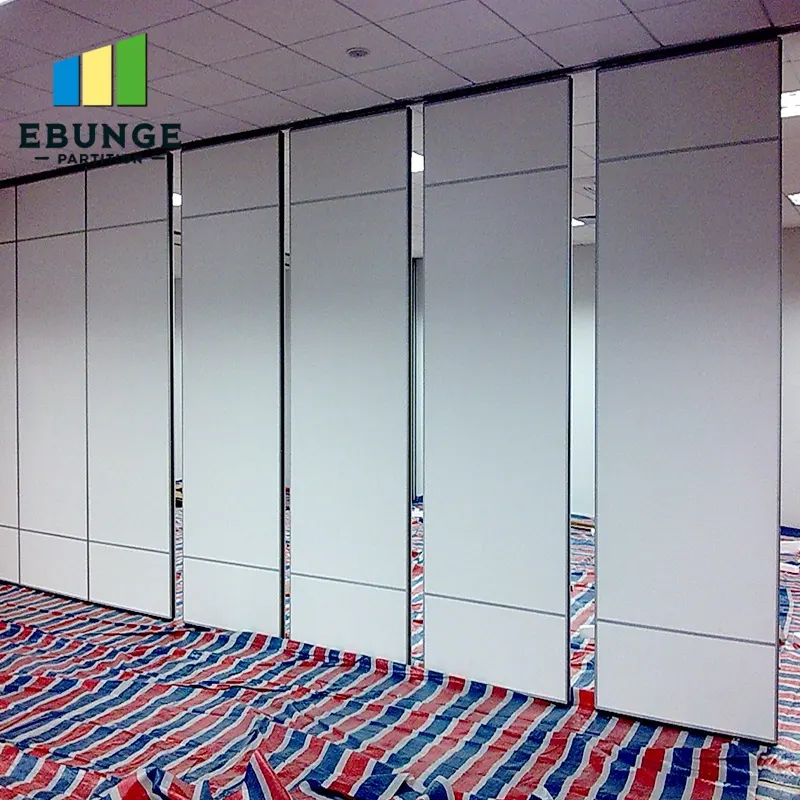
Confirmed finish options include laminate, melamine, fabric, leather, glass and other approved surfaces. Keep those inferences out of the register unless matching project evidence exists.
Evidence note
Do not derive hidden acoustic, fire, durability, load or commercial performance from a visible shape, finish, photograph or drawing. If a statement is comparative, absolute or causal, it needs corresponding evidence or an explicit confirmation boundary.
A Six-Step Coordination Workflow
Checklist focus: architect acoustic assumption register movable partition.
- Log the room intent. Record how each space must divide, combine or reconfigure, and which adjacent spaces share the opening.
- Map the movement route. Sketch straight, turning and stacking routes from the layout, and mark where the overhead route must remain continuous and connected.
- Flag the acoustic question. State the design intent in plain language and mark it unconfirmed until project-specific review is complete.
- Record dimensional dependencies. Note opening width, height, parking depth and any interface with adjacent construction, all as items to verify.
- Assign an owner and a status. Every line needs a responsible party and a status such as open, under review, or confirmed against project documentation.
- Re-issue at each design stage. The register is only useful if it travels with the drawing set and is re-checked after every change.
Routing, Stacking and Support Review
Review focus: architect acoustic assumption register movable partition.
Straight, turning and stacking routes should be reviewed from the layout rather than assumed from a catalogue image. The exact route, junction arrangement, continuous overhead path and parking position must be confirmed from the coordinated project drawings. The same applies to parking: parking style is customised to the customer layout and project requirements, and compact stacking may be possible when the coordinated design permits it.
Pass-doors and documentation
Pass-door requirements and project documentation can be discussed with the supplier. Add them to the register as coordination items so they are resolved alongside the route, not after it.
Acoustic Concepts Without Invented Numbers

Project review term: architect acoustic assumption register movable partition.
Treat any rating discussion as a starting point for project-specific review.
Instead, record the acoustic intent, the evidence required, and the reviewer who will confirm it.
Decision Checklist Before Issuing Drawings
- Is every acoustic statement labelled confirmed or unconfirmed?
- Is the overhead route continuous and connected across the full movement path?
- Is the parking position shown and coordinated with adjacent uses?
- Are finish selections recorded without implying performance?
- Are pass-door and documentation items assigned to a reviewer?
- Has the register been re-issued since the last layout change?
Common Coordination Failure Modes
The most frequent failure is silent assumption: a number appears in a specification because it was copied from an earlier project. The second is route drift, where the stacking position moves but the track route is not re-checked. The third is finish inference, where a selected surface is treated as proof of acoustic or durability behaviour.
A short register review at each stage catches all three. It also gives contractors a clear basis for questions, and gives owners a visible record of what remains open. For broader planning context, see the EBUNGE resources and the movable walls product page.
Frequently Asked Questions
What is an architect acoustic assumption register for movable partitions?
It is a design-phase log that records every acoustic, dimensional and routing assumption about a movable partition, together with its evidence status and the reviewer responsible for confirming it.
Which statements need project-specific evidence?
These require matching project evidence rather than inference from a drawing or finish.
Can the register confirm acoustic performance?
No. It organises the questions and the evidence trail.
How should movement and stacking routes be recorded?
Sketch straight, turning and stacking routes from the layout, mark the continuous connected overhead route, and record the parking position as a coordinated design item rather than a default.
Where do finishes and pass-doors fit in the workflow?
Record finish selections such as laminate, melamine, fabric, leather or glass as design choices, and log pass-door requirements and documentation as coordination items to be discussed with the supplier.
When should the register be updated?
At every design stage and after every layout change. A register that is not re-issued with the drawing set stops being a coordination tool.
Conclusion and Next Step
A disciplined assumption register keeps movable partition coordination honest. It separates maintained product facts from open project questions, keeps acoustic claims tied to evidence, and gives every reviewer a clear list of what still needs confirmation. Confirm project-specific support, acoustic and dimensional requirements before drawings are issued.
To discuss pass-door requirements, documentation or layout coordination for your project, contact the EBUNGE team.