
Quick answer: movable partition wall
Review focus: movable partition wall.
Movable partition wall tender clarification deadlines are where procurement discipline meets technical ambiguity. On overseas projects, bidders often raise questions about top-hung panel routes, stacking positions, finish options and pass-door requirements. If the query cut-off is vague or answers are not traceable, the tender can drift into assumptions that no drawing supports. This framework helps contractors, architects, owners and distributors set a defensible clarification window, record every answer and keep the evaluation tied to project-specific confirmation.
Why Clarification Deadlines Matter on Movable Partition Packages
Project review term: movable partition wall.
The suitability of each route and parking arrangement depends on the approved layout, circulation, ceiling interfaces and operating sequence. A bidder may need to confirm whether the overhead route is continuous, where panels park and how finishes are specified. Without a clear deadline, questions arrive after pricing is fixed, and answers may be given verbally or inconsistently.
The goal is not to eliminate questions but to route them through a controlled window. That window protects bidder effort, keeps addenda aligned and gives evaluators a single source of truth. It also prevents late technical changes from being treated as commercial leverage.
Define the Query Cut-Off Before Bidders Start Pricing
Coordination scope: movable partition wall.
The query cut-off should be stated in the tender documents, not negotiated after issue. It is the last point at which bidders can submit written questions and expect a formal response. Set it early enough that answers can be reviewed, approved and issued as an addendum before the submission deadline.
What to publish in the tender schedule
- Query cut-off date and time, with the project time zone stated.
- Submission channel for questions, such as a named procurement mailbox.
- Target response date for consolidated answers.
- Whether answers will be issued to all bidders simultaneously.
- Statement that verbal answers are not binding.
These items are administrative, not performance claims. They create a predictable process without implying any particular panel capability.
Build a Traceable Answer Log for Every Clarification
Checklist focus: movable partition wall.
Traceability means each question, answer, addendum and drawing revision can be followed from issue to evaluation. A simple log with a unique reference number, date received, topic, answer owner and issue date is enough. The log should record whether the answer changes the specification, the drawings or only the commercial terms.
Minimum fields for an answer log
- Clarification reference number and date received.
- Bidder name or anonymous bidder code.
- Topic category, such as route, stacking, finish or pass-door.
- Question summary and exact wording reference.
- Answer text, answer owner and approval date.
- Related addendum number and drawing revision.
- Distribution date to all bidders.
This log is not evidence of product performance. It is evidence of process control, which is what a tender review needs.
Separate Technical Clarifications from Commercial Queries
The exact route, junction arrangement, continuous overhead path and parking position must be confirmed from the coordinated project drawings. Commercial queries may concern payment terms, delivery milestones or documentation. Mixing them can slow down technical review and obscure which answers affect the specification.
Use separate reference prefixes and separate answer owners. Technical answers should be reviewed against the project drawings and the maintained product facts. Commercial answers should be reviewed by the procurement lead. Both should be issued together so bidders see a single consolidated response.
Review the Layout Before Answering Route Questions
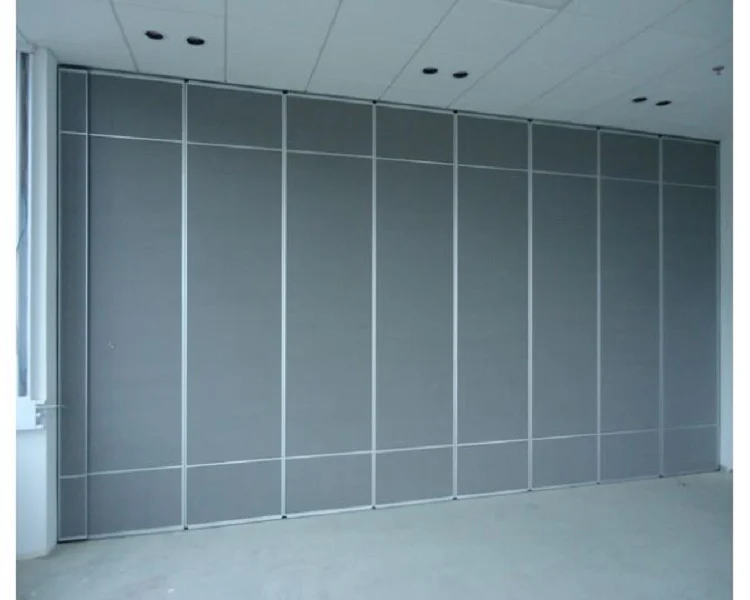
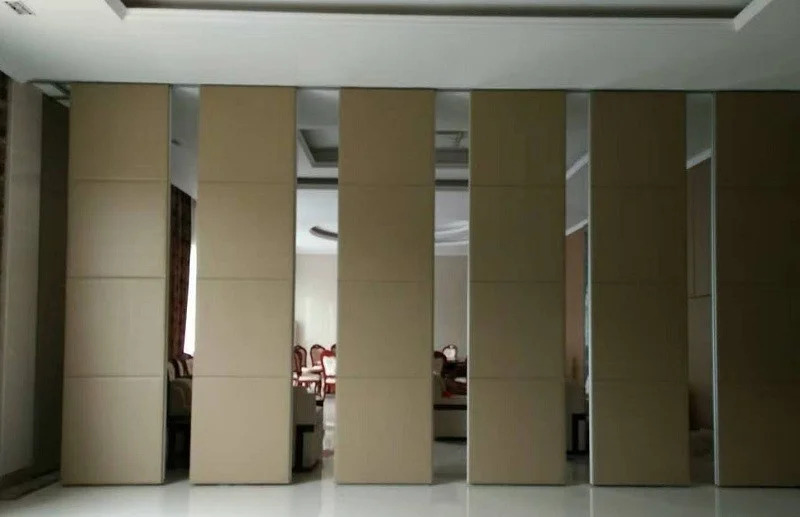
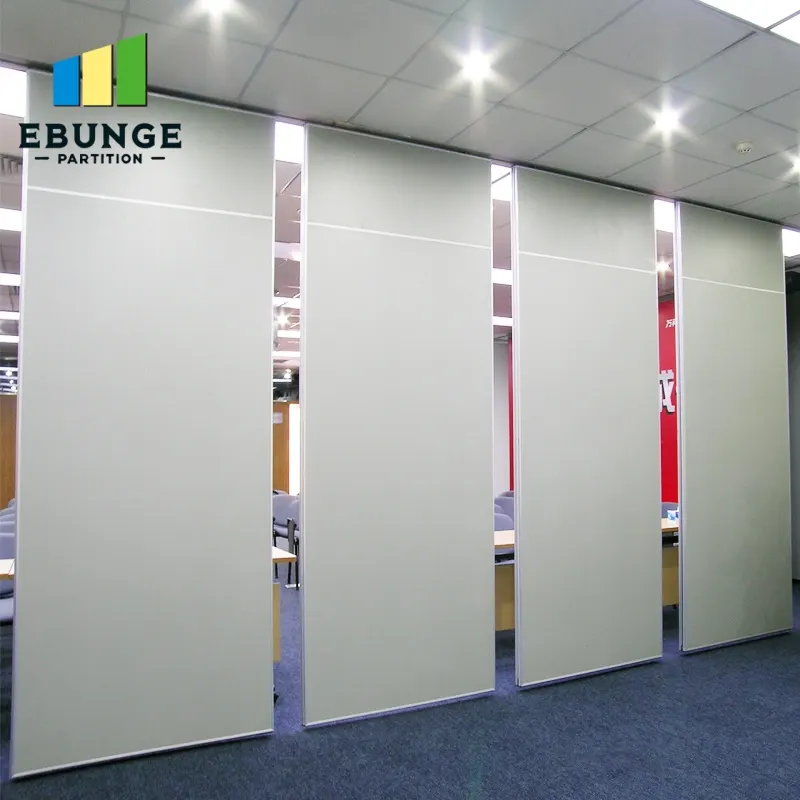
Many bidder questions about movable partition wall tender clarification deadlines are really layout questions. Panels are individually movable, suspended from a top track, cross the opening without a floor track and park at a planned stacking position. Straight, turning and stacking routes are reviewed from the layout.
Before answering, confirm that the proposed movement path has a continuous connected overhead route and that support conditions are reviewed for the specific project. Visible references can support layout discussion but do not verify hidden construction or performance.
Use a Decision Checklist for Late or Ambiguous Questions
Not every question arrives before the cut-off. A decision checklist helps the evaluation team respond consistently without reopening the tender.
| Question type | Action after cut-off | Traceability requirement |
|---|---|---|
| Administrative or formatting | Answer if it does not change scope | Log and issue to all bidders |
| Technical route or stacking | Review against layout; issue addendum if scope changes | Link to drawing revision and answer log |
| Finish or pass-door | Confirm against approved finish options and project documentation | Record as a clarification, not a new specification |
| Acoustic or structural performance | Do not answer without project-specific evidence | State the confirmation boundary in writing |
This table is a process tool. It does not assert any performance value or certification.
Keep Answers Aligned with Maintained Product Facts
Confirmed finish options include laminate, melamine, fabric, leather, glass and other approved surfaces. Pass-door requirements and project documentation can be discussed.
When a bidder asks for a performance figure, explain the concept rather than inventing a number. Project-specific acoustic requirements need their own evidence and review.
Coordinate Clarifications Across the Project Team
Architects may own layout and finish intent. Contractors may own support and interface questions. Owners may own scope and commercial priorities. Distributors may need to confirm documentation routes.
Set a short internal review window before the bidder response date. This prevents last-minute answers that contradict earlier addenda. If an answer cannot be finalized, issue a holding response that states what is still under review and when the final answer will follow.
Frequently Asked Questions
What is a reasonable query cut-off for a movable partition tender?
The cut-off should be set by the procurement schedule, not by a fixed rule. It must allow enough time to review answers, approve them and issue an addendum before bids close. State the time zone and submission channel clearly.
Should all clarification answers be shared with every bidder?
Yes, sharing consolidated answers with all bidders supports fairness and traceability. It also prevents one bidder from pricing against a different technical interpretation. The answer log should record the distribution date.
How do we handle questions about acoustic performance?
State that project-specific acoustic requirements need their own evidence and review before any claim is made.
Can we answer route or stacking questions without a drawing review?
No. Straight, turning and stacking routes are reviewed from the layout. Confirm that the proposed movement path has a continuous connected overhead route and that support conditions are reviewed for the project. Otherwise, mark the answer as subject to confirmation.
What should the answer log contain?
Use a unique reference, date received, topic, question summary, answer text, answer owner, approval date, related addendum and distribution date.
How do we avoid late changes after the deadline?
Use a decision checklist. Administrative questions may be answered if they do not change scope. Technical questions that change scope should be issued as an addendum. Performance questions without evidence should be answered with a confirmation boundary.
Conclusion and Next Step
Movable partition wall tender clarification deadlines are a process control, not a technical performance claim. Set the cut-off early, publish the response date, log every answer and keep technical responses tied to the layout and maintained product facts. Where a question touches support, acoustics or dimensions, state the project-specific confirmation boundary instead of filling the gap with assumptions.
For product context, review the movable wall systems page. For planning resources, visit the resources library. To discuss pass-door requirements, finish options or project documentation, contact the EBUNGE team and confirm the requirements for your specific project.