
Quick answer: movable partition wall
Review focus: movable partition wall.
A movable partition wall addendum impact assessment is the disciplined review of how a tender addendum changes the scope, coordination duties or documentation expectations of a movable partition package. For overseas contractors, architects, interior designers, owners and renovation teams, the goal is not to guess at hidden performance. It is to trace each change back to the drawings, specifications and clarifications that govern the bid.
This framework keeps every recommendation tied to maintained product facts, visible evidence limits and project-specific drawing review. The exact overhead route and support arrangement must be confirmed by the responsible project team from coordinated drawings.
Why Addenda Deserve Their Own Review Track
Project review term: movable partition wall.
Addenda arrive late, often after pricing assumptions have been built. A single revised drawing can shift the stacking position, alter the route a panel travels, or change the finish schedule. If those changes are not traced, bidders may price different scopes while appearing to answer the same tender.
Treat every addendum as a scope event. Log it, map it to the affected specification clause, and record whether the change is technical, commercial or purely documentary. The suitability of each route and parking arrangement depends on the approved layout, circulation, ceiling interfaces and operating sequence.
Separate technical change from editorial change
A corrected room name is editorial. A relocated parking area is technical. Only technical changes should trigger a re-check of support, route and dimensional coordination.
A Five-Step Trace Process for Reviewers
Coordination scope: movable partition wall.
- Register the addendum: assign a number, date and the clause or drawing it touches.
- Classify the change: technical, commercial or editorial, with a short reason.
- Map affected scope: list the panels, routes, finishes or interfaces that the change reaches.
- Request confirmation: ask the design team to confirm support, acoustic and dimensional requirements where the change touches them.
- Re-issue the comparison: update the bid comparison so all bidders answer the same revised scope.
This process does not require performance assumptions. It requires a clear paper trail from addendum to specification line.
What the Maintained Product Facts Allow Us to Say
Checklist focus: movable partition wall.
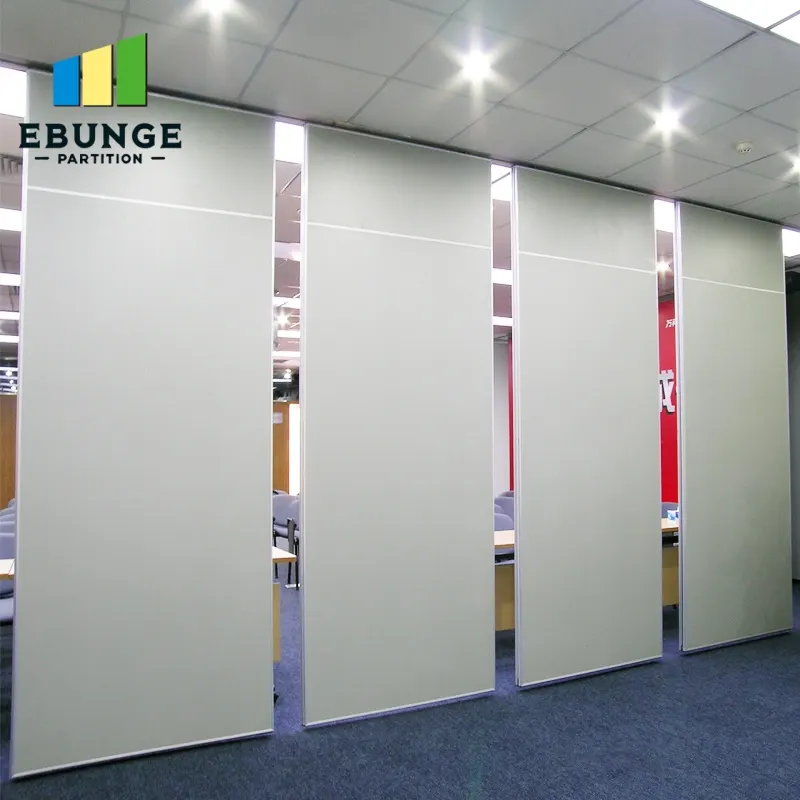
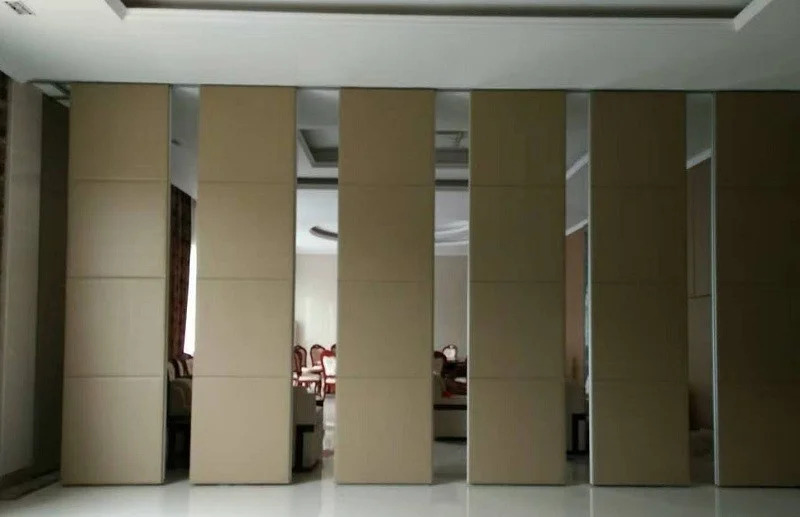
EBUNGE movable wall panels are individually movable, suspended from a top track, cross the opening without a floor track, and park at a planned stacking position. Straight, turning and stacking routes are reviewed from the layout. Confirmed finish options include laminate, melamine, fabric, leather, glass and other approved surfaces. Pass-door requirements and project documentation can be discussed.
Those facts describe configuration and movement logic. When an addendum touches any of those areas, the reviewer should mark the item as requiring project-specific confirmation.
Route continuity is a drawing question
Every proposed movement path needs a continuous connected overhead route. A layout that shows a gap in the track route is a coordination issue, not a product claim. Reviewers should ask for the revised route drawing before accepting a scope change.
Evidence Boundaries Reviewers Should Apply
Visible references can support layout discussion but do not verify hidden construction or performance. Comparative, absolute and causal statements require matching evidence; otherwise state the exact project-specific confirmation boundary.
This boundary matters most when an addendum introduces a new room use. A training room, conference room or coworking area may suggest different expectations, but the addendum itself does not prove that any particular partition configuration meets them.
Where an addendum cites a rating, the reviewer should confirm the project-specific acoustic requirement with the design team rather than assume a value.
Checklist for a Scope-Change Comparison
- Does the addendum change the opening width, height or head condition?
- Does it move the stacking position or alter the parking area?
- Does it change the route between straight, turning and stacking segments?
- Does it add or remove a pass-door requirement?
- Does it change the finish schedule or approved surface list?
- Does it introduce a new acoustic, fire or structural expectation?
- Does it change the documentation required at handover?
Each checked item should point to a clause, a drawing or a written clarification. Unchecked items can remain as assumptions only if they are clearly labelled.
Coordinating the Assessment Across Disciplines
The architect confirms design intent. The contractor confirms site interfaces. The reviewer confirms that every bidder receives the same revised information.
This protects the tender from later disputes about what was included.
Documentation to request
Ask for the revised layout, the updated specification clauses, the finish schedule and any written clarification that changes scope. These documents form the basis of the revised comparison.
Common Pitfalls in Addendum Review
One pitfall is treating a finish change as cosmetic when it also changes the approved surface list. Another is accepting a new stacking position without checking the route drawing. A third is allowing a performance expectation to enter through a room name rather than a specification clause.
Reviewers can avoid these by keeping the assessment tied to documents. If a claim cannot be traced to a drawing, a clause or a maintained product fact, it should be marked for confirmation.
Frequently Asked Questions
What is a movable partition wall addendum impact assessment?
It is a structured review of how a tender addendum changes the scope, coordination or documentation of a movable partition package, traced back to the governing drawings and clauses.
Does an addendum always change the price?
Not necessarily. Editorial changes may have no commercial effect. Technical changes should be re-priced or re-confirmed by each bidder so the comparison remains valid.
How should acoustic requirements be handled in an addendum?
Confirm the project-specific acoustic requirement with the design team and document the confirmation.
What if the addendum moves the stacking position?
Request the revised layout and confirm that the movement path remains a continuous connected overhead route. Support and dimensional requirements should be confirmed for the project.
Can finishes be changed by addendum?
Yes, if the change stays within confirmed finish options such as laminate, melamine, fabric, leather, glass and other approved surfaces. The approved surface list should be updated accordingly.
When should a reviewer stop and ask for clarification?
Whenever a change touches support, acoustic or dimensional requirements, or when a claim cannot be traced to a drawing, clause or maintained product fact.
Conclusion and Next Step
A movable partition wall addendum impact assessment is a documentation discipline. Register the change, classify it, map the affected scope, request confirmation where support, acoustic or dimensional requirements are involved, and re-issue the comparison.
To discuss pass-door requirements, project documentation or a specific layout, contact the EBUNGE team. You can also review the movable wall product range and the project resources before your next addendum review.