
Quick project answer
Review focus: changeover exception log.
A movable partition changeover exception log is a simple operational record that captures every time a room changeover does not go to plan. For facilities and operations teams, it turns scattered radio calls and verbal complaints into a reviewable pattern. This article sets out a structured method for logging exceptions, reviewing recurring causes, and feeding findings back into room release and staffing decisions. It stays within confirmed product facts and project-specific confirmation boundaries.
Why a Changeover Exception Log Matters for Movable Partition Walls
Project review term: changeover exception log.
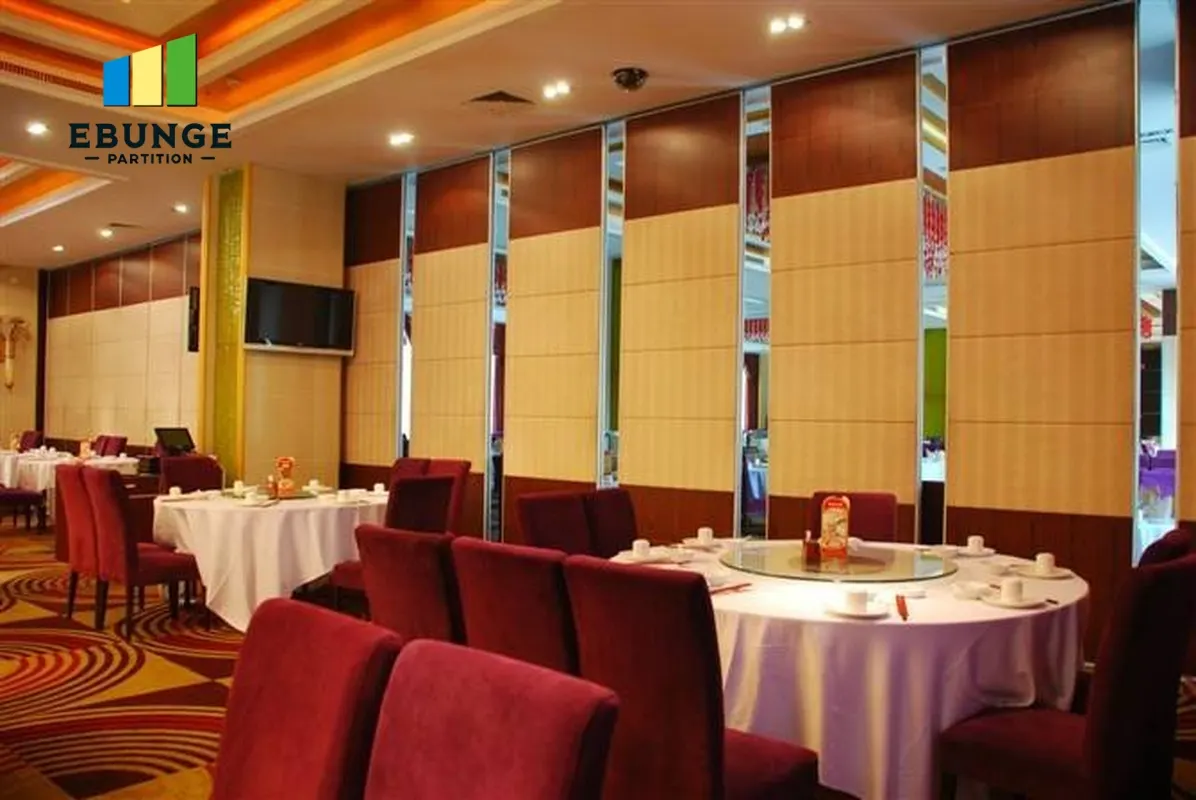
Movable partition panels are individually movable, suspended from a top track, cross the opening without a floor track, and park at a planned stacking position. That clear-floor design supports fast reconfiguration, but it also means changeover depends on the coordinated route, the parking position, and the sequence agreed during layout review.
When a changeover runs late, the cause is often not the panel itself. It may be a blocked stacking bay, a room still occupied, a route obstruction, or a booking that overlaps with another event. Without a log, these causes blur together and the same delay repeats.
What Counts as a Changeover Exception
Coordination scope: changeover exception log.
An exception is any deviation from the planned changeover outcome that affects room release, staffing, or the next booking. Define the threshold locally, because a five-minute overrun in one venue may be routine while in another it cascades into a missed handover.
Core exception categories
- Route exception: the planned straight, turning, or stacking route was obstructed or unavailable.
- Parking exception: the planned stacking position was occupied, blocked, or not ready.
- Readiness exception: the room was not released on time by the previous user or cleaning team.
- Coordination exception: staffing, booking, or handover information did not match the actual changeover.
- Documentation exception: the as-built route or parking arrangement differed from the reviewed layout.
A Numbered Process for Logging Exceptions
Checklist focus: changeover exception log.
Consistency matters more than detail volume. A short, repeatable process keeps the log usable during busy periods.
- Capture the time and room. Record when the changeover was due and when it actually completed.
- Name the exception category. Use the categories above so patterns can be counted later.
- Describe what was observed. Keep to visible facts: what blocked the route, which bay was occupied, who held the room.
- Note the immediate resolution. Record what was done to complete the changeover, without inferring causes.
- Flag whether the reviewed layout was followed. If the actual route or parking differed, mark it for drawing review.
- Close the entry. Add the reviewer initials and date so the log stays auditable.
Root-Cause Review Cadence
A log without a review cadence becomes an archive. Set a regular review rhythm that matches venue activity, for example weekly during peak season and monthly otherwise. The cadence should be agreed by facilities, operations, and the booking team.
Questions for each review session
- Which exception category appears most often this period?
- Do exceptions cluster around specific rooms, times, or booking types?
- Are route or parking exceptions linked to a layout that needs re-checking against the reviewed drawings?
- Are readiness exceptions linked to handover timing rather than the partition itself?
- Which findings can be resolved locally, and which need project-specific confirmation?
Keep the review evidence-bounded. If the log shows repeated route obstruction, the finding is about operations and layout coordination, not about panel performance. If the log shows nothing unusual, that is also a useful result.
Feeding Findings into Room Release and Staffing Decisions
The value of the log is in the decisions it informs. Room release times, cleaning windows, and staffing levels can all be adjusted using observed patterns rather than assumptions.
Room release decisions

If readiness exceptions recur, consider whether the release time allows enough margin for the previous user to leave and for the changeover to begin. This is a scheduling decision, not a product claim.
Staffing decisions
If coordination exceptions cluster at particular times, review whether the changeover window aligns with available support. Do not infer a required number of operators from the log; staffing is a local operational choice.
Layout and drawing review
If route or parking exceptions repeat, take the log to the project-specific drawing review. Straight, turning, and stacking routes are reviewed from the layout, and any change to the reviewed arrangement should be confirmed before it is treated as the new standard.
Evidence Boundaries and Project-Specific Confirmation
This framework is operational. The suitability of each route and parking arrangement depends on the approved layout, circulation, ceiling interfaces and operating sequence.
Evidence note: the log records observed changeover events. It does not prove panel performance, service life, or financial return. Any specification, support, acoustic, or dimensional requirement must be confirmed for the specific project.
Finish options such as laminate, melamine, fabric, leather, glass, and other approved surfaces can be discussed for the project. Pass-door requirements and project documentation can also be discussed.
FAQ
What is a movable partition changeover exception log?
It is an operational record of any changeover that deviates from plan, covering route, parking, readiness, coordination, and documentation exceptions. It supports review and decision-making rather than product evaluation.
How often should the log be reviewed?
Set a cadence that matches venue activity. Weekly during peak periods and monthly otherwise is a common starting point, agreed by facilities, operations, and booking teams.
Does the log prove acoustic performance?
No. The log records changeover events.
What should be recorded for a route exception?
Record the time, room, what obstructed the planned route, and whether the reviewed layout was followed. Keep to visible facts and avoid inferring causes.
Can the log change room release times?
It can inform them. If readiness exceptions recur, review whether the release window allows enough margin. This is a scheduling decision, not a product claim.
When should findings go to drawing review?
When route or parking exceptions repeat, or when the actual arrangement differs from the reviewed layout. Straight, turning, and stacking routes are reviewed from the layout.
Conclusion and Next Steps
A movable partition changeover exception log gives facility teams a factual basis for improving room release, staffing alignment, and layout coordination. Start with the categories and numbered process above, set a review cadence, and keep every finding within confirmed evidence. Where a project-specific requirement arises, confirm support, acoustic, and dimensional details before changing the operational standard.
To discuss pass-door requirements, project documentation, or layout review for your venue, contact the EBUNGE team. You can also review the movable wall product range and browse further planning resources.