
Quick answer: movable partition wall
Review focus: movable partition wall.
A movable partition wall tender addendum review is the discipline of comparing every issued addendum against the original package before award. It matters because movable walls are top-hung systems that move without a continuous floor track, park at a planned stacking position, and follow straight, turning or stacking routes reviewed from the layout. When an addendum changes a room boundary, a stacking location or a finish, the change can ripple through drawings, interfaces and pricing. This article gives overseas contractors, architects, designers, owners and procurement teams a repeatable way to track those changes without inventing performance, engineering or commercial conclusions.
Why Addenda Deserve Their Own Review Gate
Project review term: movable partition wall.
Addenda are often treated as administrative updates. In a movable partition package, they can alter the opening width, the parking zone, the finish schedule or the coordination sequence. Each of those items affects how the system is described and priced. A disciplined review gate prevents an addendum from silently becoming the new baseline while the original specification still governs the comparison.
The goal is not to slow the tender. It is to make scope movement visible before award, when questions are still cheap to ask and answers can be documented.
Build a Scope-Change Register Before Award
Coordination scope: movable partition wall.
Create one register that lists every addendum, the clause it touches, the affected drawing, the responsible party and the status. Keep it separate from the pricing sheet so commercial evaluation stays comparable across bidders.
- Addendum number and date: the unique reference used in correspondence.
- Original clause: the specification or drawing section being changed.
- Change type: dimensional, finish, route, parking, interface or documentation.
- Evidence needed: the drawing, schedule or written confirmation required to close the item.
- Owner and due date: who must respond and by when.
- Status: open, answered, superseded or withdrawn.
This register becomes the audit trail. It also stops the common failure where a verbal answer at a meeting is later treated as an approved change.
Check the Movement Route Against the Layout
Checklist focus: movable partition wall.
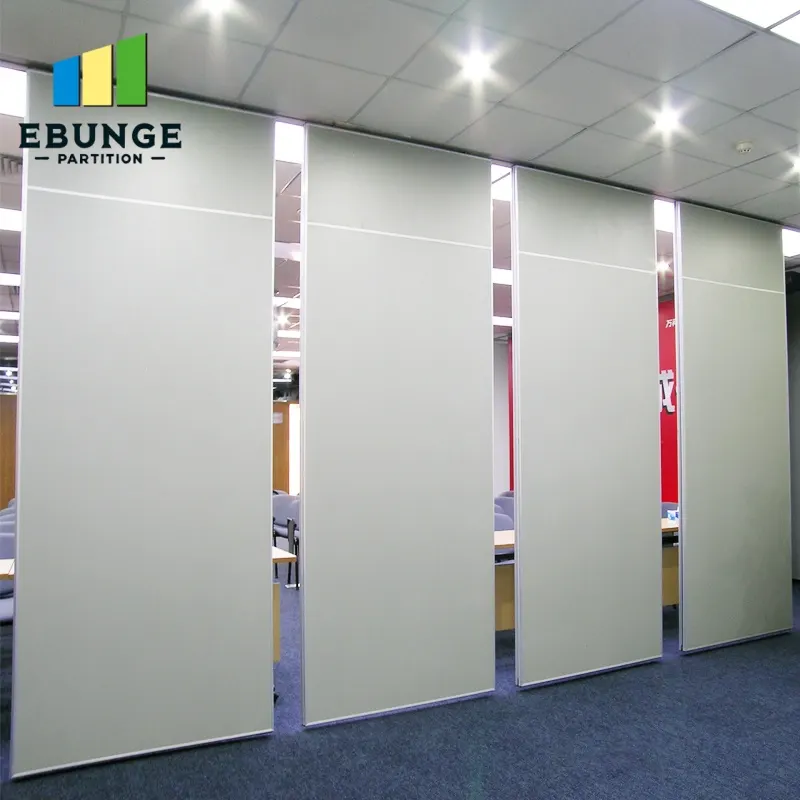
Movable panels are individually movable and suspended from a top track. They cross the opening without a floor track and park at a planned stacking position. Straight, turning and stacking routes are reviewed from the layout. An addendum that moves a wall, adds a return or changes a stacking area can affect that route.
Questions to ask when a route changes
- Does the revised layout still show a continuous connected overhead route for every panel movement?
- Is the parking position still reachable from the opening without crossing an untracked gap?
- Has the structural support for the overhead route been reviewed for the revised condition?
- Do adjacent finishes, ceilings or services conflict with the new route?
- Has the change been reflected in the finish schedule and the interface drawings?
Do not infer support capacity, load or engineering outcomes from a drawing alone. Confirm project-specific support, acoustic and dimensional requirements with the responsible design professional.
Separate Product Facts From Project Assumptions
Review focus: movable partition wall.
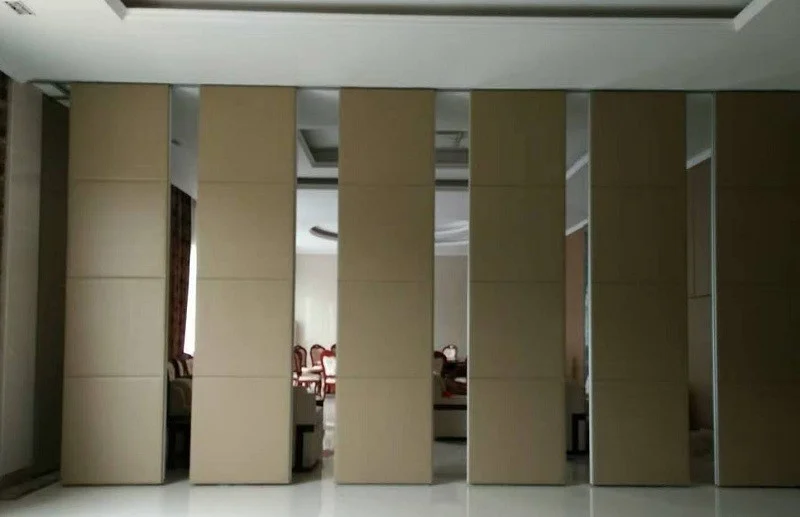
Confirmed finish options include laminate, melamine, fabric, leather, glass and other approved surfaces. The suitability of each route and parking arrangement depends on the approved layout, circulation, ceiling interfaces and operating sequence. If an addendum introduces a new finish, treat it as a new item to be confirmed rather than an equivalent substitution.
| Addendum item | What can be stated | What still needs project confirmation |
|---|---|---|
| Finish change | Approved finish options include laminate, melamine, fabric, leather and glass | Compatibility with the project, maintenance expectations and sample approval |
| Route change | Routes are reviewed from the layout | Support, dimensional fit and interface coordination |
| Parking change | Parking is planned and customized to the layout | Stacking position, clearance and adjacent trades |
| Acoustic wording | STC and Rw are rating concepts, not a direct count of decibels | Project-specific acoustic requirements and evidence |
This table is a boundary tool. It keeps the tender comparison honest when an addendum uses broad language.
Coordinate Pass-Doors and Documentation Early
Pass-door requirements and project documentation can be discussed with the supplier. If an addendum adds a pass-door, the review should capture the location, the adjacent panel, the finish and the documentation needed for approval. Do not assume that a pass-door is included unless it is written into the package.
Documentation checklist for each addendum
- Revised drawing with a clear revision cloud or marker.
- Updated finish schedule where relevant.
- Written confirmation of any route or parking change.
- Interface notes for ceiling, floor and adjacent walls.
- Record of who approved the change and when.
Keep the checklist short enough to use. A long checklist that nobody completes is less useful than a short one that is consistently applied.
Run a Pre-Award Addendum Review Meeting
Hold one meeting before award with the procurement lead, the designer and the supplier. Walk the register line by line. For each open item, decide whether it is answered, needs a drawing, or must be withdrawn. Record the outcome in the same register.
Use the meeting to confirm that the tender comparison still reflects the latest scope. If one bidder priced an earlier revision, note the difference rather than adjusting the numbers silently.
Evidence note
Statements about acoustic performance, structural capacity, durability or commercial outcomes require matching project evidence. A finish sample, a photograph or a generic drawing does not prove those properties. Where evidence is missing, state the confirmation boundary instead of filling the gap with an assumption.
This boundary protects both buyer and supplier. It also makes the addendum review defensible if the project is audited later.
Frequently Asked Questions
What is a movable partition wall tender addendum review?
It is a structured comparison of every issued addendum against the original tender package before award. It tracks scope changes, affected drawings, evidence needs and approvals so the final comparison reflects the latest agreed scope.
Which addendum changes most often affect a movable partition package?
Changes to room boundaries, movement routes, parking positions, finish schedules and pass-door requirements are common. Each can affect the layout review, the finish selection and the documentation needed for approval.
Can an addendum change the acoustic requirement?
It can change the wording or the target. Any acoustic requirement must be confirmed for the specific project with matching evidence.
Do movable partitions need a floor track?
EBUNGE movable partition panels are top-hung and move without a continuous floor running track or floor hardware along the partition line. The exact route, junction arrangement, continuous overhead path and parking position must be confirmed from the coordinated project drawings.
How should a buyer handle an unclear addendum?
Log it as open, request a written clarification with a drawing reference, and avoid treating a verbal answer as approved. Keep the clarification in the same register used for all other changes.
When should the supplier be involved in the review?
Involve the supplier before award when the addendum touches routes, parking, finishes or pass-doors. Early involvement helps confirm what can be documented and what still needs project-specific confirmation.
Conclusion and Next Step
A movable partition wall tender addendum review is a procurement discipline, not a paperwork formality. Use a scope-change register, check movement routes against the layout, separate confirmed product facts from project assumptions, and document every approval before award. Confirm project-specific support, acoustic and dimensional requirements with the responsible parties.
To discuss pass-door requirements, project documentation or a movable wall package for your next tender, contact EBUNGE. You can also review the movable walls product range and browse the resources library for further planning context.