
Quick answer: movable partition wall
Review focus: movable partition wall.
A movable partition wall tender submittal review is not a document-checking exercise. It is a risk-mapping exercise. The submittal tells you what a supplier believes the project needs, what they have assumed, and what they have left for others to resolve. Your job is to separate maintained product facts from project-specific assumptions before the package is awarded. This guide gives procurement reviewers, contractors, architects and owners a structured way to read submittals for top-hung movable wall packages without inferring hidden performance, engineering outcomes or commercial certainty.
Why Tender Submittals Drift From Project Reality
Project review term: movable partition wall.
The suitability of each route and parking arrangement depends on the approved layout, circulation, ceiling interfaces and operating sequence. A submittal may look complete while still carrying unresolved assumptions about the overhead route, parking position or interface with adjacent trades. The drift usually appears in three places: the movement path, the support strategy and the finish schedule.
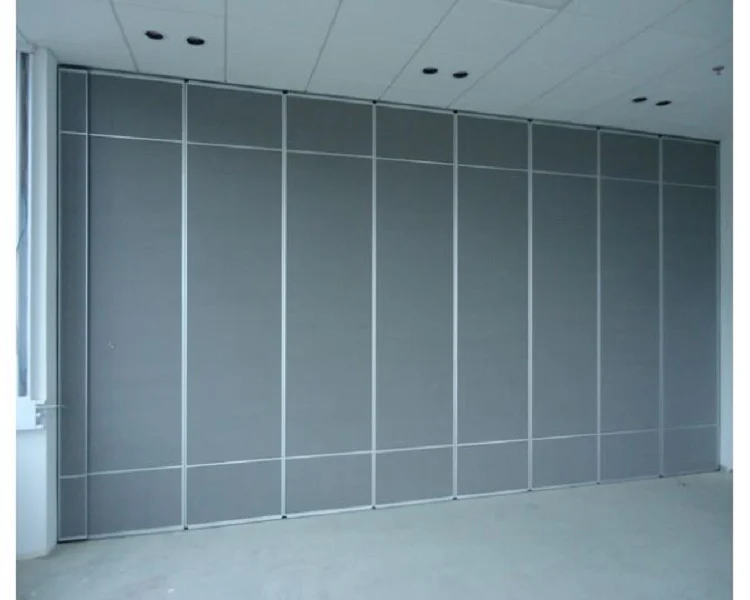
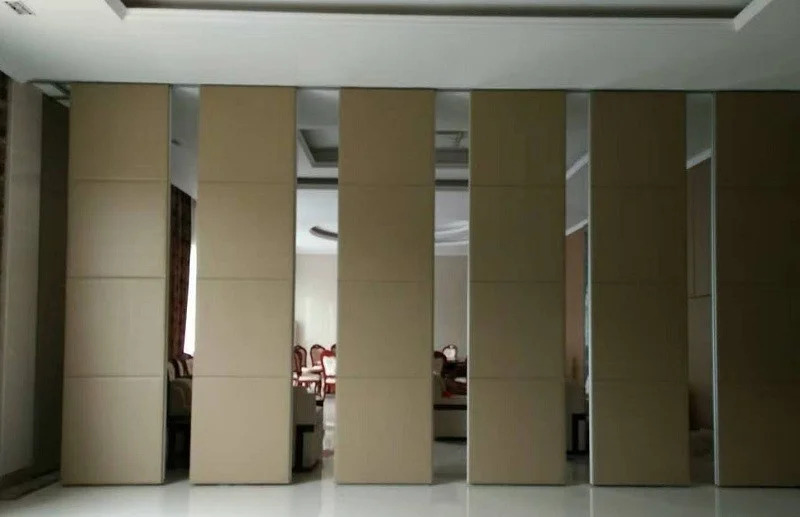
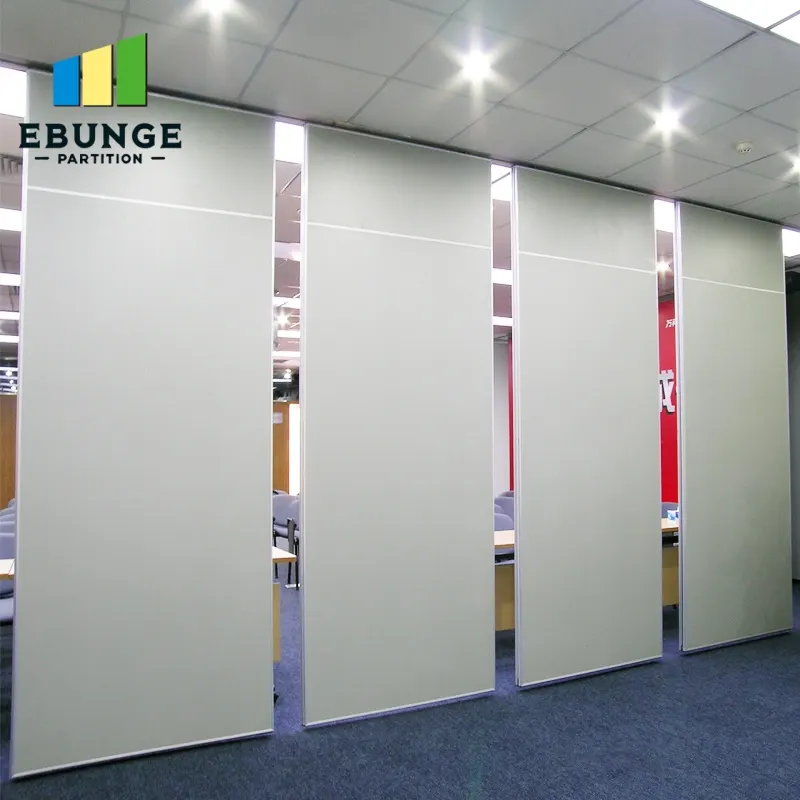
EBUNGE movable partition panels are individually movable, suspended from a top track, cross the opening without a floor track, and park at a planned stacking position. That maintained fact is a starting point, not a complete design. Straight, turning and stacking routes must be reviewed from the layout. If the submittal does not show how the panels travel from closed to parked, the reviewer cannot confirm that the proposed route is continuous and supported.
Scope Gap Checklist for Reviewers
Coordination scope: movable partition wall.
Use this checklist to mark what the submittal actually resolves and what it defers. A gap is not automatically a rejection; it is a question that must be answered before award.
- Movement route: Does the submittal show the full path from closed position to parking position, including any turns?
- Overhead continuity: Is the top track route shown as continuous and connected across the opening and into the parking zone?
- Parking strategy: Is the stacking position identified, and does it match the architectural layout?
- Finish schedule: Are laminate, melamine, fabric, leather, glass or other approved surfaces listed with the correct location and quantity?
- Pass-door requirements: If a pass door is required, is it described as part of the package or excluded?
- Interface points: Are ceiling, structural support and adjacent wall interfaces identified for coordination?
- Documentation: Does the submittal reference project drawings, or does it rely on generic literature?
Each unchecked item becomes a written clarification. Do not let a supplier’s silence become your assumption.
Assumption Flags: Language That Needs Evidence
Checklist focus: movable partition wall.
Certain phrases in a submittal signal that a claim is being carried without project-specific evidence. Flag them and request confirmation.
Performance language
Do not accept a number without that boundary.
Support and load language
The exact route, junction arrangement, continuous overhead path and parking position must be confirmed from the coordinated project drawings. A submittal that says the system is top-hung is describing a product fact. The exact overhead route and support arrangement must be confirmed by the responsible project team from coordinated drawings.
Operational language
Words like easy, quick or simple are not evidence. They do not describe manpower, tools or time. If the submittal implies an operational outcome, ask what project-specific information supports it. If none exists, remove the implication from your evaluation.
How to Structure the Review Process
- Register the submittal. Record the revision, date and scope of the package being reviewed.
- Map the layout. Compare the submittal’s movement routes against the architectural drawings for straight, turning and stacking paths.
- Mark scope gaps. Use the checklist above to identify missing or deferred items.
- Flag assumptions. Highlight performance, support and operational language that lacks project-specific evidence.
- Issue clarifications. Send written questions to the supplier and copy the relevant design and construction parties.
- Record resolutions. Update the review with the supplier’s responses and any revised drawings.
- Confirm before award. Do not treat unresolved items as accepted risk.
This sequence keeps the review auditable and gives every stakeholder a clear picture of what remains open.
Comparing Submittals Without Inventing Performance
When two suppliers submit different packages, compare them on scope completeness and evidence quality, not on unverified claims. The table below suggests a comparison frame that stays within maintained facts.
| Review area | What to look for | Evidence boundary |
|---|---|---|
| Movement route | Straight, turning and stacking paths shown on layout | Requires project-specific drawing review |
| Parking position | Planned stacking location identified | Must match architectural layout |
| Finish options | Laminate, melamine, fabric, leather, glass or other approved surfaces | Finish choice does not confirm acoustic or structural performance |
| Pass-door scope | Included or excluded, with requirements stated | Project-specific requirement |
| Documentation | Project drawings referenced, not generic literature only | Documentation quality is not a performance guarantee |
Evidence Notes for Procurement Files
Evidence note: A submittal statement is not project evidence until it is tied to the project’s layout, support conditions and acoustic requirements. Confirm project-specific support, acoustic and dimensional requirements before relying on any submittal claim.
Keep a short evidence note for each major claim. Record what the supplier stated, what project document supports it, and what remains to be confirmed. This practice protects the reviewer and gives the project team a clear basis for decisions.
For maintained product context, refer to the movable walls product page. For broader planning resources, see the resources section. If your team needs to discuss pass-door requirements or project documentation, contact EBUNGE.
Frequently Asked Questions
What is the first thing to check in a movable partition wall tender submittal review?
Start with the movement route. Confirm that the submittal shows how panels travel from closed position to the planned stacking position, including any turns. If the route is not shown, the review cannot confirm that the overhead path is continuous and supported.
Can a submittal’s acoustic rating be accepted as a project guarantee?
No. Ask for the test context and confirm project-specific acoustic requirements separately.
How should finish options be evaluated in the submittal?
Check that the finish schedule lists the approved surfaces for each location, such as laminate, melamine, fabric, leather, glass or other approved surfaces. Those remain project-specific confirmations.
What does it mean if the submittal does not mention pass doors?
It means the pass-door scope is unresolved. Pass-door requirements can be discussed as part of the package, but the submittal must state whether they are included or excluded. Treat silence as a clarification item, not as an assumption.
Is a top-hung system automatically suitable for any ceiling?
No. The maintained fact is that panels are suspended from a top track and cross the opening without a floor track.
How can reviewers compare two submittals fairly?
Compare scope completeness and evidence quality. Look for movement routes, parking positions, finish schedules, pass-door scope and project-specific documentation. Avoid ranking suppliers on unverified performance claims or commercial assumptions.
Conclusion: Review for Gaps, Not Promises
A disciplined movable partition wall tender submittal review helps project teams avoid carrying unresolved assumptions into construction. Focus on what the submittal actually shows, flag what it assumes, and confirm project-specific support, acoustic and dimensional requirements before award. The goal is not to find the most impressive document; it is to find the clearest path to a coordinated installation.
If your team is preparing a tender package or reviewing supplier submittals, contact EBUNGE to discuss project documentation, pass-door requirements and layout coordination.