
Quick answer: movable partition wall
Review focus: movable partition wall.
A movable partition wall tender compliance review is the structured comparison of what a tender package promises against what the project drawings, specification and confirmed product information actually support. Panel handling and the operating sequence must be confirmed for the selected layout and project conditions. This framework keeps every conclusion tied to maintained product facts, visible evidence limits and project-specific drawing review.
Why Tender Compliance Review Differs From Price Comparison
Project review term: movable partition wall.
Price comparison assumes the offers describe the same scope. Compliance review tests that assumption. A movable partition package includes panels, a top track, movement routes, parking arrangements, finish selections and documentation obligations. If two bids describe these elements differently, the lower number may not represent the same deliverable.
Reviewers should separate three questions: what is stated, what is evidenced, and what still requires project confirmation. The suitability of each route and parking arrangement depends on the approved layout, circulation, ceiling interfaces and operating sequence.
Start With the Movement and Parking Concept
Coordination scope: movable partition wall.
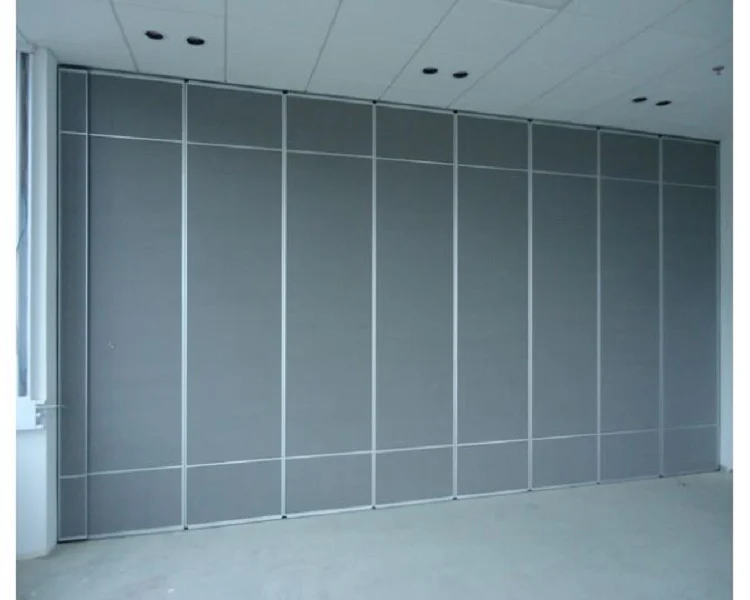
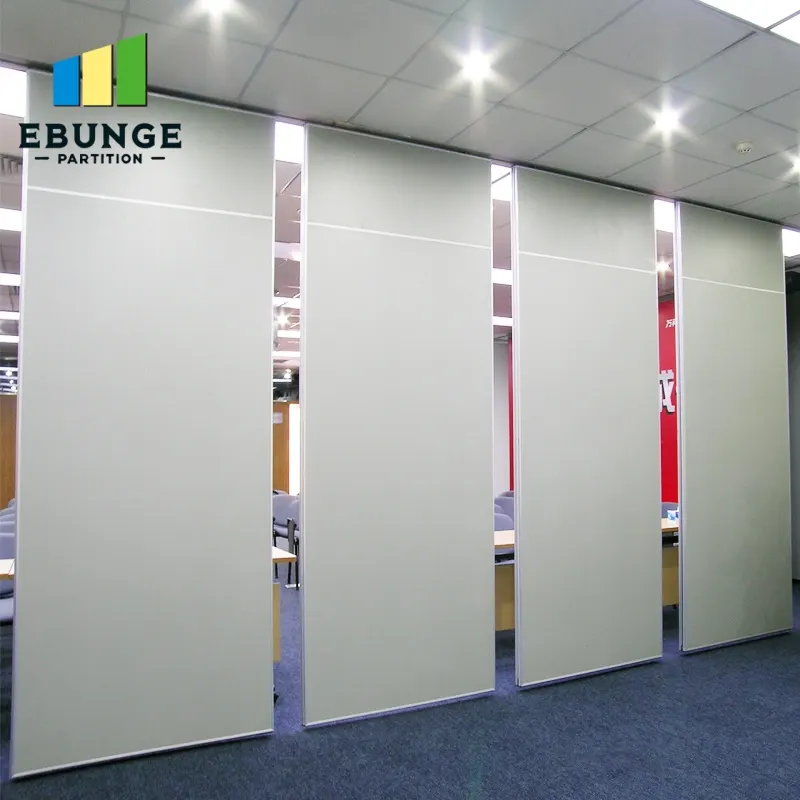
EBUNGE movable partition panels are individually movable, suspended from a top track, cross the opening without a floor track, and park at a planned stacking position. That single sentence already generates several tender checks.
Route continuity
Straight, turning and stacking routes are reviewed from the layout. A tender should show how panels travel from the closed position to the parking position. The exact route, junction arrangement, continuous overhead path and parking position must be confirmed from the coordinated project drawings.
Parking position
Parking style is customized to the customer layout and project requirements and may support compact stacking when the coordinated design permits it. The tender should identify where panels rest when the opening is clear and whether that location conflicts with services, doors or adjacent room functions.
Build a Clause-by-Clause Compliance Matrix
A matrix converts a narrative tender into checkable rows. It also makes deviations visible to everyone, including reviewers who join later.
| Tender item | What to verify | Evidence status |
|---|---|---|
| Panel movement concept | Top-hung, individually movable, no floor track along the partition line | Confirm against maintained product facts |
| Route and parking | Straight, turning and stacking routes reviewed from layout | Project drawing review required |
| Finish selection | Laminate, melamine, fabric, leather, glass or other approved surfaces | Confirm approved sample and project requirement |
| Pass-door needs | Location, swing and coordination with panel layout | Discuss with project team |
| Documentation | Drawings, schedules and submittal expectations | Confirm project documentation scope |
Each row should end with one of three statuses: confirmed, deviation noted, or requires project-specific confirmation. Avoid a fourth status such as assumed acceptable.
Handle Acoustic and Seal Language Carefully
Seals, joints and interface details influence acoustic behaviour conceptually, but reviewers should not infer a rating from a drawing, a finish photograph or a generic product description.
Evidence note: if a tender claims a performance outcome without a matching test report, project condition statement or approved calculation, record it as an unverified statement rather than a compliance point.
Review Finishes, Interfaces and Pass Doors
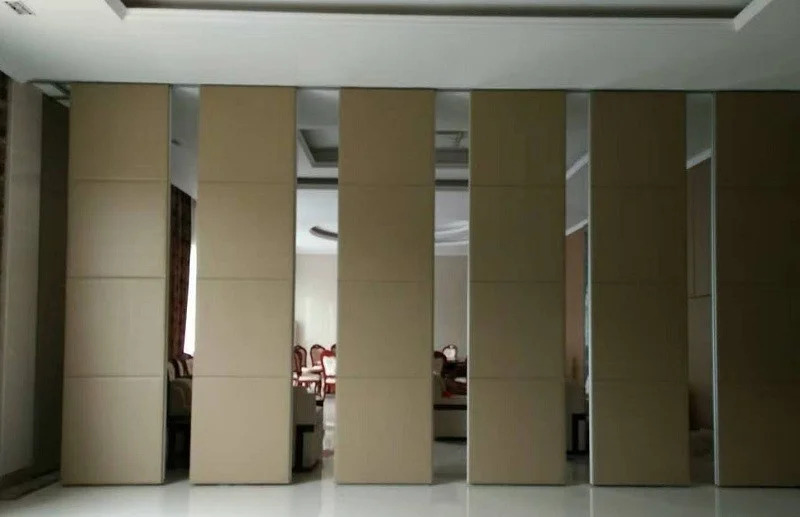
Confirmed finish options include laminate, melamine, fabric, leather, glass and other approved surfaces. Finish selection affects appearance, cleaning expectations and coordination with adjacent materials, so the tender should identify the approved surface for each visible condition.
Interface coordination
Review how the top track meets the structure, how the partition meets adjacent walls, and how the parking area interacts with ceilings, lighting and signage. These are drawing-review items, not assumptions.
Pass-door requirements
Pass-door requirements can be discussed with the project team. The tender should show whether a pass door is needed, where it sits within the panel layout, and how it coordinates with the movement route.
A Numbered Deviation Review Process
- Issue the tender documents and drawing set to the review team.
- Extract every partition-related clause into the compliance matrix.
- Mark each clause as confirmed, deviation or requires project confirmation.
- Request clarification for any statement that cannot be verified from maintained facts or project drawings.
- Reissue the matrix with responses and unresolved items clearly listed.
- Confirm final scope, documentation and support requirements before award.
This sequence keeps the review auditable. It also prevents a late clarification from silently changing the scope after commercial evaluation has begun.
Documentation and Support Boundaries
Project documentation can be discussed as part of the tender package. Support conditions, dimensional tolerances and acoustic requirements are project-specific and must be confirmed for each opening.
Use the movable wall product information as a starting reference, then check the resource library for planning context. Neither replaces project-specific confirmation.
Frequently Asked Questions
What is a movable partition wall tender compliance review?
It is a structured comparison of tender statements against maintained product facts, project drawings and confirmed requirements, with deviations recorded before award.
Which tender statements need project-specific evidence?
Visible references can support layout discussion but do not verify hidden construction or performance.
How should reviewers treat acoustic ratings such as STC or Rw?
Treat them as rating concepts defined under specific conditions.
Can parking and movement routes be confirmed from the layout?
Straight, turning and stacking routes are reviewed from the layout. The review should confirm a continuous connected overhead route and a planned parking position.
What finish information should the tender include?
The tender should identify the approved surface for each condition from options such as laminate, melamine, fabric, leather, glass or other approved surfaces.
When should pass-door requirements be raised?
Raise them during drawing review so the pass door, panel layout and movement route are coordinated before the package is finalised.
Conclusion and Next Step
A disciplined movable partition wall tender compliance review protects the project from scope gaps, unverified claims and late changes. Keep every conclusion tied to maintained facts, visible evidence limits and project-specific drawing review, and record deviations openly.
To discuss pass-door requirements, project documentation or a specific opening, contact the EBUNGE team and share your layout for review.