
Quick project answer
Review focus: changeover performance baseline.
Facility and operations managers often need to compare room reconfiguration options without relying on vendor performance claims. A movable partition changeover performance baseline is an internal, project-specific record of how long a changeover takes, what steps it involves, and where delays occur. It is not a published rating or a guarantee. It is a measurement habit that helps teams plan staffing, scheduling, and space use with clearer evidence.
This framework applies to conference centers, training rooms, ballrooms, coworking floors, school halls, and other flexible spaces. The named venue types are examples only; movable partitions can be considered wherever flexible spatial division, combination, or reconfiguration is required. Every project still needs its own support, acoustic, and dimensional review.
Why a Changeover Baseline Matters for Facility Operations
Project review term: changeover performance baseline.
Without a baseline, changeover discussions drift toward assumptions. One team may remember a fast reset; another may remember a difficult one. A baseline replaces memory with a simple, repeatable record. It helps operations managers answer practical questions: How many changeovers can a room support in a day? When should setup staff be scheduled? Which room layouts create the most friction?
The baseline also protects against overpromising. It does not claim that a partition system will perform in a certain way. It records what actually happened in your facility under your conditions. That distinction matters when internal stakeholders ask for evidence.
What the baseline is not
It is not a substitute for project-specific engineering. The suitability of each route and parking arrangement depends on the approved layout, circulation, ceiling interfaces and operating sequence. It does not replace drawing review, support confirmation, or acoustic design. It is an operations tool, not a product certification.
Defining the Changeover Event You Will Measure
Coordination scope: changeover performance baseline.
Start by defining what counts as a changeover. A changeover may begin when the room is cleared and end when the new layout is ready for use. It may include moving panels, parking them at the planned stacking position, and confirming the opening is clear.
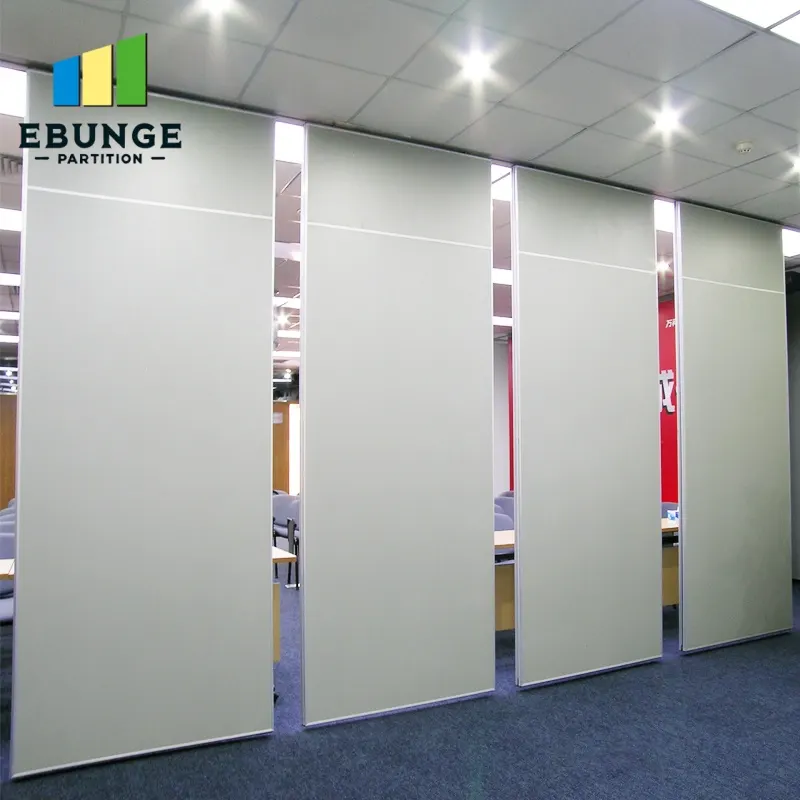
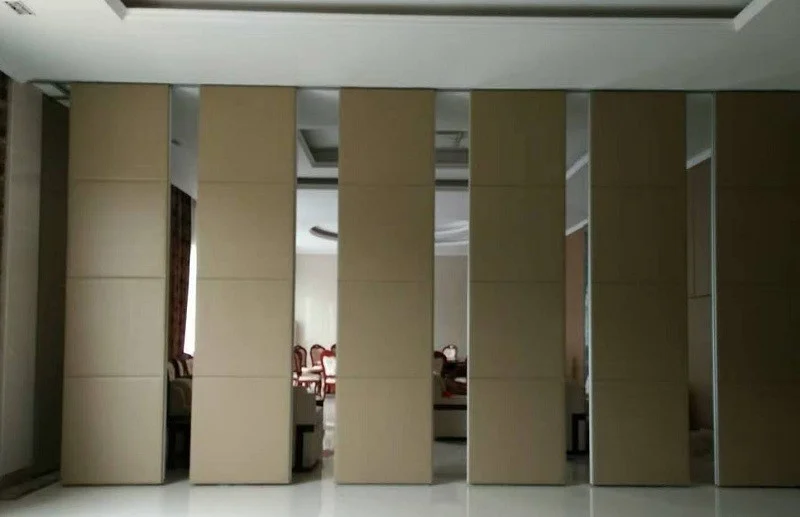
Because EBUNGE movable partition panels are individually movable and suspended from a top track, they cross the opening without a floor track. That means the changeover path is overhead, not along the floor. Your baseline should record the route actually used, including any turning or stacking movements reviewed from the layout.
Include preparation and closeout
Measure preparation before the first panel moves and closeout after the last panel is parked. Preparation may include checking the room, removing obstacles, and confirming the planned stacking area is clear. Closeout may include a visual check and returning furniture. These steps affect total changeover time and should be recorded consistently.
Building a Measurement Method That Fits Your Facility
Checklist focus: changeover performance baseline.
Choose a simple method your team can sustain. A stopwatch and a paper log are enough to begin. Record the date, room, starting layout, ending layout, number of panels moved, and total time. Add a short note about anything unusual, such as a blocked route or a late furniture move.
Use the same definition and the same timing points each time. Consistency matters more than precision at the start. After several changeovers, patterns will emerge. The exact overhead route and support arrangement must be confirmed by the responsible project team from coordinated drawings.
Separate controllable and external delays
Some delays come from the partition operation itself. Others come from room scheduling, furniture, or staffing. Keep these categories separate so the baseline reflects the partition changeover rather than unrelated facility issues.
Setting Internal Benchmarks Without External Claims
Review focus: changeover performance baseline.
An internal benchmark is a target you set from your own baseline, not a number borrowed from a brochure. For example, if your first ten changeovers average a certain time, you might set a goal to reduce variability rather than to beat an arbitrary figure.
Panel handling and the operating sequence must be confirmed for the selected layout and project conditions. Track the range as well as the average.
| Benchmark type | What it measures | How to use it |
|---|---|---|
| Consistency | Variation between changeovers | Improve scheduling reliability |
| Route efficiency | Time lost to turning or stacking | Review layout and parking position |
| Preparation discipline | Time before first panel moves | Standardize room readiness |
These benchmarks are internal only. They do not describe EBUNGE performance or any other product. They describe your facility under your conditions.
Tracking Trends Over Time
Review the baseline monthly or quarterly. Look for trends rather than single events. A gradual increase in changeover time may suggest a change in room use, furniture, or route. A sudden change may point to a specific incident worth investigating.
Keep the records simple and accessible. If the data is hard to collect, it will not be collected. A shared spreadsheet or a clipboard log can work. The goal is a living record that supports decisions.
When to revisit the baseline
Revisit the baseline after a significant change in room layout, furniture, or usage pattern. Also revisit it after any modification to the partition configuration. Because parking style is customized to the customer layout and project requirements, a change in stacking position can affect changeover time.
Coordinating With Project Documentation and Drawing Review
Operations planning should connect to project documentation. Straight, turning, and stacking routes are reviewed from the layout. Pass-door requirements and project documentation can be discussed with the supplier. These reviews help confirm that the planned movement path is continuous and supported.
Do not infer hidden performance from a drawing or a finish. Visible references can support layout discussion but do not verify hidden construction or performance. Confirm project-specific support, acoustic, and dimensional requirements with qualified professionals.
Evidence note
This article provides an operations framework only. It does not state or imply acoustic ratings, load capacity, installation time, or commercial results. Confirm all project-specific requirements through drawing review and appropriate professional advice.
Common Pitfalls in Changeover Benchmarking
Another is comparing rooms with different layouts as if they were identical. A third is treating a single difficult changeover as a trend.
Another pitfall is ignoring the parking position. If panels park far from the opening, changeover time may increase. Review the stacking route as part of the baseline.
Quick checklist
- Define start and end points for the changeover.
- Record the same data fields every time.
- Separate partition time from facility delays.
- Review trends monthly or quarterly.
- Revisit after layout or usage changes.
- Confirm support and acoustic requirements separately.
FAQ: Movable Partition Changeover Performance Baseline
What is a movable partition changeover performance baseline?
It is an internal record of how long and how consistently a changeover takes in your facility. It is built from your own observations, not from external performance claims.
Can I use a manufacturer’s published time as my baseline?
No. Published figures may not match your room, route, or staffing. Use your own measurements and confirm project-specific requirements separately.
How many changeovers should I measure before setting a benchmark?
There is no fixed number. Measure enough to see a pattern, then set an internal target based on your own range and average.
Does the baseline prove acoustic performance?
No. Confirm acoustic requirements with qualified professionals.
What if my changeover time changes suddenly?
Investigate the specific change. It may relate to furniture, route, staffing, or room use. Revisit the baseline after any significant change.
Where can I get help with project documentation?
You can discuss pass-door requirements and project documentation with the supplier. Review the movable walls product page and the resources page for general context, then contact us to discuss your project.
Conclusion: Build Your Own Evidence
A movable partition changeover performance baseline is a practical operations tool. It helps you schedule rooms, plan staffing, and identify friction without relying on unsupported claims. Start with a simple log, define the changeover clearly, and review trends over time.
Keep every recommendation tied to maintained product facts and project-specific review. Confirm support, acoustic, and dimensional requirements for your project. When you are ready to discuss documentation or pass-door requirements, contact EBUNGE to continue the conversation.