
Quick answer: changeover task sequencing
Review focus: changeover task sequencing.
Movable partition changeover task sequencing is the operational discipline of ordering every action between one room layout and the next. In multi-purpose venues, turnaround variability rarely comes from the partition itself. It comes from unclear task order, undefined handoffs and assumptions about what the installed system can do. This framework helps facility managers plan changeovers around confirmed product facts and project-specific drawings.
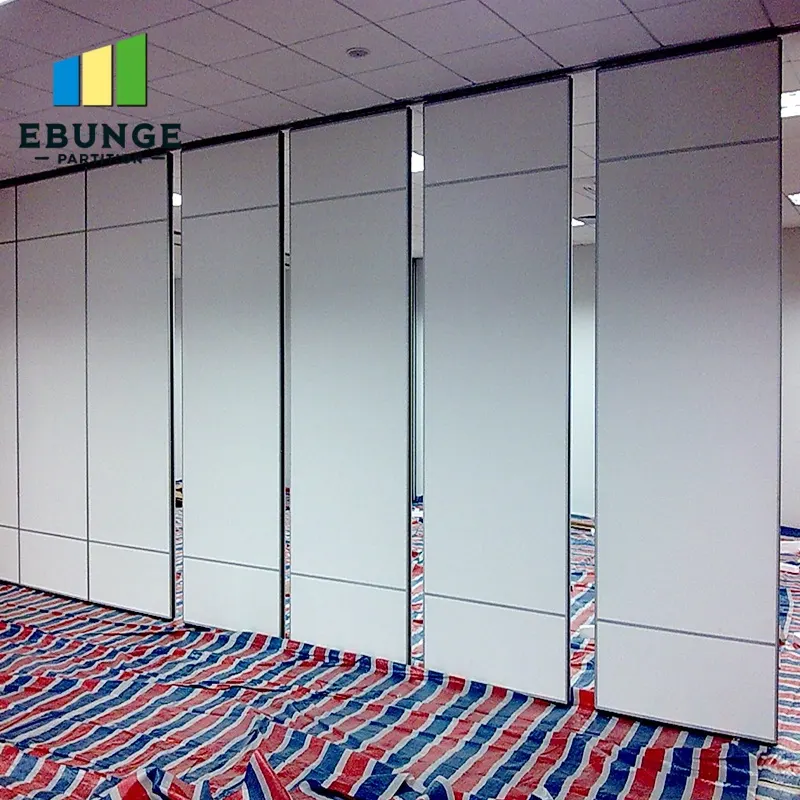
EBUNGE movable partition panels are individually movable, suspended from a top track, cross the opening without a floor track, and park at a planned stacking position. Straight, turning and stacking routes are reviewed from the layout. Those four facts anchor every sequencing decision below. The exact overhead route and support arrangement must be confirmed by the responsible project team from coordinated drawings.
Why Changeover Variability Starts Before the Room Is Cleared
Project review term: changeover task sequencing.
Most turnaround delays are decided long before staff touch a panel. The exact route, junction arrangement, continuous overhead path and parking position must be confirmed from the coordinated project drawings. The fix is not urgency. It is a written sequence tied to the reviewed layout.
Treat the changeover as a chain of dependent tasks. Each task has an owner, a trigger and a completion signal. When any of those three is missing, the next task waits. That waiting time is what shows up as variability in room turnaround reporting.
Separate fixed constraints from local choices
Fixed constraints come from the reviewed layout: the overhead route, turning positions and the planned stacking position. Local choices include who clears furniture, who inspects the opening and who confirms the room is ready for the next booking. Keep the two categories apart in your documentation so staff do not improvise around fixed constraints.
A Six-Step Changeover Task Sequence
Coordination scope: changeover task sequencing.
- Confirm the target layout. Match the booking to the reviewed configuration drawing before any physical work begins.
- Clear the movement route. Remove furniture, staging and temporary items from the straight, turning and stacking routes identified in the layout.
- Verify the overhead path.
- Move panels individually. Follow the reviewed order so each panel reaches its planned stacking position without blocking the next.
- Set the opening. Position panels for the required room division and check the opening against the layout.
- Hand off and record. Confirm completion with the receiving team and log any deviation for the next planning review.
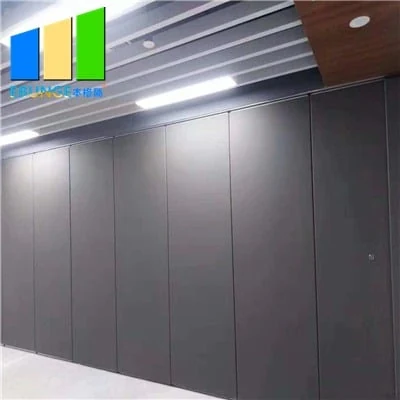
This sequence is deliberately generic. It describes task order, not tooling, staffing levels or timing. Those depend on the venue, the panel configuration and the project-specific support and dimensional review.
Defining Handoffs That Survive a Busy Schedule
Checklist focus: changeover task sequencing.
A handoff is a transfer of responsibility, not a conversation. Write it as a short statement: what is finished, what is verified, and who accepts the next task. Handoffs fail when the receiving person cannot tell whether the previous step is genuinely complete.
Use a three-part handoff statement
First, state the completed task. Second, state the evidence the receiver can see — for example, the route is clear and the panels are at the planned stacking position. Third, name the accepting role. The suitability of each route and parking arrangement depends on the approved layout, circulation, ceiling interfaces and operating sequence.
Keep handoffs role-based, not person-based
Roles survive shift changes; names do not. Define handoff points by function — setup lead, room readiness checker, receiving coordinator — so the protocol still works when staffing changes. Avoid embedding assumptions about how many people a task requires unless the project documentation confirms it.
Evidence Boundaries for Changeover Planning
Review focus: changeover task sequencing.
Planning documents describe task order and responsibility. They do not prove acoustic performance, structural capacity, cleaning compatibility or application reference outcomes. Those require matching project-specific evidence.
This boundary matters because changeover plans are often reused across rooms. A sequence that works in one reviewed layout may not transfer to another without a fresh route and support review. Reusing a plan without checking the drawing is a common source of hidden error.
Do not convert a rating into a promise about how a room will perform. Confirm acoustic requirements for the specific project and opening.
Coordination Checklist for Project Teams
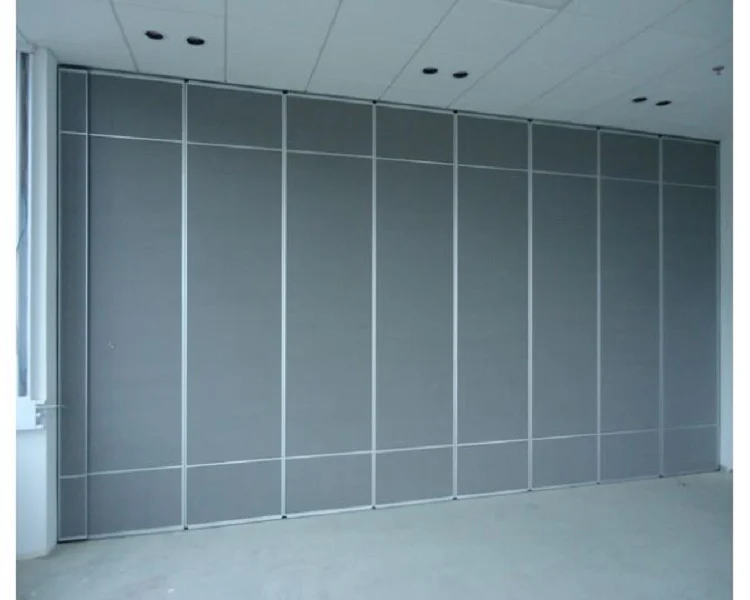
- Reviewed layout showing straight, turning and stacking routes.
- Confirmed parking position and its relationship to furniture storage.
- Defined handoff roles and completion signals.
- Pass-door requirements discussed where the room program needs them.
- Finish selections drawn from approved options: laminate, melamine, fabric, leather, glass and other approved surfaces.
- Project documentation confirming support, acoustic and dimensional requirements.
Use this checklist as a planning gate, not a specification. Each line still needs project-specific confirmation before it becomes an operational instruction. For maintained product context, see the movable wall systems page and the planning resources library.
Reducing Turnaround Variability Without Inventing Performance
Variability drops when the sequence is stable and the handoffs are explicit. Panel handling and the operating sequence must be confirmed for the selected layout and project conditions. Avoid writing target times into the protocol unless the project has its own measured basis. Instead, track where the sequence stalls and fix the stalled dependency.
Common stall points include an unclear parking position, a route blocked by stored items, and a handoff with no visible completion signal. Each is a planning issue, not a product limitation. Correcting them keeps the changeover predictable without overstating what the partition system does.
Review the sequence after every layout change
When the room program changes, the reviewed routes and stacking position may change too. Revisit the sequence and the handoff map before the next event cycle. This is the cheapest way to prevent a stale plan from becoming an operational assumption.
Frequently Asked Questions
What information is required for movable partition changeover task sequencing?
You need the reviewed layout showing straight, turning and stacking routes, the planned parking position, the target room configurations, and the roles responsible for each handoff. Support, acoustic and dimensional requirements should be confirmed for the project rather than assumed from a generic plan.
Do movable partition panels need a floor track for changeovers?
EBUNGE movable partition panels are top-hung and cross the opening without a floor track. Movement follows the reviewed overhead route. Every proposed movement path still requires a continuous connected overhead route and project-specific support review.
Can one changeover sequence be reused across different rooms?
Only after checking each room’s reviewed layout. Routes, turning positions and stacking positions are layout-specific. A sequence that fits one room may not fit another without a fresh review.
How should handoffs be documented?
Use a short three-part statement: the completed task, the visible evidence of completion, and the accepting role. Keep handoffs role-based so they remain valid across shift changes.
Can the changeover plan specify acoustic performance?
No. A changeover plan describes task order and responsibility.
What finish options can be considered during planning?
Confirmed finish options include laminate, melamine, fabric, leather, glass and other approved surfaces.
Conclusion: Sequence First, Then Confirm
A reliable changeover protocol is built from confirmed product facts, a reviewed layout and explicit handoffs. Keep the sequence stable, keep the evidence boundaries visible, and confirm support, acoustic and dimensional requirements for each project. That approach reduces turnaround variability without inventing performance claims.
To discuss pass-door requirements, project documentation or a layout review for your venue, contact the EBUNGE team and share your drawings and room program.