
Quick project answer
Review focus: movable partition changeover downtime review.
Changeover downtime is rarely caused by one obvious fault. In a movable partition changeover downtime review, the useful question is not who moved the panels slowly, but which planning assumption failed to match the room as built. This framework helps contractors, architects, designers, owners and facility teams trace downtime to its root cause without inventing performance conclusions. It stays inside confirmed product facts and asks for project-specific confirmation where drawings, support conditions or acoustic targets are involved.
Why Changeover Downtime Deserves a Root-Cause Review
Project review term: movable partition changeover downtime review.
Downtime is an operational symptom. It may appear as a late room handover, a stalled event setup or a repeated manual adjustment before a space can be used. Treating it as a training issue alone can hide a layout or coordination problem that will return at the next changeover.
A root-cause review separates what is visible from what must be confirmed. Visible evidence includes the opening width, the parking position, the route the panels follow and whether the floor is clear along the partition line. Confirmed EBUNGE facts state that panels are individually movable, suspended from a top track, cross the opening without a floor track, and park at a planned stacking position. The suitability of each route and parking arrangement depends on the approved layout, circulation, ceiling interfaces and operating sequence.
Map the Movement Route Before Blaming Operations
Coordination scope: movable partition changeover downtime review.
Every changeover depends on a connected overhead route. Straight, turning and stacking routes should be reviewed from the layout, not assumed from a room photograph. The exact route, junction arrangement, continuous overhead path and parking position must be confirmed from the coordinated project drawings.
Route questions for the project team
- Does the layout show a continuous connected overhead route from the closed position to the parking position?
- Are turning points and stacking zones drawn, or only described in conversation?
- Does the parking position conflict with door swings, furniture zones or service access?
- Is the floor along the partition line free of a continuous running track or floor hardware, as confirmed for the top-hung system?
These questions are planning checks, not engineering approvals. Support and dimensional requirements must be confirmed for the specific project.
Separate Confirmed Product Facts from Project Assumptions
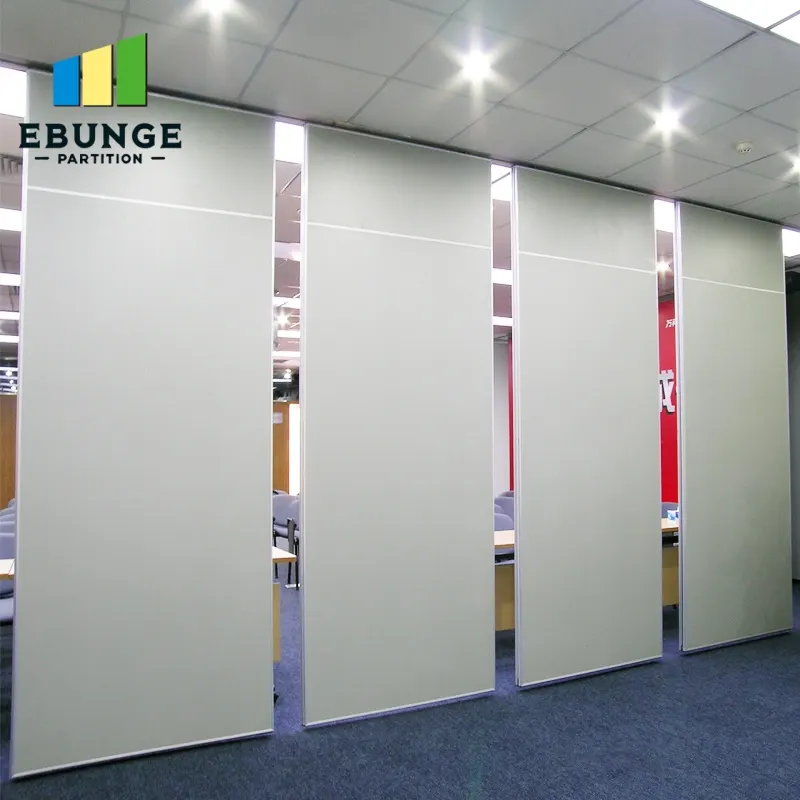
Checklist focus: movable partition changeover downtime review.
A reliable review uses a simple evidence boundary. Confirmed facts can be repeated. Project assumptions must be labelled and verified. The table below shows how to sort common statements during a changeover review.
| Statement type | Example | Review action |
|---|---|---|
| Confirmed product fact | Panels are individually movable and top-hung. | Use as planning context. |
| Confirmed product fact | Panels cross the opening without a floor track. | Check the layout for a clear floor line. |
| Project assumption | The parking position will not block another function. | Confirm against the coordinated layout. |
| Unsupported claim | A specific acoustic result will be achieved. | Remove or replace with a project-specific confirmation request. |
This sorting prevents a changeover review from drifting into promises the drawings do not support.
Review Finishes, Seals and Acoustic Concepts Carefully
Confirmed finish options include laminate, melamine, fabric, leather, glass and other approved surfaces. Each option should be checked against the project’s design intent and maintenance expectations without inferring hidden performance from appearance.
Where a project has an acoustic target, the review should ask for the relevant project-specific documentation rather than deriving a result from a finish sample or a visible panel shape.
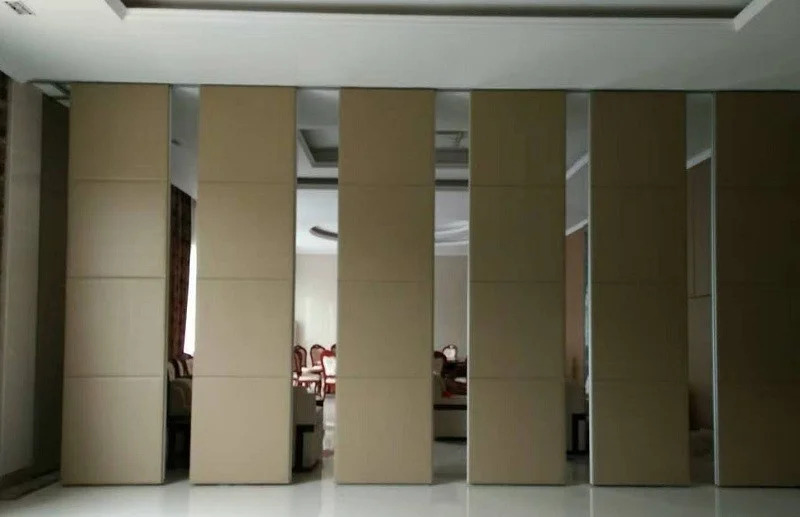
Evidence note
If a statement about acoustic, fire, durability, load or maintenance performance cannot be matched to project-specific evidence, keep it out of the changeover review. Replace it with a confirmation request to the project team.
Build a Changeover Downtime Review Checklist
A checklist keeps the review repeatable across rooms and events. It also gives facility teams a shared language when they report a problem.
- Record the room, date and changeover sequence that caused downtime.
- Compare the as-built opening and parking position with the coordinated layout.
- Check whether the route is straight, turning or stacking, and whether it is continuously connected overhead.
- Confirm that the floor line is clear of a continuous running track or floor hardware.
- List any finish, seal or acoustic expectation that lacks project-specific evidence.
- Identify whether a pass-door requirement affects the changeover sequence.
- Note documentation gaps and assign them to the responsible project party.
- Confirm support, acoustic and dimensional requirements before any design change.
Panel handling and the operating sequence must be confirmed for the selected layout and project conditions. It simply makes the cause of downtime visible and keeps decisions tied to evidence.
Coordinate Documentation Across Project Parties
Changeover downtime often appears at handover because information sits in different documents. Architects may hold the layout, contractors may hold the installation sequence, and facility teams may hold the event calendar. A review should bring these together without inventing a single source of truth that does not exist.
Project documentation and pass-door requirements can be discussed with the supplier. That discussion should cover the layout, the intended routes and the parking position. It should not be treated as approval of support conditions, acoustic results or dimensional fit. Those remain project-specific and require confirmation by the responsible parties.
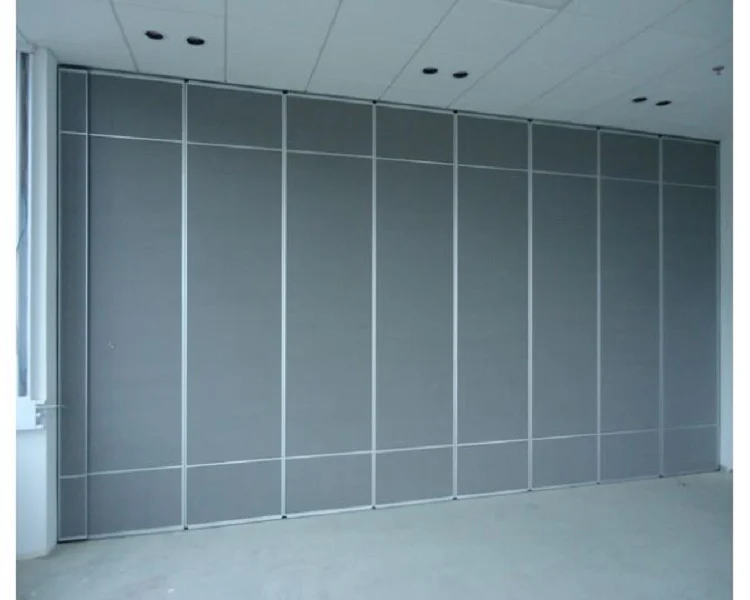
FAQ: Movable Partition Changeover Downtime Review
What is a movable partition changeover downtime review?
It is a structured look at why a room takes longer than planned to change between configurations. It traces the cause to route logic, layout coordination, documentation or operational assumptions rather than blaming one symptom.
Which product facts can be used in the review?
Confirmed facts include individually movable panels, top-hung suspension, movement across the opening without a floor track, and parking at a planned stacking position. Other statements need project-specific evidence.
Can finish choice explain a changeover problem?
Confirmed options include laminate, melamine, fabric, leather, glass and other approved surfaces.
How should acoustic expectations be handled?
If a project has an acoustic target, ask for the relevant project-specific documentation instead of inferring a result from a sample or drawing.
When should the project team stop and confirm?
Confirm support, acoustic and dimensional requirements for the specific project before proceeding.
Does the review require a site visit?
Not necessarily. A drawing-based review can identify many coordination gaps. A site check may still be useful where as-built conditions differ from the coordinated layout.
Conclusion: Keep the Review Evidence-Bounded
A movable partition changeover downtime review is most useful when it separates confirmed product facts from project assumptions. Use the layout to check straight, turning and stacking routes. Keep the floor line clear of a continuous running track. Treat finishes as design choices, not performance proof. The exact overhead route and support arrangement must be confirmed by the responsible project team from coordinated drawings.
For project planning support, review the movable wall systems and the planning resources, then contact the team to discuss pass-door requirements, documentation and layout coordination.