
Quick answer: movable partition wall
Review focus: movable partition wall.
Movable partition wall tender addenda often arrive after the main package has been priced, when drawings, finishes and interface responsibilities are still moving. For overseas buyers, the risk is not only cost; it is scope drift that leaves the contractor, architect and owner with different assumptions. This framework helps project teams review addenda and control scope changes using maintained product facts, visible evidence limits and project-specific drawing review. It applies to conference suites, training rooms, coworking floors, hotel function spaces and other flexible areas, but every configuration still requires its own confirmation.
Why Addenda Create Scope Risk in Partition Packages
An addendum is a formal change to the tender documents. In a movable partition wall package, it may adjust the opening size, finish schedule, parking position, pass-door requirement or documentation set. Each change can affect the overhead route, the stacking zone and the interface with adjacent trades. The danger is treating an addendum as a simple substitution rather than a coordinated revision.
Procurement teams should compare every addendum against the original scope line by line. If the addendum changes a route or parking location, the layout must be reviewed again. If it changes a finish, the approved surface category must be checked. If it changes documentation, the submittal register must be updated. None of these steps should rely on assumed performance or hidden engineering conclusions.
Evidence Boundaries Buyers Should Apply to Every Addendum
Movable partition wall tender addenda should be read with clear evidence boundaries. Visible references can support layout discussion but do not verify hidden construction or performance. The suitability of each route and parking arrangement depends on the approved layout, circulation, ceiling interfaces and operating sequence.
What the maintained product facts support
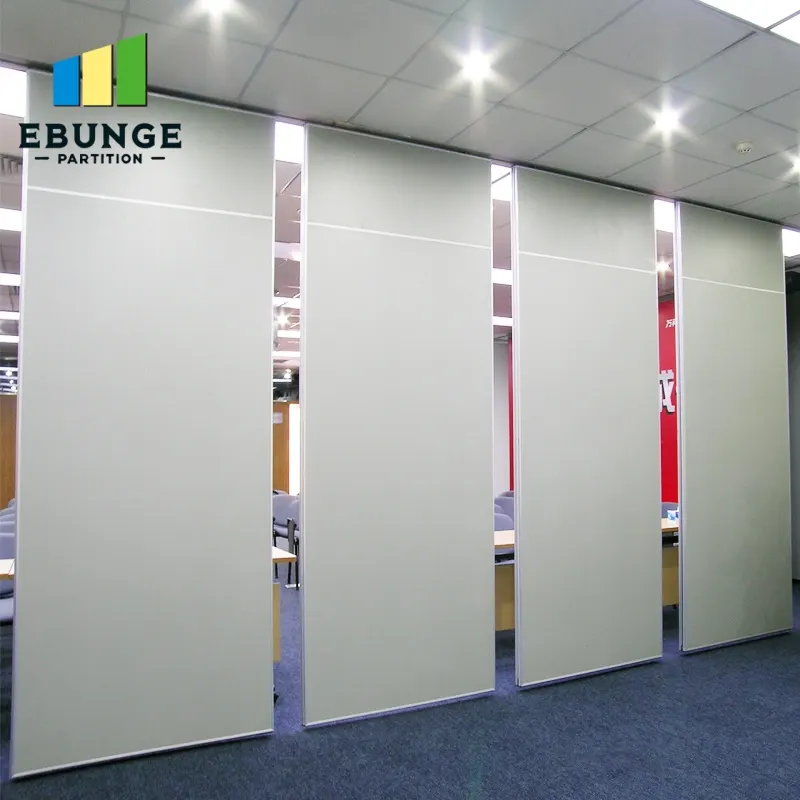
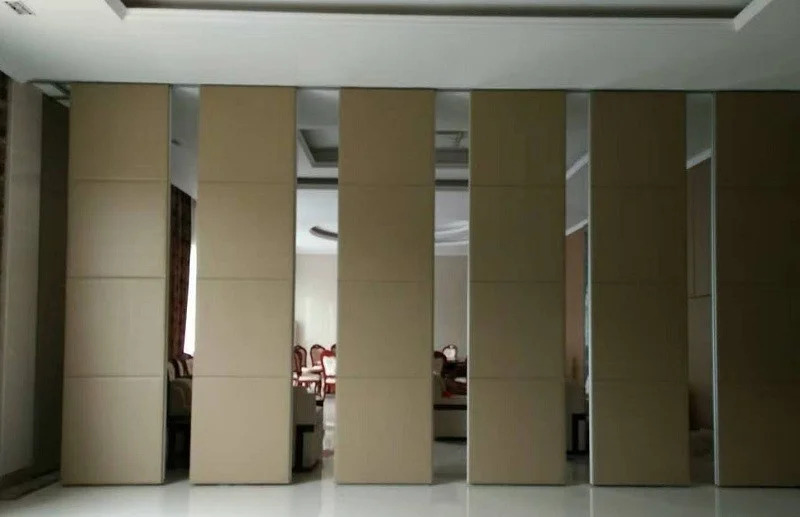
EBUNGE movable partition panels are individually movable, suspended from a top track, cross the opening without a floor track, and park at a planned stacking position. Straight, turning and stacking routes are reviewed from the layout. Confirmed finish options include laminate, melamine, fabric, leather, glass and other approved surfaces. Pass-door requirements and project documentation can be discussed.
What still requires project-specific confirmation
Support points, acoustic requirements, dimensional tolerances, interface details and local compliance must be confirmed for each project. The project team should confirm the required rating, the test evidence expected and the exact assembly being evaluated.
A Step-by-Step Review Process for Addenda and Scope Changes
- Log the addendum. Record the addendum number, date, issuer and the exact clauses affected.
- Map the change. Identify whether it touches layout, route, parking, finish, pass-door, documentation or interfaces.
- Re-check the route. Confirm that the overhead route remains continuous and connected for every proposed movement path.
- Re-check the parking zone. Confirm that the stacking position still fits the coordinated design and does not conflict with other trades.
- Re-check finishes. Confirm that the proposed surface is within the approved finish options and that samples or documentation are updated.
- Re-check documentation. Update the submittal register, drawing set and approval status.
- Issue a written response. State what is accepted, what is excluded and what remains subject to project-specific confirmation.
Scope Change Control Checklist for Project Teams
- Does the addendum change the opening width, height or alignment?
- Does it change the straight, turning or stacking route?
- Does it change the parking position or the space reserved for stacked panels?
- Does it change the finish category or the approved surface?
- Does it add or remove a pass-door requirement?
- Does it change the documentation deliverables or approval sequence?
- Does it affect interfaces with ceilings, floors, adjacent walls or other trades?
- Has the change been confirmed against the current layout and project-specific requirements?
Comparing Addendum Types and Their Review Focus
| Addendum type | Typical trigger | Primary review focus |
|---|---|---|
| Layout change | Room size or opening adjusted | Route continuity, parking zone, dimensional coordination |
| Finish change | Design intent or sample approval updated | Approved finish options, sample status, documentation |
| Pass-door change | Access or circulation requirement revised | Pass-door requirement, layout impact, interface review |
| Documentation change | Submittal or approval process updated | Register, drawing set, approval status |
This table is a review aid, not a performance statement. Each row still requires project-specific confirmation and matching evidence.
Coordination Between Contractor, Architect and Owner
The contractor should confirm buildability and interface assumptions. The architect should confirm design intent and finish direction. The owner should confirm operational requirements and acceptance criteria. The supplier should confirm what is supported by maintained product facts and what needs further review.
Where a change affects the overhead route or parking position, a drawing review should be scheduled before pricing is finalized. Where a change affects acoustic requirements, the project team should confirm the required rating and the evidence expected. Where a change affects documentation, the submittal register should be updated immediately. These steps reduce the risk of unresolved assumptions being carried into construction.
Documentation and Submittal Discipline
Addenda should be reflected in the submittal register, drawing set and approval records. A clear revision history helps avoid disputes later. Each submittal should state the addendum number it responds to and the scope it covers. If a requirement cannot be confirmed from available evidence, it should be marked as pending project-specific confirmation rather than assumed.
For buyers comparing packages, the movable wall systems page provides maintained product context. Additional planning guidance is available in the resources section. Project teams with specific addenda or scope change questions can contact EBUNGE to discuss documentation and pass-door requirements.
Frequently Asked Questions
What is a movable partition wall tender addendum?
It is a formal change to the tender documents that adjusts part of the movable partition wall package, such as layout, finish, pass-door requirement or documentation. It should be logged and reviewed against the original scope.
Does an addendum automatically change the acoustic requirement?
Not automatically. Acoustic requirements should be confirmed for the specific project and assembly.
Can a finish change be approved without re-checking the layout?
A finish change may not affect the layout, but it still requires confirmation that the proposed surface is within the approved finish options and that samples or documentation are updated.
How should parking position changes be handled?
Parking position changes should trigger a review of the stacking route and the space reserved for stacked panels. The coordinated design must still support the revised position.
What should be included in a scope change response?
A written response should state what is accepted, what is excluded and what remains subject to project-specific confirmation. It should reference the addendum number and the affected scope.
When should the project team request a drawing review?
Request a drawing review whenever an addendum affects the overhead route, parking position, opening dimensions or interfaces with other trades. Early review reduces unresolved assumptions.
Conclusion and Next Steps
Movable partition wall tender addenda and scope change control require disciplined review, not assumptions. Keep the addendum log current, re-check routes and parking positions, confirm finishes and documentation, and state clearly what still needs project-specific confirmation. This approach helps contractors, architects, designers, owners and distributors keep the package aligned from tender to installation.
To discuss your project documentation, pass-door requirements or addendum review process, contact EBUNGE and share your current layout and tender documents.