
Quick project answer
A movable partition wall quotation can look complete before the buyer has a clear way to check what will actually be supplied. A practical readiness review separates visible components, project-specific configuration decisions and items that still need approved drawings. This checklist helps contractors, architects, distributors and owners ask useful questions before production release, packing or site delivery.
Start with a controlled component schedule
Ask the supplier to identify the selected panel arrangement, overhead support interface, track route, trolley type, seals, closures, pass-door request, finishes and packing scope in one controlled schedule. The schedule should use the current project reference and revision. It should not turn a general product image into proof of a selected system.
Match every component line to an agreed responsibility. The buyer may confirm room use and finishes; the responsible project team confirms building interfaces; the supplier confirms what belongs to the proposed configuration. Keeping those roles visible prevents a brochure description from becoming an unapproved fabrication instruction.
Review visible panel information without over-reading a photo
The installed panel image below shows a visible panel face, joints and a pass-door opening. It is useful for discussing presentation and interface questions.
Use the movable wall product overview to start the product conversation, then use the current project documents for the selected configuration.
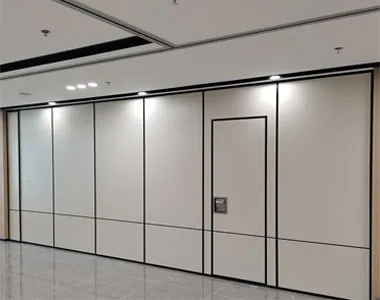
- Identify the panel face and access features visible in the reference.
- Compare them with the current drawing and component schedule.
- Record every item that still needs a project-specific confirmation.
For the selected wall, request the panel count, nominal opening reference, finish direction, edge treatment, closure arrangement and any pass-door option on the supplier’s current documents. Where a room requires access through a closed wall, confirm the location and project requirements separately.
Keep the overhead route continuous on the drawings
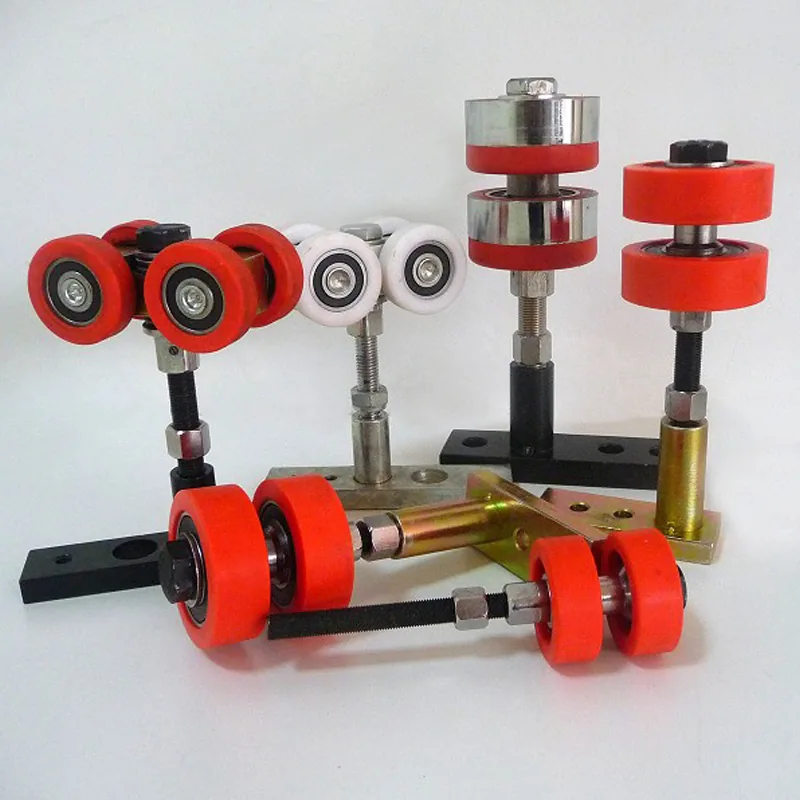
Movable wall panels travel on an overhead system. The exact route, junction arrangement, continuous overhead path and parking position must be confirmed from the coordinated project drawings. A panel cannot be assumed to leave that supported route to reach an untracked corner.
The trolley image is a product-component reference, not a confirmation of the carrier used on every system. Ask for the selected trolley, track and panel relationship in the approved arrangement, and have the responsible designers confirm the building support basis.
Check profile and finish materials against samples
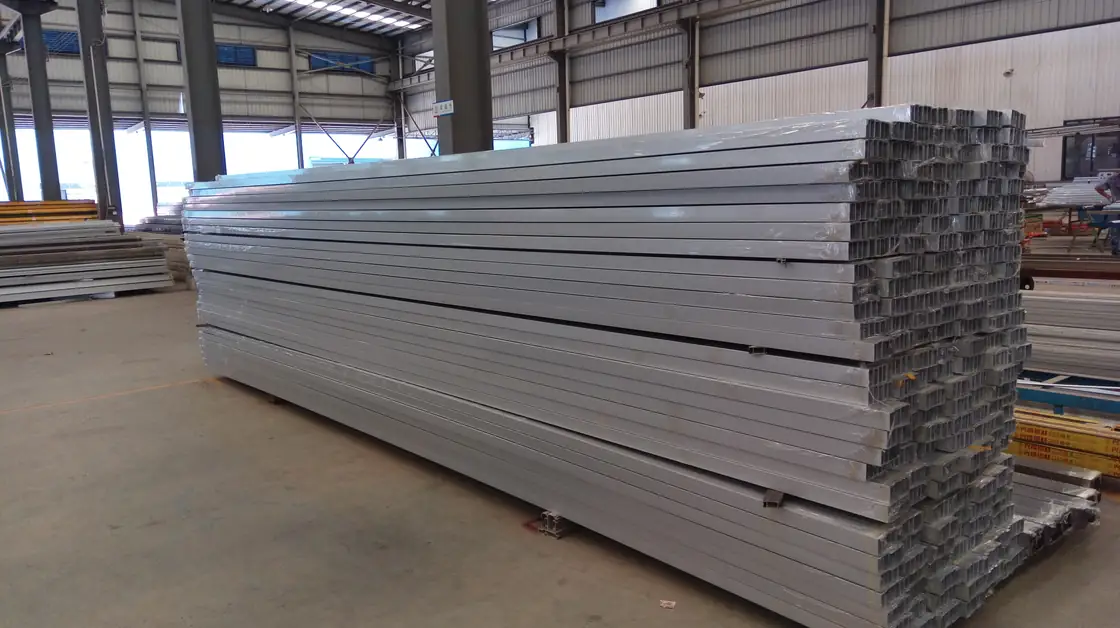
The factory photo below shows aluminum profile stock. The suitability of each route and parking arrangement depends on the approved layout, circulation, ceiling interfaces and operating sequence. Those items belong in controlled samples, drawings and configuration records.
Ask for a finish sample and a written description of the visible profile treatment before release. Record colour, sheen, grain direction, edge condition and the approval reference. This gives the project team a traceable way to check appearance without implying technical properties that have not been verified.
Make packing and delivery questions explicit
Before dispatch, confirm how panels, tracks, trolleys, seals, trims, fasteners and documents will be identified. Packing labels should help the receiving team connect each package with the controlled schedule. A receiving record should note visible damage, missing labels and any item that requires supplier clarification.
Do not infer the contents of a closed crate from an exterior photograph. Use the packing list, label reference and receiving count to establish what has arrived. Keep a discrepancy record until the responsible party confirms the next action.
The EBUNGE resources library can help the team organize supporting questions before the release meeting.
Use a release meeting that tests three room conditions
Review the closed condition, the open condition and the transition between them. The team should check intended circulation, permanent doors, furniture, ceiling services and the panel operating zone. A release is stronger when it tests the way the room will be used, instead of approving only a product elevation.
List unresolved matters with a source, owner and required response. Typical open items include support confirmation, ceiling build-up, route changes, parking clearance, finish sample approval, access needs and configuration-matched acoustic evidence. Hold only the activity that actually depends on the missing answer.
Buyer checklist before production release
- Current opening, route and parking information are identified.
- The component schedule names the selected configuration and revision.
- Support and ceiling interfaces have a responsible reviewer.
- Visible finish details are tied to approved samples.
- Packing, labels and receiving records are defined.
- Any performance statement has matching configuration evidence.
Frequently asked questions
Can a product photo confirm the internal panel construction?
No. Use the approved configuration information and matching documents for internal construction and performance questions.
Do all movable partition walls use the same trolley?
No. Confirm the selected trolley and track arrangement for the proposed system.
Can a pass door be assumed from an installed example?
No. Treat it as a configuration and project coordination question.
What should a receiving record include?
Record package references, visible condition, counts, missing labels and items requiring clarification.
When should acoustic values be stated?
Only when matching evidence applies to the proposed configuration and project metric.
Conclusion
A component readiness checklist gives the project team a simple release path: use current drawings, identify the visible parts, connect every decision to an owner and keep unverified claims out of the record. Share the latest opening, route, finish and delivery information with EBUNGE for a project-specific review.