
Choosing a school folding partition supplier is a high-stakes decision for any office renovation company tasked with upgrading a school hall. The partition must divide space effectively, meet acoustic demands, and comply with building regulations, all while fitting the project’s budget and timeline. This guide focuses on the critical aspects of supplier evaluation, from quotation readiness to technical specifications and after-sales support, helping you make an informed choice that aligns with your project’s needs.
Direct Answer: The best school folding partition supplier for your project is one that provides detailed, code-compliant quotations, offers customization based on your drawings, and demonstrates a reliable track record in delivery and after-sales support. Prioritize suppliers who ask about your opening size, acoustic targets, and finish preferences, and who can guide you through installation.
School Folding Partition Supplier: Understanding Your School Hall Partition Requirements
Before contacting suppliers, you must have a clear picture of your project’s needs. This includes the exact opening dimensions (width, height, and depth), the desired acoustic performance (measured in Rw dB), and the aesthetic finish that complements the school’s interior. Consider how the partition will be used: will it divide the hall for simultaneous classes, or create a quiet space for exams? This affects the required sound insulation and operational ease.
Also, assess the structural integrity of the building. A top-hung track system, which EBUNGE specializes in, requires adequate overhead support. You’ll need to know the load-bearing capacity of the ceiling or roof structure. Gathering these details upfront ensures that supplier quotations are accurate and comparable.
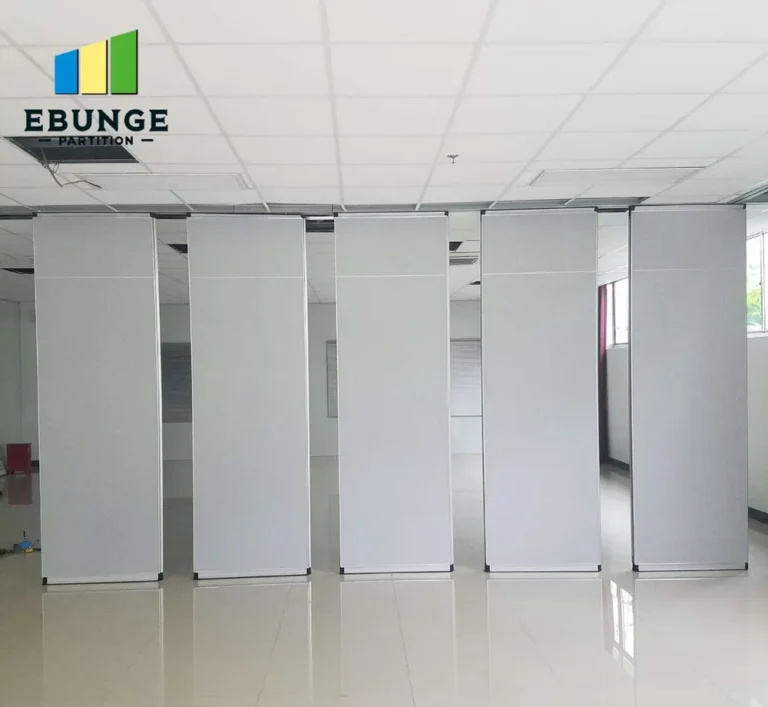
Need help turning the school folding partition supplier requirements into a practical project layout?
Key Technical Specifications to Evaluate
When comparing proposals, focus on the technical details that impact performance and longevity. For a school hall, acoustic performance is often a top priority. Look for suppliers who provide clear acoustic ratings based on standard testing. However, be cautious: actual on-site performance can vary due to installation quality and flanking paths. Therefore, rely on the supplier’s experience and ask for references from similar educational projects.
Another critical specification is the track system. A top-hung track without a floor rail offers several advantages: it creates a seamless floor finish, reduces trip hazards, and simplifies cleaning. Ensure the supplier’s system is designed for heavy daily use, with durable hangers and smooth operation. Also, consider the partition’s thickness and weight, which affect stability and sound insulation.
Compliance with Building Regulations
Your partition must comply with local building codes, including fire safety, accessibility, and structural requirements. A reliable supplier will be knowledgeable about these regulations and provide documentation to prove compliance. They should also be able to advise on any additional requirements for public buildings, such as emergency egress and fire-rated materials. Always verify that the supplier’s products meet the standards applicable in your region.
Assessing Supplier Reliability and Track Record
Supplier reliability is paramount, especially when you’re coordinating an overseas delivery. Look for evidence of past projects, especially in the education sector. Ask for case studies or references that demonstrate their ability to deliver on time and handle customization. A supplier with a local presence or strong partnerships can mitigate risks associated with international shipping and installation.
Also, consider their communication responsiveness. A supplier who promptly answers your queries and provides detailed information is more likely to be reliable throughout the project. Check their after-sales support: do they offer installation guidance, spare parts, and maintenance services? These factors can significantly affect the total cost of ownership.
Customization and Design Compatibility
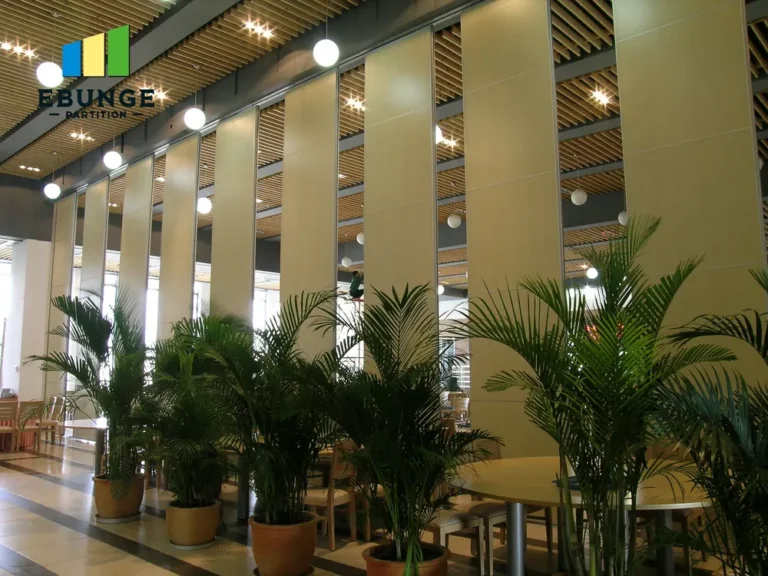
Every school hall has unique dimensions and aesthetic preferences. A good supplier should offer customization options, such as panel sizes, finishes (e.g., whiteboard, tackable surfaces), and glazing. They should be willing to work from your architectural drawings to ensure a perfect fit. EBUNGE, for instance, emphasizes custom project coordination, providing tailored solutions based on your specifications.
Design compatibility extends to the partition’s operation. Consider the available space for stacking the panels when open. Some systems require more wall space than others. Ensure the supplier’s system aligns with your spatial constraints. Also, think about future modifications: can the partition be easily reconfigured or expanded if the school’s needs change?
Share the opening, drawings, finish direction, and privacy target for a project-specific review.
Quotation Readiness and Transparency
A detailed quotation is a sign of a professional supplier. It should itemize costs for materials, hardware, delivery, installation (if offered), and any customization fees. Beware of vague estimates that lack specifics. A reliable supplier will ask for your opening size, drawings, acoustic target, finish preference, and project location before providing a quote. This ensures that the quotation reflects your exact needs and avoids surprises later.
Transparency also includes clear terms for payment, delivery timelines, and warranty. Understand what is covered under warranty and for how long. Does it include parts and labor? What is the process for claims? A supplier who is upfront about these details is more trustworthy.
Total Cost of Ownership and Installation Timeline
Beyond the initial purchase price, consider the total cost of ownership. This includes installation, maintenance, energy efficiency (if glass panels are involved), and potential repairs. A cheaper partition may have higher long-term costs due to poor durability or expensive spare parts. Discuss the expected lifespan with the supplier and ask for maintenance recommendations.
Installation timeline is another critical factor. For a school, installation often must be scheduled during holidays to minimize disruption. Confirm the supplier’s ability to meet your timeline and whether they offer installation services or can recommend certified installers. A delay in installation can have cascading effects on the project schedule.
Warranty and After-Sales Support
A robust warranty is a safeguard against manufacturing defects and premature wear. Ask for the warranty terms in writing and understand what is excluded. For instance, does the warranty cover the track system, hardware, and panels? Also, inquire about after-sales support: is there a local agent or service center? How quickly can they respond to issues? For overseas suppliers, this can be a deciding factor.
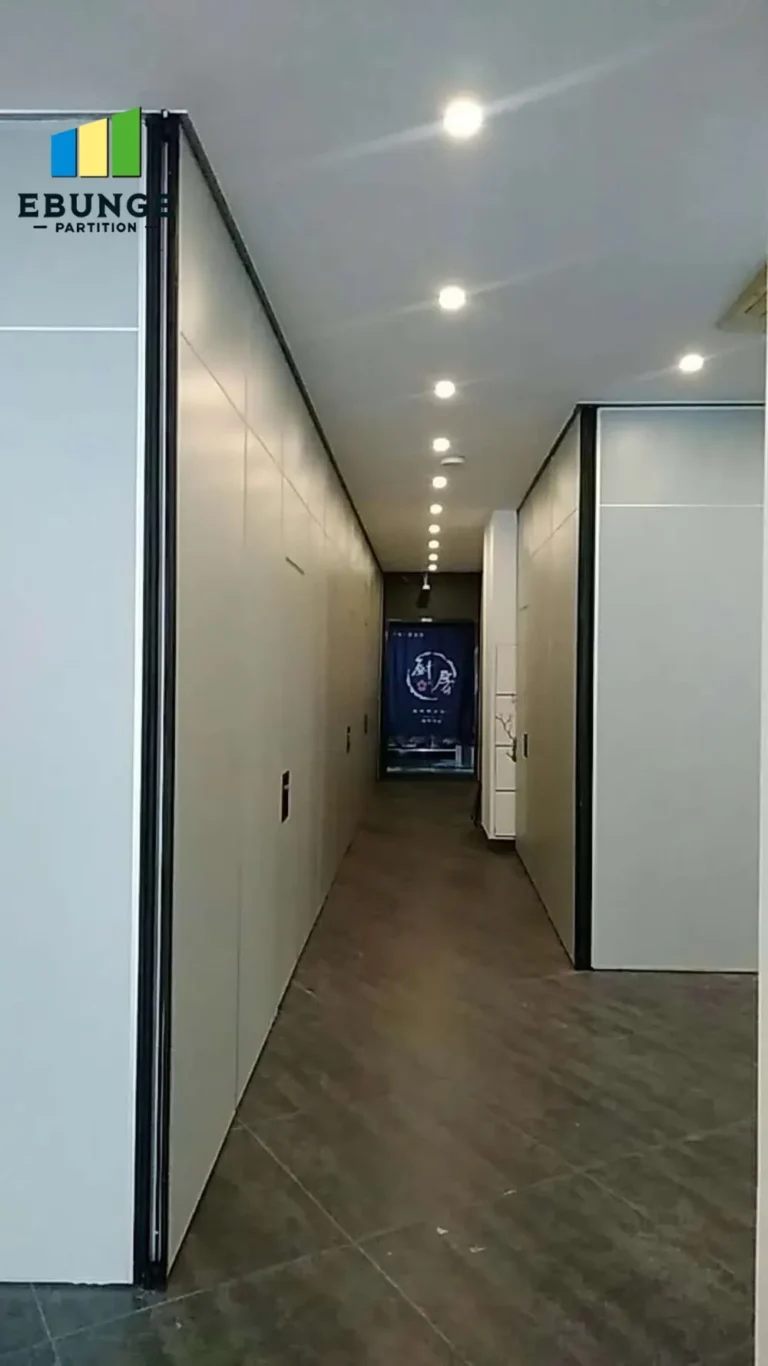
Some suppliers offer installation guidance and detailed maintenance manuals, which can help your team manage the partition effectively. EBUNGE provides drawings and installation guidance as part of its custom project coordination, ensuring that you have the support you need even if you use your own installers.
Practical Checklist for Supplier Evaluation
To streamline your decision-making, use this checklist when comparing suppliers:
- Do they provide a detailed, itemized quotation based on your specifications?
- Can they supply technical data sheets and compliance certificates?
- Do they offer customization in finishes, sizes, and configurations?
- What is their estimated delivery and installation timeline?
- What warranty and after-sales support do they offer?
- Can they provide references from similar school projects?
- Are they experienced in overseas delivery and coordination?
- Do they use a top-hung track system without floor rail?
Frequently Asked Questions
What is the typical lead time for a school folding partition?
Lead times vary based on customization and order size. Typically, it can range from 4 to 12 weeks, excluding shipping and installation. Always confirm the exact timeline with your supplier, as it affects your project schedule.
How do I determine the acoustic performance required for a school hall?
Consider the activities that will occur simultaneously. For general teaching, an Rw of 40-45 dB may suffice, but for music or exams, higher ratings (45-50+ dB) are recommended. Consult with an acoustician to establish the exact target for your project.
Can the partition be fitted to existing structures?
Yes, most systems can be adapted, but it requires accurate measurements and a structural assessment. The top-hung track must be securely fixed to the supporting structure. A professional supplier will guide you through this process.
What finishes are available for school partitions?
Common finishes include laminate, veneer, paint, and tackable surfaces. Whiteboard or marker-friendly surfaces are popular for classrooms. Discuss your aesthetic and functional needs with the supplier to choose the best finish.
How is the partition installed, and do we need special labor?
Installation requires skilled technicians familiar with the system. Some suppliers offer installation services, while others provide detailed drawings and guidance for your own installers. Ensure that your team is adequately trained to avoid issues.
In conclusion, selecting a school folding partition supplier involves careful evaluation of technical specifications, reliability, and support. By focusing on your specific requirements and asking the right questions, you can find a partner who delivers a high-quality, functional partition that meets your school’s needs. For more insights, explore our resources on movable partition walls and industry blogs. If you’re ready to discuss your project, contact us for personalized assistance.
For this buyer review, school folding partition supplier should be checked against the confirmed opening, drawings, operating plan, and project specification.
Send the opening size and drawings to discuss a differentiated school folding partition supplier solution.