
When planning a school hall that must serve both as an assembly space and as a venue for examinations, performances, or community events, the acoustic behavior of an operable wall becomes a central decision. The school sliding partition acoustic performance directly affects speech intelligibility, concentration, and compliance with building regulations. This article is written for facility managers, architects, and procurement officers who need a practical framework for evaluating acoustic partitions before requesting quotations. We focus on the application in school halls, addressing the questions that matter for budget planning, installation scheduling, and long-term satisfaction.
Direct answer: For a school hall, the school sliding partition acoustic performance is primarily determined by the partition’s weighted sound reduction index (Rw) and Sound Transmission Class (STC), which must be verified against the specific acoustic requirements of the space. A typical target for separating classrooms or a hall from a corridor is STC 50, but for music rooms or areas requiring high speech privacy, higher ratings such as STC 55 or more may be necessary. Always confirm the required rating from your acoustic consultant or building regulations, and request test certificates from the manufacturer. The partition’s performance also depends on proper installation, including perimeter sealing and the use of a top-hung track system without a floor rail to minimize sound leaks.
School Sliding Partition Acoustic Performance: Why Acoustic Performance Matters in a School Hall
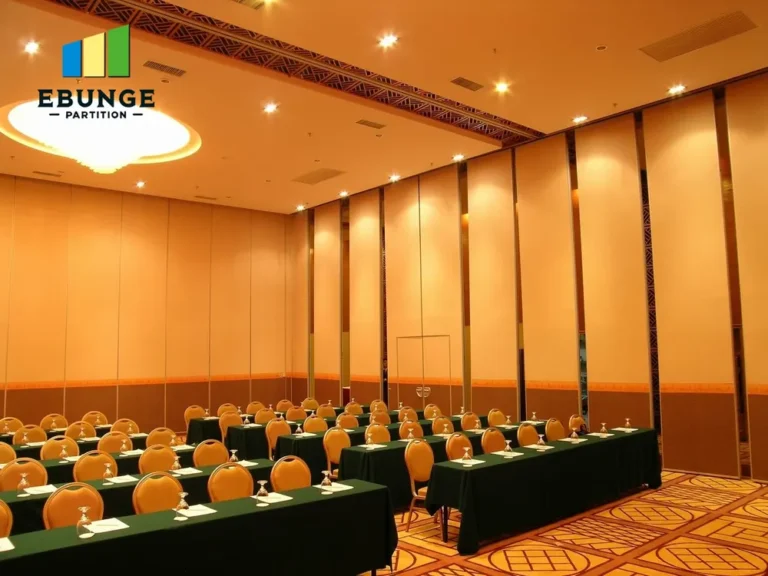
In a school hall, the partition often divides a large space into smaller rooms for simultaneous activities. Poor acoustics can cause sound to leak between areas, disrupting exams, meetings, or performances. The school sliding partition acoustic performance is not just about blocking sound; it also involves controlling reverberation and ensuring that the partition does not become a weak point in the building’s acoustic envelope. A well-designed movable partition wall can provide flexibility without compromising acoustic comfort, but only if the performance is specified correctly.
Consider the scenario: a school hall is used for a music rehearsal in one half and a quiet study session in the other. Without adequate sound insulation, the music will interfere with the study. Therefore, the acoustic rating must be chosen based on the noise levels of the activities and the acceptable background noise in adjacent spaces. This is where a buyer’s checklist becomes essential.
Need help turning the school sliding partition acoustic performance requirements into a practical project layout?
Understanding Acoustic Ratings: STC and Rw
Acoustic performance is commonly expressed as Sound Transmission Class (STC) in North America and Weighted Sound Reduction Index (Rw) in Europe and other regions. Both measure the partition’s ability to reduce sound transmission, but they use different frequency weightings. For school applications, it is crucial to verify which rating system is used in your region and to compare like-for-like.
Typically, a single movable wall panel can achieve an STC of 40 to 50, while double-panel systems can reach higher values. However, the actual performance depends on the wall construction, the sealing around edges, and the track system. For a school hall, a minimum STC of 50 is often recommended to provide adequate speech privacy between classrooms, but this should be confirmed with an acoustic consultant based on the specific noise sources and acceptable levels.
It is important to note that STC and Rw ratings are laboratory measurements. Field performance may be lower due to installation issues, flanking paths, or gaps. Therefore, always ask the manufacturer for field test data or references from similar school projects.
Compliance with School Building Regulations
School buildings are subject to strict acoustics regulations, such as the UK’s Building Bulletin 93 (BB93) or the USA’s ANSI S12.60. These standards specify maximum background noise levels and minimum sound insulation between spaces. The school sliding partition acoustic performance must meet or exceed these requirements. For example, BB93 sets minimum weighted sound reduction index (DnT,w) values between rooms, which may be around 45 dB for teaching spaces. Your partition must be designed to achieve these values in situ.
When requesting quotations, provide the regulatory requirements to the supplier so they can recommend a suitable system. Also, ask for evidence of compliance, such as test reports from accredited laboratories. In some cases, a partition may need to be custom-designed to meet specific performance targets, which can affect cost and lead time.
Durability and Safety in a School Environment
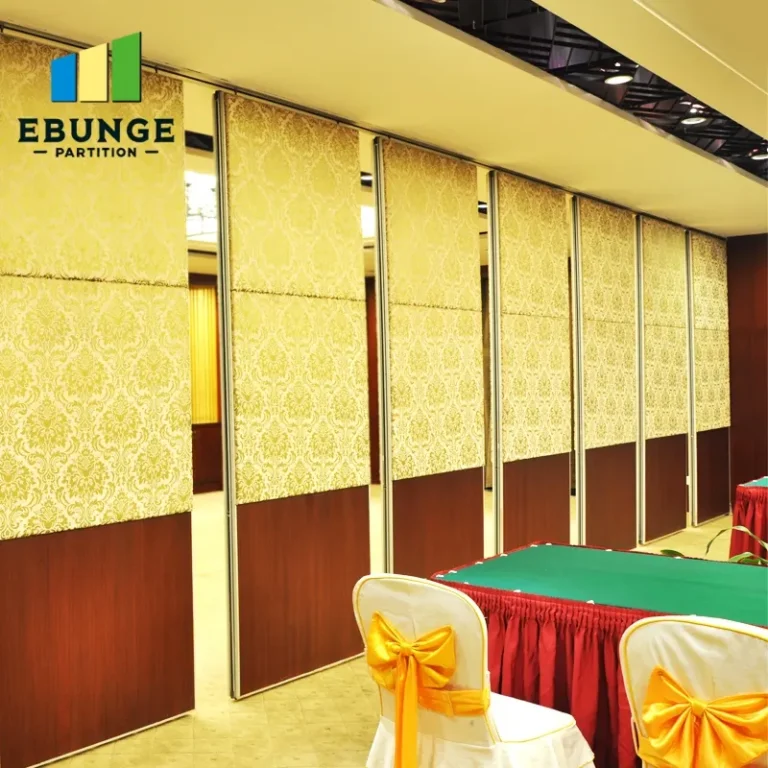
Schools are high-traffic environments where partitions are frequently moved. Therefore, durability and safety are as important as acoustics. The top-hung track system, which suspends the partition from an overhead rail without a floor rail, is often preferred because it eliminates the floor track that can be a trip hazard and collects dirt. This system also allows for easier cleaning and maintenance of the floor surface.
When evaluating durability, consider the quality of the panels, the hardware, and the seals. Panels should be impact-resistant and able to withstand daily use by students. The operating mechanism should be smooth and easy for staff to use, even with minimal training. Ask about the warranty on the track, panels, and acoustic seals, and ensure that spare parts are readily available.
Ease of Operation and Maintenance
Staff will be operating the partition regularly, so it must be user-friendly. Look for systems that require minimal physical effort, such as those with a crank or motorized operation. The partition should stack neatly into a pocket or against a wall when not in use, maximizing available space.
Maintenance is another consideration. Acoustic seals may wear over time and need replacement. The track should be inspected periodically for alignment and wear. Choose a supplier that offers clear maintenance instructions and after-sales support. A well-maintained partition will retain its acoustic performance for many years.
Installation Timeline and Disruption
The installation of a movable partition wall can cause some disruption to school activities. It is essential to plan the installation during a holiday period or at weekends to minimize impact. Ask the supplier for a detailed installation schedule, including the time required for site preparation, delivery, and assembly. Typically, a simple installation may take a few days, but custom projects can take longer.
Also, consider the condition of the existing building. If the ceiling and floor are not level, additional work may be needed to ensure a proper fit. The supplier should conduct a site survey to identify any potential issues before installation. This will help avoid unexpected delays and costs.
Share the opening, drawings, finish direction, and privacy target for a project-specific review.
Cost vs. Performance Trade-offs
The cost of a school sliding partition varies significantly based on size, acoustic performance, finish, and additional features. Higher acoustic ratings usually require thicker panels, double glazing, or additional seals, which increase cost. However, investing in a higher performance partition may be more cost-effective in the long run if it reduces the need for separate soundproofing measures.
When comparing quotes, ensure that all suppliers are quoting for the same specifications. Ask for a breakdown of costs, including the track system, panels, installation, and any ancillary items. Be wary of unusually low quotes, as they may indicate lower quality materials or insufficient acoustic performance.
To help you evaluate, here is a comparison table of typical features and considerations:
| Feature | Standard Option | High Performance Option |
|---|---|---|
| Acoustic Rating | STC 45-50 | STC 55+ |
| Panel Construction | Single panel with insulation | Double panel with air gap |
| Track System | Top-hung, manual operation | Top-hung, motorized operation |
| Sealing | Perimeter seals | Acoustic drop seals |
| Finish | Laminate or painted | Custom veneer or acoustic panels |
Remember that the table is for guidance; exact specifications must be confirmed with your supplier.
Warranty and After-Sales Support
A reliable warranty is crucial for peace of mind. Check what is covered, such as the track, panels, and seals, and for how long. Some manufacturers offer extended warranties for an additional cost. Also, inquire about the availability of technical support and spare parts. A supplier that is responsive to queries and provides prompt service is invaluable.
Before finalizing your decision, ask for references from other school projects. This will give you insight into the supplier’s reliability and the performance of their partitions in real-world conditions.
Preparing for Quotation: What You Need to Provide
To get accurate quotations and ensure the partition meets your needs, you should prepare the following information:
- Opening size (width and height) and the number of panels required
- Architectural drawings or sketches of the area
- Acoustic target (STC or Rw) and any regulatory requirements
- Finish preference (e.g., laminate, veneer, whiteboard surface)
- Project location and site access details
- Timeline for installation and any constraints
Providing this information upfront will help suppliers give you a more precise quote and reduce the risk of misunderstandings. It also shows that you are a serious buyer, which may lead to better service.
Conclusion
The school sliding partition acoustic performance is a critical factor in the design and operation of a school hall. By understanding acoustic ratings, regulatory requirements, and the practical aspects of durability, operation, and installation, you can make an informed decision that balances performance and budget. Use the checklist provided to guide your discussions with suppliers, and always verify claims with supporting documentation.
For more information on movable partition walls and their applications, explore our Movable Partition Applications category, or read our blog posts for insights. If you are ready to discuss your project, contact our team for personalized guidance.
Frequently Asked Questions
What is the typical STC rating for a school sliding partition?
Typical STC ratings range from 45 to 55, but the exact requirement depends on the acoustic needs of the space. For classrooms, STC 50 is common, while music rooms may require higher.
How does the top-hung track system affect acoustic performance?
A top-hung track system without a floor rail reduces sound leaks through the bottom and eliminates the floor track gap. It also provides a continuous seal at the bottom, which is essential for achieving high acoustic ratings.
Can the partition be customized to match the school interior?
Yes, partitions can be finished with various materials, including laminates, veneers, or even whiteboard surfaces, to match the school’s design and functionality.
How long does installation typically take?
Installation time varies based on the project size and complexity. A simple installation may take a few days, while a custom project could take several weeks. The supplier should provide a schedule after a site survey.
What maintenance is required?
Periodic inspection of the track and seals is recommended. Acoustic seals may need replacement after several years. The supplier should provide maintenance instructions and support.
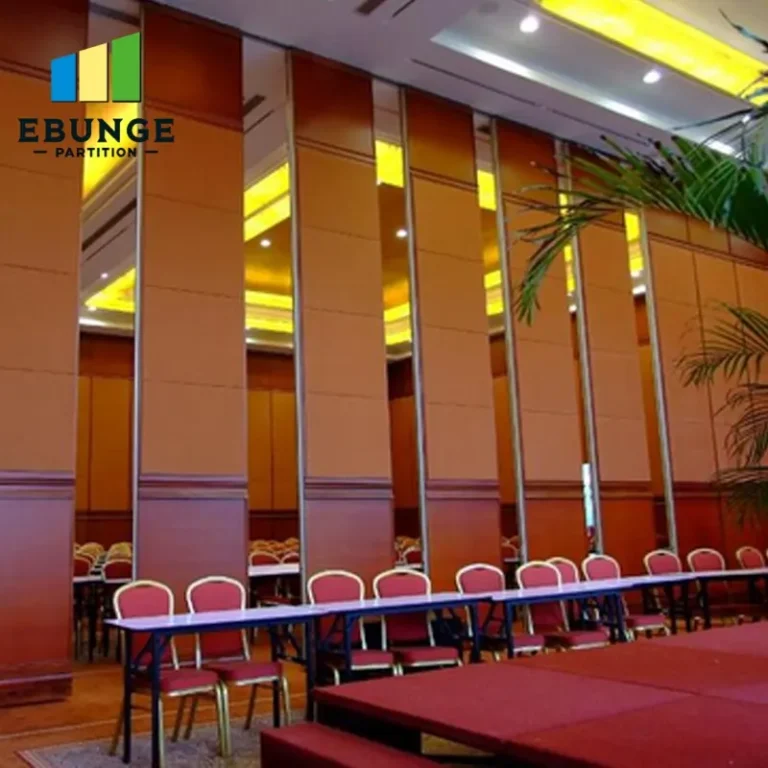
For this buyer review, school sliding partition acoustic performance should be checked against the confirmed opening, drawings, operating plan, and project specification.
Send the opening size and drawings to discuss a differentiated school sliding partition acoustic performance solution.