
When you’re an interior designer specifying a school hall, the sliding partition technical specification is not just a list of dimensions and materials. It’s the blueprint for how the space will function for assemblies, exams, performances, and daily activities. Getting it right affects acoustics, safety, and usability for years to come. This guide walks you through the critical elements to review, ensuring your next operable wall system project is a success.
Quick Answer: For a school hall, your sliding partition technical specification must prioritize acoustic performance (with a clear target in dB), durability against daily wear, safety compliance (especially for fire and impact), ease of operation, and a top-hung track system that eliminates floor rails. Always confirm exact values with your supplier and ensure the specification aligns with your project’s drawings and budget.
Why the Sliding Partition Technical Specification is Your Blueprint
In a school hall, the movable partition wall is a major investment. The specification is the single source of truth that ensures you get a system that performs as expected. It protects you from vague promises and ensures all stakeholders—from the school’s facilities manager to the contractor—are aligned. A well-written specification also simplifies the quotation process, making it easier to compare bids from different suppliers.
Without a detailed spec, you risk ending up with an operable wall system that fails to deliver on acoustics, is difficult to operate, or doesn’t meet safety standards. That’s a costly mistake in a busy educational environment.
Need help turning the sliding partition technical specification requirements into a practical project layout?
What to Check in the Technical Data Sheet
When reviewing a sliding partition technical specification, look beyond the glossy brochure. Focus on the technical data sheet, which contains the real numbers. Here are the key parameters to verify:
- Acoustic Performance: Look for the sound insulation rating (Rw or STC). For a school hall, you typically need an Rw of 45-50 dB or higher, depending on adjacent spaces. The spec should state the exact rating and the conditions under which it was tested (e.g., with or without perimeter seals).
- Fire Resistance: Check the fire rating (e.g., 30, 60, or 90 minutes). The spec must indicate the fire-resistance level and whether the system includes intumescent seals.
- Panel Dimensions and Weight: The spec should list the maximum panel size and weight, which affects the track and trolley design. This is critical for ensuring the system can handle the required opening size.
- Track System: Verify that it’s a top-hung system without a floor rail. This is a key feature for safety and easy cleaning. The spec should describe the track profile and trolley mechanism.
- Materials and Finishes: The spec should detail the panel core (e.g., particleboard, gypsum) and surface finish (e.g., laminate, veneer). For a school, a durable, scratch-resistant finish is essential.
- Operation Mechanism: How is the partition moved? Manual or motorized? The spec should include the effort required to operate and any safety features like soft-close or anti-derailment.
Don’t hesitate to ask the supplier for clarification on any point. If a spec is vague, that’s a red flag.
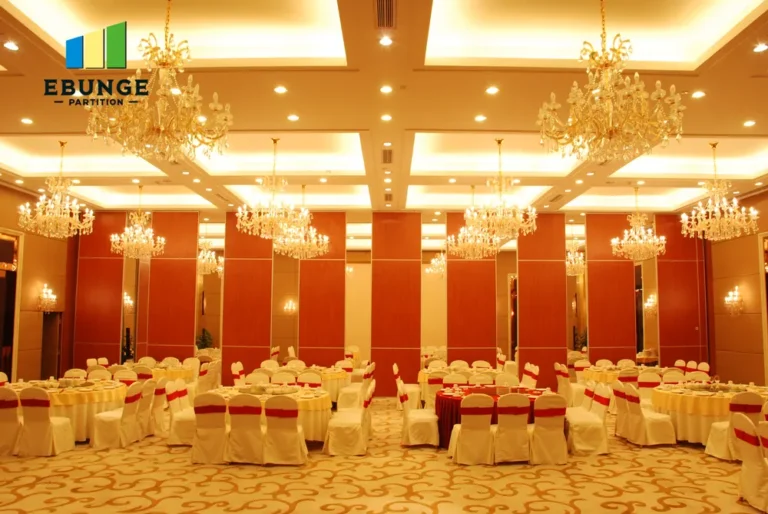
Acoustic Performance: Setting the Right Target
Acoustics is often the top concern for a school hall. The sliding partition technical specification must state the acoustic performance clearly, but you also need to understand the context. An Rw rating alone isn’t enough; the spec should also mention the acoustic seal system (perimeter seals, head and floor seals) and how they contribute to the overall performance.
For a school, consider the activities that will happen simultaneously. If one side will have a music class while the other has a lecture, you’ll need a higher rating. The spec should also indicate the acoustic performance at different frequencies, as low-frequency noise (like bass from a PA system) is harder to block.
Remember that the actual on-site performance depends on the surrounding structure. The partition is only as good as the walls, floor, and ceiling it connects to. Ensure the spec includes details on the perimeter sealing and any required structural support.
Durability and Safety: Built for School Life
Schools are high-traffic environments. The movable partition wall will be subjected to constant opening and closing, accidental bumps, and possibly even vandalism. Your sliding partition technical specification must address durability and safety:
- Impact Resistance: The panel faces should be able to withstand knocks and scrapes. The spec might include a test method (e.g., impact test per EN 16688) and a performance class.
- Edge Protection: Are the edges protected with metal or PVC? This prevents damage and reduces injury risk.
- Safety Features: Look for anti-finger-trap protection on the vertical edges, especially if children will be using the partition. The spec should describe these features.
- Fire Safety: In a school, fire compliance is non-negotiable. The spec must clearly state the fire rating and any relevant standards (e.g., EN 1634-1).
These factors not only protect the users but also extend the lifespan of the operable wall system, reducing long-term costs.
Ease of Operation and Maintenance
If the partition is difficult to operate, it won’t be used. The sliding partition technical specification should include details on the operation mechanism. For a school hall, a manual system with a simple push-pull mechanism is often sufficient, but for very large panels, a motorized system might be necessary.
Consider the maintenance requirements. The spec should list what needs regular checking (e.g., track cleaning, seal replacement) and the expected lifespan of key components. A top-hung track system without a floor rail is easier to maintain because there’s no floor track to collect dirt and debris.
Also, think about the storage pocket. When the partition is fully open, where does it go? The spec should include the dimensions of the pocket and how it integrates with the building structure.
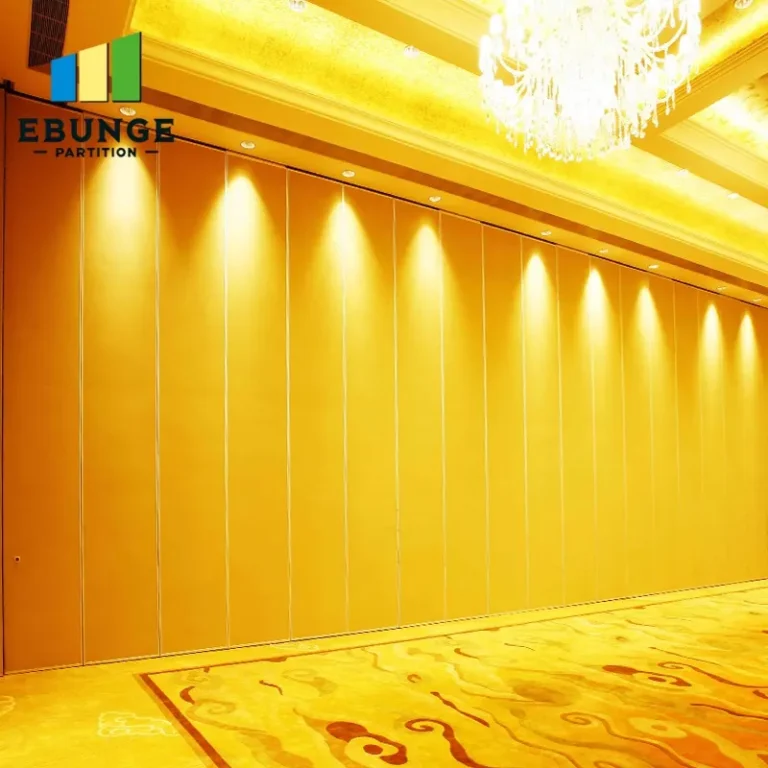
Installation and Timeline: What to Expect
Your sliding partition technical specification should also reference the installation process. This is crucial for project planning. The spec should outline the site requirements, such as the need for a level ceiling and adequate structural support. It should also indicate the typical installation timeline, but remember that exact timings depend on the project size and site conditions.
Ask the supplier about the installation crew’s qualifications and whether they will handle the entire installation or if you need to coordinate with other trades. A professional installation is key to ensuring the system performs as specified.
Also, check if the spec includes a maintenance manual and warranty terms. While we don’t invent specific warranty promises, a reputable supplier will provide a clear warranty statement in their quote.
Share the opening, drawings, finish direction, and privacy target for a project-specific review.
Cost Transparency and Quotation Readiness
To get an accurate quotation, you need to provide the supplier with a complete set of information. The sliding partition technical specification helps you do that. When you request a quote, include:
- The opening size (width, height, and depth of the stack pocket).
- Architectural drawings (floor plans, elevations, and sections) showing the partition location.
- The acoustic target (in dB) for the partition.
- Preferred finishes (e.g., laminate color, whiteboard surface, etc.).
- Project location (for logistics and site assessment).
This information allows the supplier to provide a detailed, itemized quote, so you can compare apples to apples. It also reduces the risk of unexpected costs later.
Visual Appeal and Space Optimization
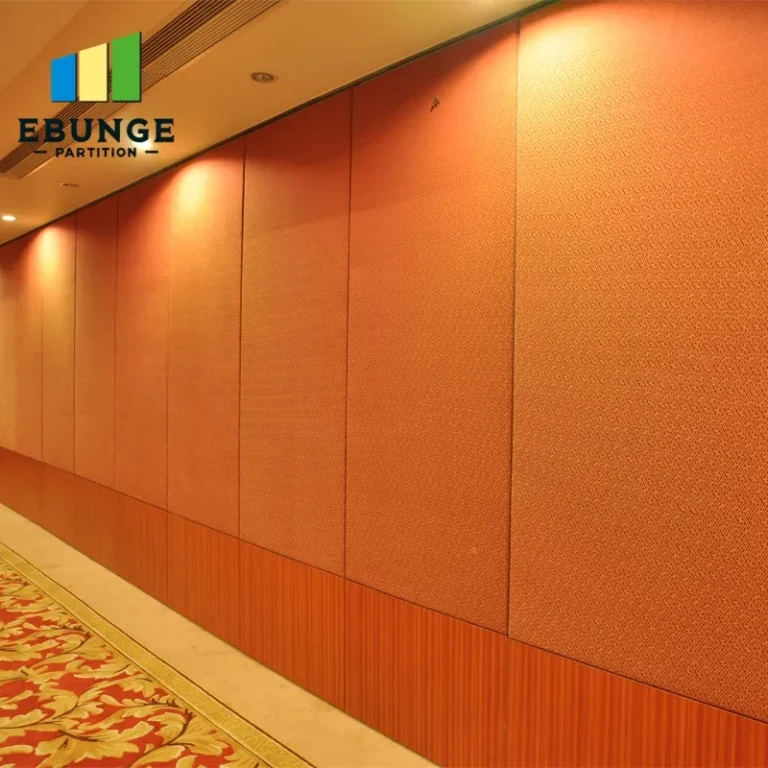
While performance is key, the partition should also complement the school’s interior design. The sliding partition technical specification should include options for finishes and colors. Many suppliers offer custom laminates or even writable surfaces, which are popular in schools.
Space optimization is another consideration. A top-hung track system without a floor rail allows for a cleaner floor and more flexible use of space. When the partition is open, the hall becomes a single large space; when closed, it divides into two functional areas. The spec should ensure the system maximizes usable space.
Checklist for Your School Hall Partition Spec
Here’s a practical checklist to use when reviewing any sliding partition technical specification:
| Feature | What to Look For | Why It Matters |
|---|---|---|
| Acoustic rating | Rw ≥ 45 dB (or higher) | Ensures sound isolation between spaces |
| Fire rating | 30/60/90 min, with seals | Safety compliance and building codes |
| Track system | Top-hung, no floor rail | Safety, easy maintenance, clean floor |
| Panel construction | Durable core, impact-resistant faces | Longevity in high-traffic use |
| Operation | Manual or motorized, with safety features | Ease of use for staff and students |
| Finishes | Scratch-resistant, customizable | Visual appeal matching school interior |
| Installation | Clear site requirements and timeline | Project planning and coordination |
| Warranty & support | Explicit terms in quote | After-sales peace of mind |
Frequently Asked Questions
What is the typical acoustic rating for a school hall partition?
For a school hall, an Rw of 45-50 dB is common, but this depends on the adjacent spaces and the activities. The spec should state the exact rating and testing conditions.
Can a top-hung track system support large panels?
Yes, top-hung systems can support panels up to certain sizes and weights. The spec will indicate the maximum panel dimensions and weight, which you should verify against your opening.
How do I ensure the partition is safe for children?
Look for anti-finger-trap protection on edges, soft-close mechanisms, and a track system that minimizes trip hazards. The spec should detail these safety features.
What information do I need to get a quotation?
Provide the opening size, drawings, acoustic target, finish preferences, and project location. This ensures the supplier can give an accurate, itemized quote.
How long does installation take?
Installation time varies based on the number of panels and site conditions. The supplier should provide an estimated timeline in their proposal, but exact durations depend on the project.
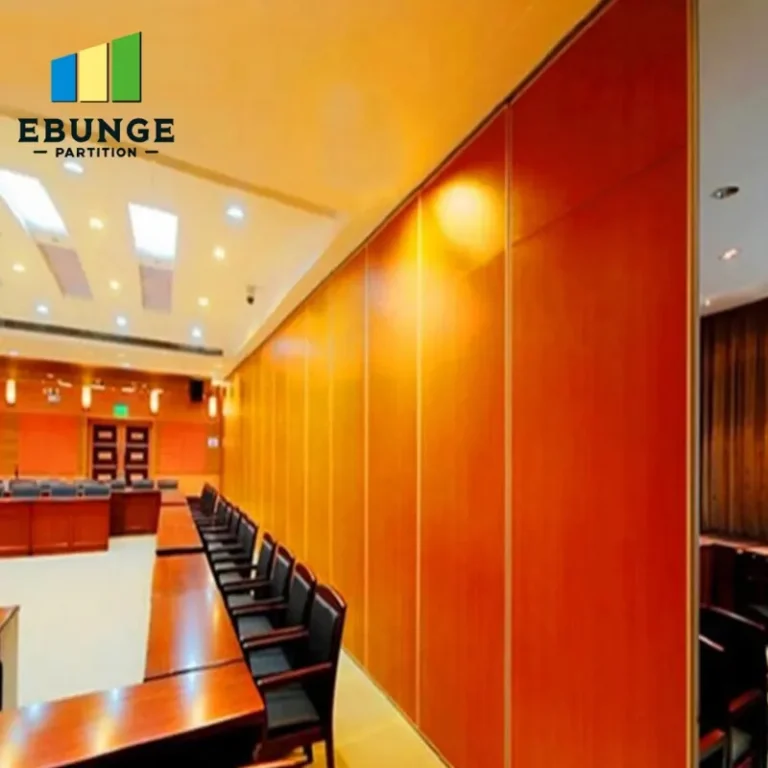
Conclusion: Your Path to a Successful Operable Wall System
Selecting the right sliding partition technical specification for a school hall is a balancing act between performance, safety, and budget. By focusing on the key elements we’ve discussed—acoustics, durability, safety, ease of operation, and cost transparency—you can make an informed decision that meets your client’s needs.
Remember to always request a detailed spec and quote, and don’t hesitate to ask suppliers for clarification. For more insights, explore our resources on movable partition walls and operable wall systems. When you’re ready to discuss your project, our team is here to help with custom coordination, including finishes, drawings, and installation guidance. Contact us to get started.
Send the opening size and drawings to discuss a differentiated sliding partition technical specification solution.