
When planning a conference room renovation, one of the most critical decisions is selecting a movable partition that delivers both spatial flexibility and reliable sound privacy. As a project contractor, you need to be confident that the movable partition acoustic performance will meet your client’s expectations for confidential discussions, without compromising on installation efficiency or budget. This article provides a practical, buyer-focused guide to evaluating acoustic partition solutions for conference rooms, helping you prepare accurate quotes and make informed decisions.
Direct answer: Movable partition acoustic performance is determined by the system’s STC rating, installation quality, and sealing details. For conference rooms, a top-hung track system without a floor rail offers superior sound isolation and ease of use. To ensure the partition meets your acoustic target, you must share your opening size, drawings, and performance requirements with your supplier early in the process.
Why Acoustic Performance Matters in Conference Rooms
Conference rooms are hubs of collaboration and confidential discussions. Sound leakage can disrupt meetings, compromise privacy, and reflect poorly on your work. A movable partition with verified acoustic performance ensures that conversations stay within the room and external noise is minimized. This is especially important in open-plan offices or multi-purpose spaces where the partition is used frequently.
When evaluating movable partition acoustic performance, focus on the Sound Transmission Class (STC) rating. A higher STC indicates better sound insulation. However, the actual performance depends on proper installation, perimeter sealing, and the partition’s construction. As a contractor, you must verify that the system you specify can achieve the required STC for your project.
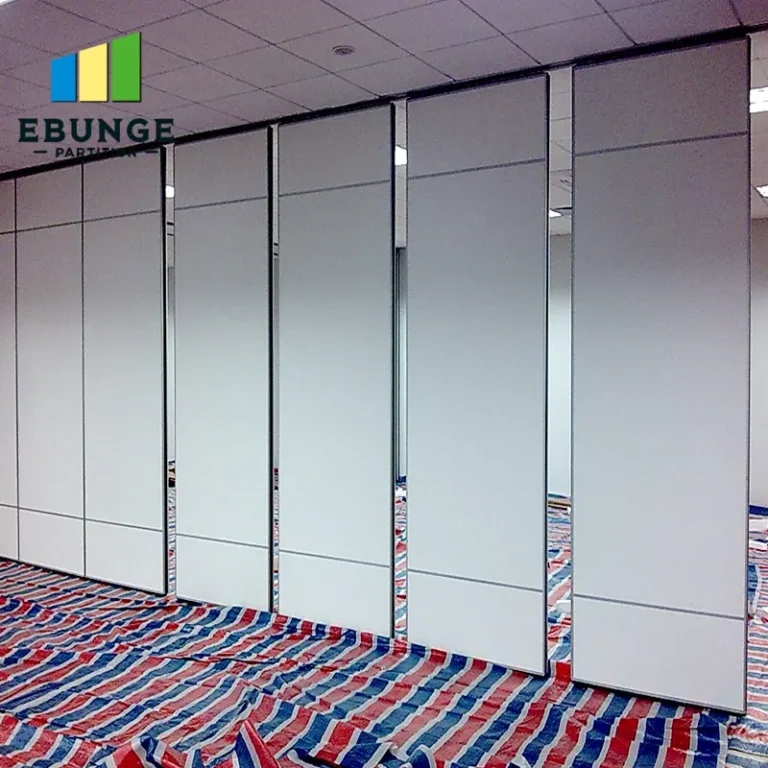
Need help turning the movable partition acoustic performance requirements into a practical project layout?
Key Technical Requirements for Conference Room Partitions
Before requesting a quote, define your project’s technical specifications. This includes the opening size, ceiling height, and the acoustic target (e.g., STC 40-45 for speech privacy). Also, consider the frequency of use: if the partition will be moved daily, durability and ease of operation are paramount.
A top-hung track system is a popular choice for conference rooms because it eliminates the need for a floor rail, providing a flush threshold and easier cleaning. This system also reduces the risk of tripping hazards and allows for flexible space configurations. Ensure the track is engineered for smooth operation and can support the partition’s weight over time.
Evaluating Acoustic Partition Solutions: What to Look For
When comparing acoustic partition solutions, consider the following elements:
- Acoustic seals: Look for double or triple seals at the perimeter, including top, bottom, and vertical joints. These are critical for achieving the rated performance.
- Panel construction: High-density cores and insulated panels typically offer better sound insulation.
- Track system reliability: A top-hung system with heavy-duty rollers and a robust track ensures smooth operation and longevity.
- Finish options: Choose from laminates, veneers, or paint finishes that match your interior design.
Remember that the movable partition acoustic performance is only as good as the installation. Even a high-STC partition will underperform if gaps are left unsealed. Insist on a detailed installation guide and consider having the supplier’s team install or supervise the installation.
Understanding STC Ratings and Real-World Performance
STC ratings are measured in controlled laboratory conditions. In the field, the actual performance can vary by 5-10 points due to installation factors, flanking paths, and ceiling conditions. Therefore, it is wise to specify a partition with a higher STC rating than your minimum requirement to ensure the desired outcome.
For conference rooms, an STC of 45 or above is recommended for confidential conversations. However, you should confirm your acoustic target with the client and the acoustician, if involved. The supplier should be able to provide test data and guidance on achieving the target in your specific situation.
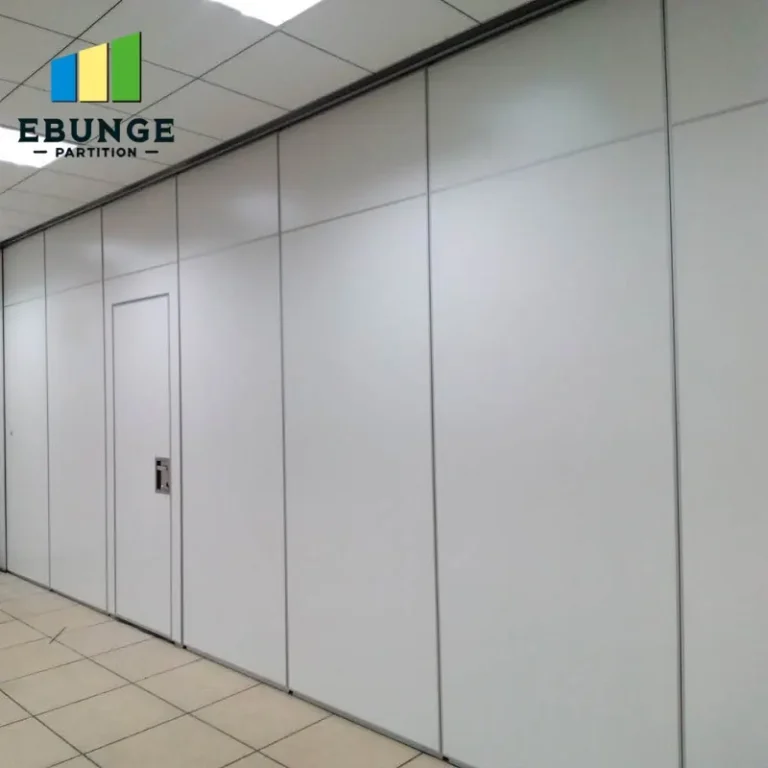
Top-Hung Track System: Advantages for Conference Rooms
A top-hung track system is a movable partition wall option that hangs from an overhead track, with no floor guide. This design offers several benefits:
- No floor rail: Creates a seamless floor surface, which is safer and easier to maintain.
- Flexibility: Allows for easy reconfiguration of space without floor obstructions.
- Acoustic performance: With proper bottom seals, a top-hung system can achieve excellent sound isolation.
When selecting a top-hung system, ensure the ceiling structure can support the partition’s weight. The track must be installed level and securely anchored. A well-designed system will include adjustable hangers to fine-tune the panel alignment.
Installation Time and Project Coordination
One of your concerns as a contractor is installation time. Movable partitions can typically be installed within a few days, depending on the number of panels and site conditions. However, proper coordination is essential to avoid delays. Work with the supplier to schedule delivery and installation, and ensure the site is ready (e.g., ceiling finished, floor level, and no obstructions).
The supplier should provide a detailed installation plan, including the sequence of operations and any specific requirements for the track and panels. Clear communication with the general contractor and other trades will help minimize disruptions.
Share the opening, drawings, finish direction, and privacy target for a project-specific review.
Cost Considerations and Budgeting
Movable partition costs vary widely based on size, materials, acoustic rating, and finish. While it may be tempting to choose the lowest quote, consider the long-term value: a reliable, well-performing partition will reduce callbacks and enhance client satisfaction. Request itemized quotes and compare not only the price but also the warranty and after-sales support.
Remember that the cost of the partition is only part of the total project. Installation, ceiling reinforcement, and any custom finishes can add to the budget. Discuss these factors with the supplier to avoid surprises.
Supplier Reliability and Support
Choosing a reliable supplier is crucial. Look for a company with experience in movable partition acoustic performance and a track record of successful installations. Ask for references and case studies, but be cautious about unsolicited testimonials. Verify their claims through independent sources.
Warranty and support are also important. Ensure the warranty covers the track system, panels, and seals, and that the supplier offers responsive after-sales service. A good supplier will also provide guidance on maintenance and operation.
Checklist for Quotation Readiness
To get an accurate quote and ensure the partition meets your needs, prepare the following information:
- Opening size (width and height)
- Ceiling height and structure details
- Acoustic target (STC rating)
- Finish preference (laminate, veneer, paint)
- Number of panels and stacking configuration
- Project location and installation schedule
- Any special requirements (e.g., fire rating, integrated door)
Sharing this information upfront will help the supplier provide a tailored solution and a more accurate quotation. It also demonstrates your professionalism and commitment to a successful project.
Comparison Table: Top-Hung vs. Floor-Guided Systems
| Feature | Top-Hung Track | Floor-Guided |
|---|---|---|
| Floor obstruction | None | Rail on floor |
| Cleaning ease | Easy | Moderate |
| Acoustic sealing | Excellent with bottom seal | Good |
| Installation complexity | Requires ceiling reinforcement | Simpler for heavy panels |
| Flexibility | High | Moderate |
Common Questions About Movable Partition Acoustic Performance
What STC rating is recommended for a conference room?
For confidential conversations, an STC of 45 or higher is recommended. However, the specific requirement depends on the level of privacy needed and the ambient noise. Consult with the client and an acoustician if necessary.
Can a movable partition achieve the same acoustic performance as a fixed wall?
In general, no. Movable partitions have seals and joints that can slightly reduce performance compared to a fixed wall. However, with proper installation, they can come close. Always verify the field performance with a sound test if required.
How long does it take to install a movable partition?
Installation typically takes 1-3 days for a standard conference room partition, depending on the size and complexity. Ensure the site is prepared to avoid delays.
What maintenance is required for a top-hung track system?
Regularly check the track and rollers for dirt and wear. Lubricate moving parts as recommended by the manufacturer. The seals may need periodic replacement to maintain acoustic performance.
Can I get a custom finish for the partition?
Yes, most suppliers offer a variety of finishes, including laminates, wood veneers, and paint. Discuss your design requirements with the supplier to ensure compatibility with the panel construction.
Conclusion: Making an Informed Decision
Selecting the right movable partition for your conference room project involves balancing acoustic performance, budget, and installation practicality. By focusing on movable partition acoustic performance and engaging a reliable supplier, you can deliver a solution that meets your client’s needs. Remember to share your project details early to get accurate guidance and quotations.
For more insights on movable partition applications, explore our Movable Partition Applications category. If you have specific questions, feel free to contact us for expert advice. You can also learn about movable partition wall options and our blog for technical tips.
Send the opening size and drawings to discuss a differentiated movable partition acoustic performance solution.