
When specifying hotel sliding partition finishes for a banquet hall, architects face a complex decision that balances aesthetics, durability, acoustics, and maintenance. The finish is not merely a surface layer; it is the interface between the partition system and the guest experience, impacting everything from visual appeal to long-term operational costs. This guide focuses on the technical and practical aspects of evaluating finishes, helping you make an informed choice for your next movable partition wall project.
Direct Answer: To evaluate hotel sliding partition finishes effectively, prioritize scratch and impact resistance, cleanability, fire safety compliance, acoustic performance, and customization options. Request detailed technical datasheets, sample panels, and warranty terms from manufacturers. Always verify that the finish aligns with your project’s specific acoustic targets and design intent, and consider the installation timeline to minimize disruption to hotel operations.
Hotel Sliding Partition Finishes: Why Finish Selection Matters for Hotel Banquet Halls
In a hotel banquet hall, the movable partition wall system is used frequently, often daily, for events ranging from weddings to corporate conferences. The finish must withstand constant handling, furniture impacts, and cleaning chemicals while maintaining its appearance. A poorly chosen finish can lead to premature wear, increased maintenance costs, and a negative impression on guests. Therefore, evaluating finishes goes beyond color and texture; it involves a holistic assessment of performance and lifecycle.
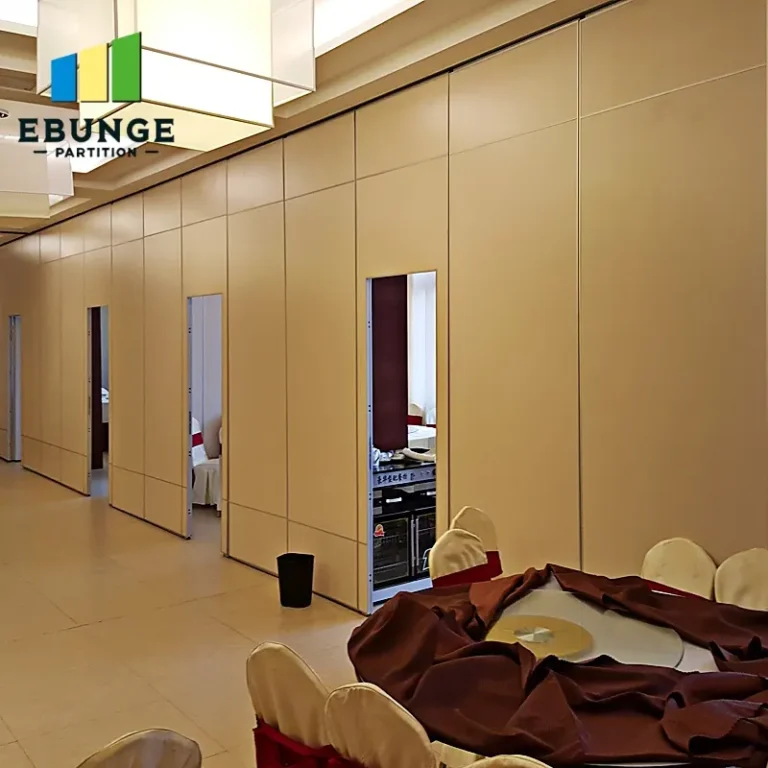
Need help turning the hotel sliding partition finishes requirements into a practical project layout?
Key Criteria for Assessing Partition Finishes
When reviewing finish options, consider the following criteria as a baseline. Each criterion should be verified with manufacturer-provided documentation, not just marketing claims.
- Scratch and impact resistance: Look for finishes with a high surface hardness, such as laminate or high-pressure laminate (HPL), which are known for durability.
- Cleanability: Choose finishes that can be wiped down with standard cleaning agents without fading or staining.
- Fire safety: Ensure the finish meets local fire codes, typically indicated by a fire rating like Class A or B.
- Customization: Check if the manufacturer offers a range of colors, textures, and materials, including wood veneers, fabrics, or acoustic panels.
- Acoustic performance: The finish should complement the acoustic core of the partition; some finishes like fabric can enhance sound absorption.
Common Finish Types and Their Trade-offs
Here is a comparison of common finishes used in movable partitions. Note that specific performance values vary by manufacturer and should be confirmed with test data.
| Finish Type | Durability | Acoustic Contribution | Maintenance | Customization |
|---|---|---|---|---|
| Vinyl | Good | Low | Easy | Limited patterns |
| Laminate (HPL) | Excellent | Low | Easy | Wide range |
| Wood Veneer | Moderate | Low | Requires care | Natural look |
| Fabric | Moderate | High | Special cleaning | Many colors |
| Acoustic Panels | Moderate | High | Special cleaning | Customizable |
For hotel banquet halls, laminate and vinyl are popular due to their durability and ease of cleaning. Fabric finishes can enhance acoustics but may require more maintenance. Wood veneer adds elegance but needs protective coatings.
Acoustic Performance and Finish Interaction
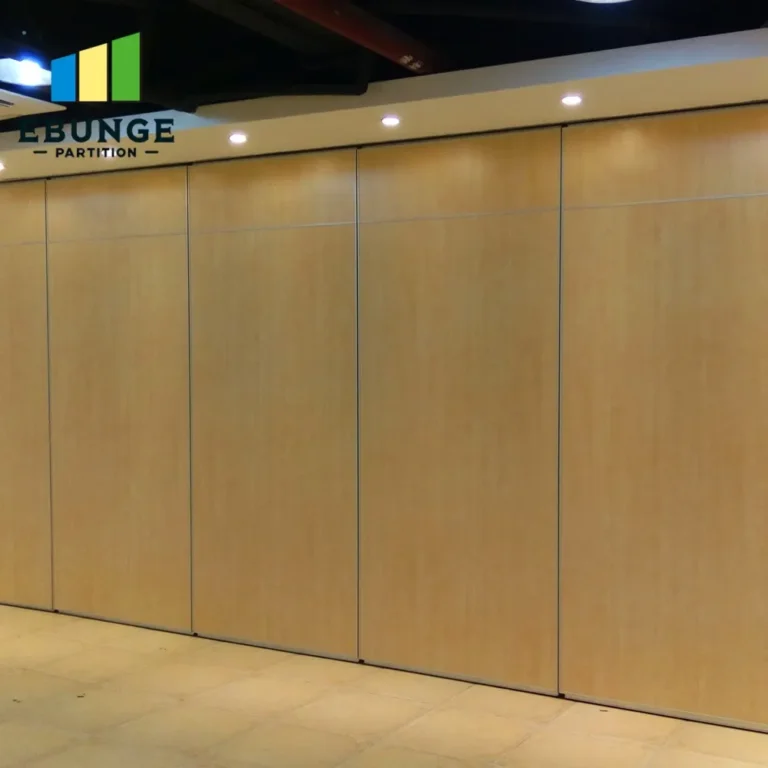
The finish can influence the acoustic performance of a movable partition. For instance, fabric-wrapped panels can improve sound absorption, but they may also affect the sound transmission class (STC) rating. It is essential to review acoustic test data that includes the finish as part of the system. If your project has a specific acoustic target, such as STC 50, ensure that the manufacturer provides test results for the complete partition assembly with your chosen finish.
Fire Safety and Compliance
Fire safety is non-negotiable. All finishes must meet the fire codes applicable to your project location. Common standards include ASTM E84 for surface burning characteristics and NFPA 286 for room corner tests. Request the finish’s fire test certificate and ensure it is valid for the intended application. Also, consider the partition’s overall fire rating, which may depend on the core material and the finish.
Customization and Aesthetic Integration
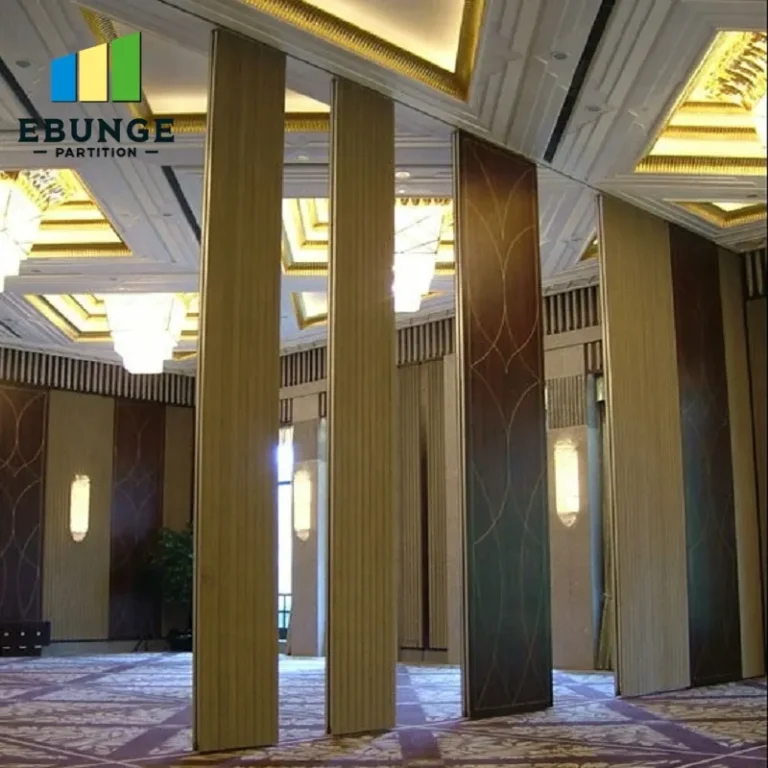
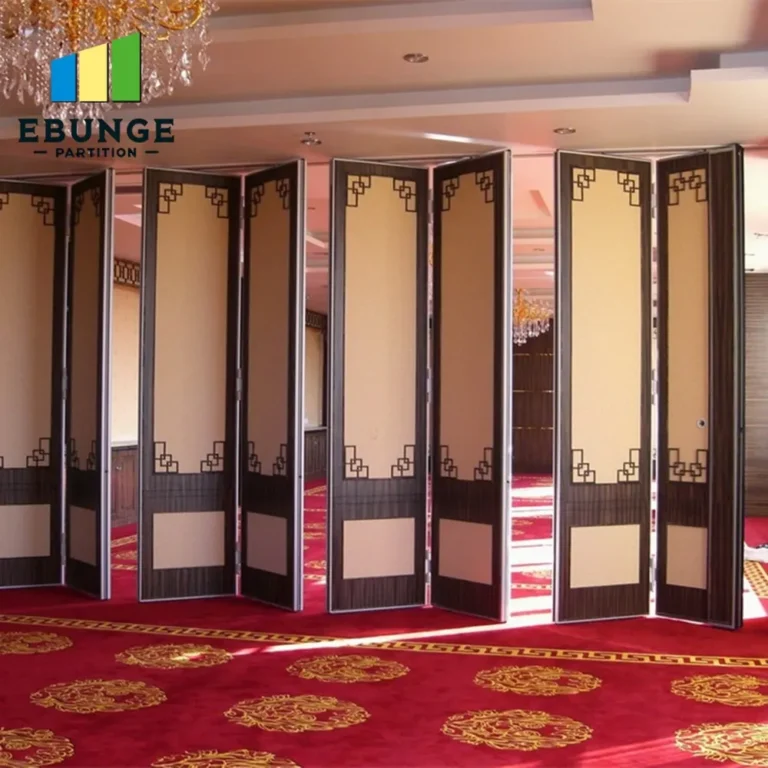
Hotels often have a distinct interior design theme. The finish should complement the banquet hall’s décor. Many manufacturers offer custom colors, patterns, and even digital printing on surfaces. When evaluating customization, ask about minimum order quantities, lead times, and any additional costs. Also, consider how the finish will look under different lighting conditions in the hall.
Share the opening, drawings, finish direction, and privacy target for a project-specific review.
Installation and Operational Disruption
The installation of movable partition walls can disrupt hotel operations. Finishes that are factory-applied may reduce on-site installation time. Ask about the installation process, including whether the panels are pre-finished and how long the installation is expected to take. A top-hung track system without a floor rail can minimize disruption to flooring and allow for faster installation, but confirm this with the manufacturer.
Warranty and After-Sales Support
Understand the warranty terms for the finish. Typically, finishes are covered for defects but not for normal wear and tear. Clarify what is included, the warranty period, and the process for claims. Also, inquire about after-sales support, such as availability of replacement panels or touch-up kits.
Checklist for Evaluating Finishes
Use this checklist when discussing finishes with manufacturers:
- ☐ Request technical datasheets for the finish, including abrasion and impact tests.
- ☐ Obtain acoustic test data for the partition system with the finish.
- ☐ Verify fire safety certifications and compliance with local codes.
- ☐ Ask for samples to evaluate color, texture, and cleanability.
- ☐ Confirm customization options and lead times.
- ☐ Discuss installation timeline and any impact on hotel operations.
- ☐ Review warranty terms and after-sales support.
Making the Final Decision
Ultimately, the choice of finish should be based on a balance of aesthetics, performance, and budget. Do not rely solely on visual appeal; consider the entire lifecycle. For a hotel banquet hall, durability and easy maintenance are often as important as appearance. Engage with manufacturers early, provide them with your project details, and ask for recommendations based on your specific needs.
Frequently Asked Questions
1. How do I test a finish for scratch resistance?
Ask the manufacturer for abrasion test results, such as those from the Taber test (ASTM D4060). This measures the weight loss of the surface after a set number of cycles. A lower weight loss indicates better resistance.
2. Can I get a finish that matches my hotel’s branding?
Yes, many manufacturers offer custom color matching and even digital printing. Be sure to discuss your specific design requirements and any minimum order quantities.
3. How does the finish affect acoustic insulation?
The finish can impact sound absorption. Fabric or acoustic panel finishes can improve absorption, but they may also affect the overall STC rating. Review the complete system’s test data.
4. What is the typical lead time for custom finishes?
Lead times vary by manufacturer and complexity. Custom colors or patterns may take longer. Always confirm lead times in your quotation.
5. Are there any special maintenance requirements for fabric finishes?
Fabric finishes may require professional cleaning and are less resistant to stains. If you expect heavy use, consider more durable options like vinyl or laminate.
6. How can I ensure the finish meets fire safety standards?
Request the fire test certificate for the finish and verify that it complies with local building codes. Common standards include ASTM E84 and NFPA 286.
Conclusion
Evaluating hotel sliding partition finishes is a multi-faceted process that requires attention to technical specifications, aesthetic fit, and operational implications. By asking the right questions and demanding verified data, you can select a finish that enhances your design while meeting performance expectations. For more insights on movable partition walls and finishes, explore our resources on movable partition wall systems and finish options. If you need assistance with your project, feel free to contact our team for tailored guidance.
For this buyer review, hotel sliding partition finishes should be checked against the confirmed opening, drawings, operating plan, and project specification.
Send the opening size and drawings to discuss a differentiated hotel sliding partition finishes solution.