
When you are responsible for equipping an office meeting room with movable walls, the comparison process often feels like a high-stakes balancing act. You are not just picking a product; you are selecting a long-term partner for your facility. The challenge intensifies when you realize that the true cost of a movable wall extends far beyond the initial quotation. It includes acoustic performance that meets your team’s needs, durability in daily use, and the ease of operation that keeps your space flexible. This guide focuses on the practical steps to compare movable walls suppliers, ensuring you are quotation-ready and can minimize project decision risks. We will walk through the critical technical, operational, and financial factors, with a special emphasis on avoiding the common pitfall of poor acoustic performance after installation.
Direct Answer: To compare movable walls suppliers effectively for an office meeting room, you must first prepare a detailed project brief that includes the exact opening size, your acoustic target (e.g., STC/Rw rating), finish preferences, and architectural drawings. Then, evaluate suppliers on their ability to provide factory-direct support, custom engineering, and transparent quotations that align with your specifications. Prioritize suppliers who offer top-hung track systems (no floor rail), provide clear installation guidance, and are willing to discuss performance data and warranty terms in writing. This approach ensures you compare apples to apples and reduces the risk of post-installation acoustic failures.
Why Acoustic Performance Often Fails After Installation
One of the most common pain points in office meeting rooms is discovering that the installed movable wall does not deliver the sound insulation you expected. This usually stems from a mismatch between the supplier’s quoted acoustic rating and the actual site conditions. For instance, a partition wall system might have a laboratory STC rating of 45, but in real-world scenarios, flanking paths, gaps at the top or bottom, and improper installation can reduce the effective rating by 10-15 points. To avoid this, you must compare suppliers based on their ability to engineer for your specific opening, not just their catalog data.
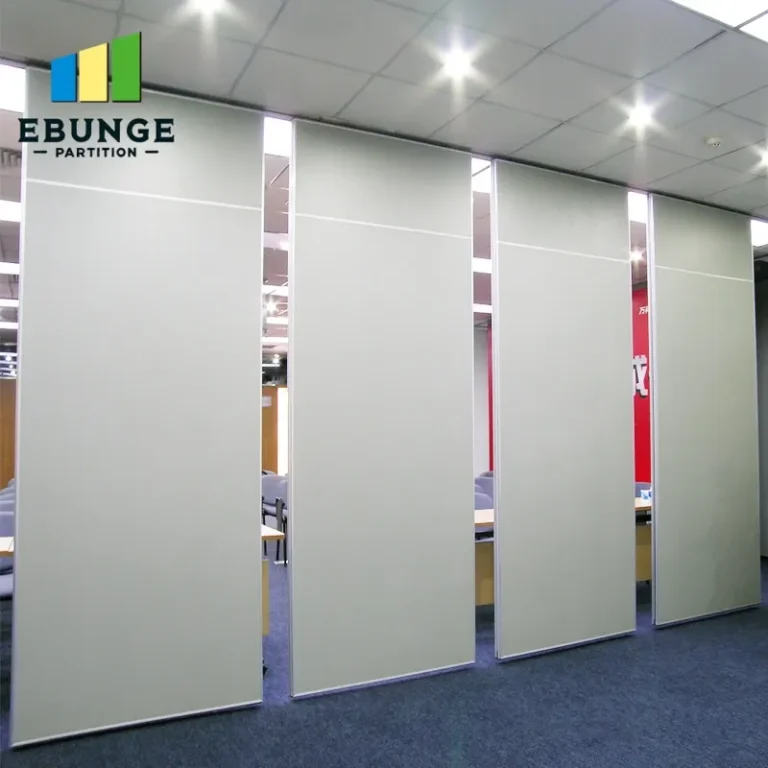
Need help turning the movable walls requirements into a practical project layout?
Preparing Your Quotation-Ready Project Brief
Before you even contact suppliers, you need a comprehensive project brief. This document should include:
- Opening size: Exact width, height, and depth of the opening, including any obstructions like columns or uneven floors.
- Acoustic target: The desired STC or Rw rating, based on your meeting room’s function (e.g., confidential discussions vs. general collaboration).
- Finish preferences: Material, color, and texture of the wall surface (e.g., dry-erase, tackable, or fabric-wrapped).
- Drawings: Architectural or structural drawings showing the opening, surrounding walls, ceiling, and floor conditions.
- Operational requirements: How often the wall will be moved, and whether it needs to stack in a specific way.
Having this information ready not only speeds up the quotation process but also forces suppliers to provide more accurate proposals. When you compare movable walls suppliers, those who ask for these details are often more reliable than those who give a generic quote.
Evaluating Acoustic Ratings: Lab vs. Field Performance
When comparing movable walls, you will encounter acoustic ratings like STC (Sound Transmission Class) or Rw (Weighted Sound Reduction Index). These are laboratory measurements, but they do not guarantee field performance. To make an informed decision, ask suppliers:
- What is the exact test method and laboratory that produced the rating?
- What are the typical field performance differences for your type of installation?
- Can you provide references or case studies of similar office meeting room projects?
- What is the sealing mechanism (top, bottom, and vertical edges) and how does it affect the rating?
A reputable supplier will be transparent about these factors. They should also be able to explain how their top-hung track system, which avoids a floor rail, contributes to better acoustic sealing at the bottom by using a drop seal that compresses onto the floor.
Durability and Maintenance in High-Traffic Areas
Office meeting rooms are often used daily, and the movable wall will be operated frequently. Durability is not just about the panel surface; it is about the mechanical components. Consider:
- Track and trolley system: Is it rated for the number of cycles you expect? Look for a top-hung system with heavy-duty trolleys.
- Panel construction: Are the panels rigid enough to withstand constant movement without warping?
- Maintenance requirements: What is the recommended upkeep for the track, seals, and hardware? Are replacement parts readily available?
During comparison, ask suppliers about their warranty coverage and what it includes (parts, labor, etc.). Avoid suppliers who are vague about maintenance schedules.
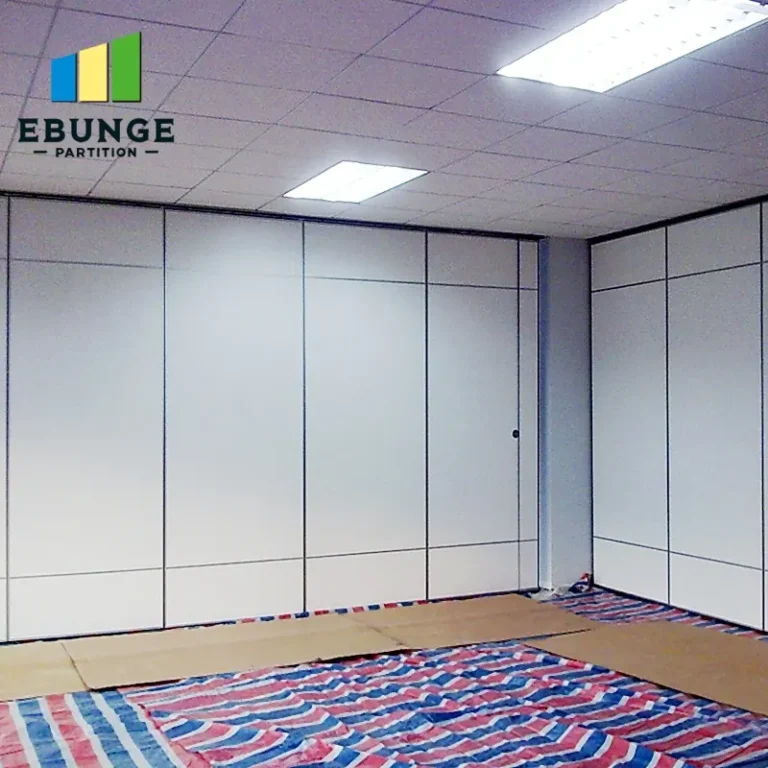
Ease of Operation: From Manual to Automated
Another key factor is how easy the movable wall is to operate. In an office setting, you do not want a system that requires specialized training. Compare:
- Manual vs. automated: Manual systems should have smooth-gliding mechanisms, while automated systems should have intuitive controls.
- Storage: How much space does the stacked wall require? Ensure it fits your floor plan.
- Safety features: Are there sensors or stops to prevent accidents?
Your supplier should be able to provide detailed operation manuals and possibly a demonstration video. If possible, visit a showroom or ask for a site visit to see the system in action.
Warranty Coverage and Compliance with Building Codes
Warranty terms can vary significantly between suppliers. Some offer a 5-year warranty, others 10 years, and some have exclusions that could be costly. When comparing, read the fine print and ask:
- What is covered (panels, track, seals, hardware)?
- What is the process for filing a claim?
- Are there any conditions that void the warranty (e.g., improper operation)?
Additionally, ensure the movable wall system complies with local building codes, including fire safety, accessibility, and structural requirements. Ask suppliers for certificates or test reports that verify compliance.
Share the opening, drawings, finish direction, and privacy target for a project-specific review.
Total Cost of Ownership: Beyond the Initial Quotation
The lowest quotation is rarely the most cost-effective in the long run. To compare movable walls suppliers fairly, calculate the total cost of ownership (TCO), which includes:
- Initial purchase and installation costs: This includes the wall system, delivery, and professional installation.
- Operating costs: Energy costs for automated systems, if any.
- Maintenance costs: Regular servicing and replacement parts over the expected lifespan.
- Downtime costs: If the wall fails, how much productivity is lost?
Create a comparison table to visualize these costs across suppliers. For example:
| Cost Component | Supplier A | Supplier B |
|---|---|---|
| Initial Quotation | $X | $Y |
| Installation | $X | $Y |
| Estimated Annual Maintenance | $X | $Y |
| Warranty Length | 5 years | 10 years |
| Estimated Lifespan | 15 years | 20 years |
| 5-Year TCO | $X | $Y |
Use this table in your evaluation to avoid being swayed by upfront costs alone.
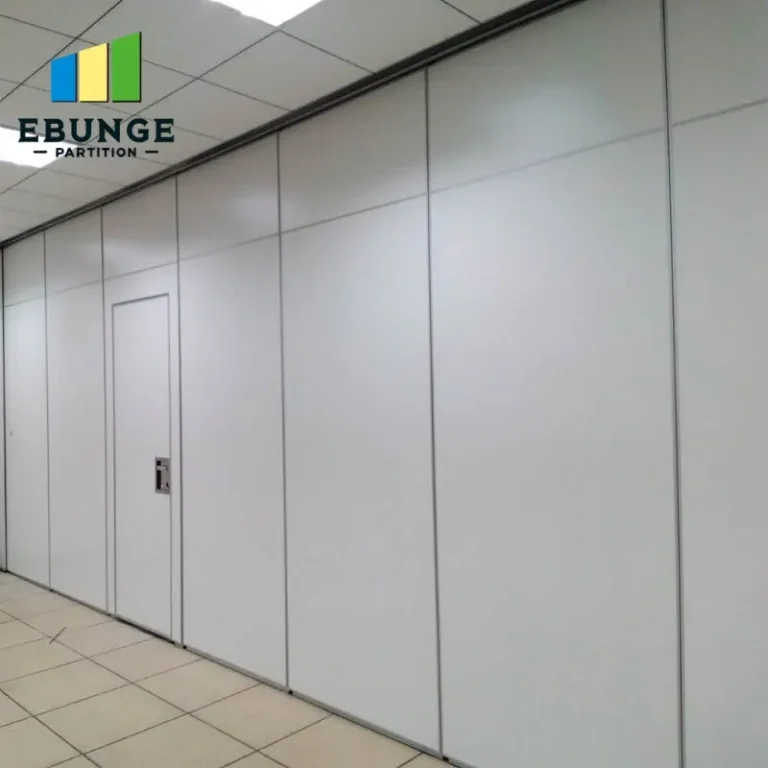
The Importance of Factory-Direct Support and Customization
For a custom movable partition wall, you often need more than a standard product. Suppliers who offer factory-direct support can provide:
- Custom sizes: Tailoring the wall to your exact opening dimensions.
- Finish options: Matching your interior design with custom colors or materials.
- Engineering assistance: Helping with structural considerations and integration with your building’s systems.
- Installation guidance: Providing detailed drawings and on-site support if needed.
In your comparison, ask whether the supplier manufactures the components themselves or outsources. A factory-direct supplier is more likely to take responsibility for quality and performance. They can also provide better after-sales service because they have direct control over spare parts and technical knowledge.
Practical Checklist for Comparing Movable Walls Suppliers
To streamline your evaluation, use this checklist:
- [ ] Request quotations from at least three suppliers using the same project brief.
- [ ] Verify each supplier’s acoustic test data and ask for field performance references.
- [ ] Confirm the track system type (top-hung vs. floor rail) and its impact on acoustics and maintenance.
- [ ] Ask for a detailed warranty document and clarify coverage.
- [ ] Check compliance certificates for fire, safety, and accessibility.
- [ ] Request a list of similar office meeting room installations for reference.
- [ ] Compare total cost of ownership, not just the initial price.
- [ ] Evaluate the supplier’s responsiveness and willingness to answer technical questions.
Conclusion: Making a Confident Decision
Comparing movable walls suppliers for your office meeting room is a meticulous process, but it is essential to avoid costly mistakes. By preparing a detailed project brief, understanding acoustic ratings, and evaluating durability, operation, warranty, and total cost, you can make a decision that serves your organization for years. Remember to prioritize suppliers who offer factory-direct support and custom solutions, as they are more likely to ensure your movable wall performs as intended. For more insights, explore our resources on movable partition walls and technical blogs. If you need assistance, our team is ready to provide expert guidance. And for cost-related considerations, visit our Movable Partition Cost category.
Frequently Asked Questions
What is the typical acoustic rating for movable walls in office meeting rooms?
Acoustic ratings vary, but for confidential meetings, an STC or Rw of 45-50 is often recommended. However, the actual performance depends on the installation and surrounding structure. Always ask for field performance data.
How does a top-hung track system improve acoustic performance?
A top-hung track system eliminates the floor rail, which is a common weak point for sound leakage. It allows for a continuous drop seal at the bottom that compresses onto the floor, providing a better acoustic seal.
What maintenance is required for movable walls?
Regular maintenance includes cleaning the track, checking the seals for wear, and lubricating moving parts. The frequency depends on usage. Your supplier should provide a maintenance schedule.
Can movable walls be customized to match my office interior?
Yes, most suppliers offer a range of finishes, including dry-erase, tackable, and fabric options. You can also choose custom colors and materials to match your design.
What should I look for in a warranty?
Look for a warranty that covers the entire system, including panels, track, and hardware, for a reasonable period (e.g., 10 years). Ensure it includes labor and has clear claim procedures.
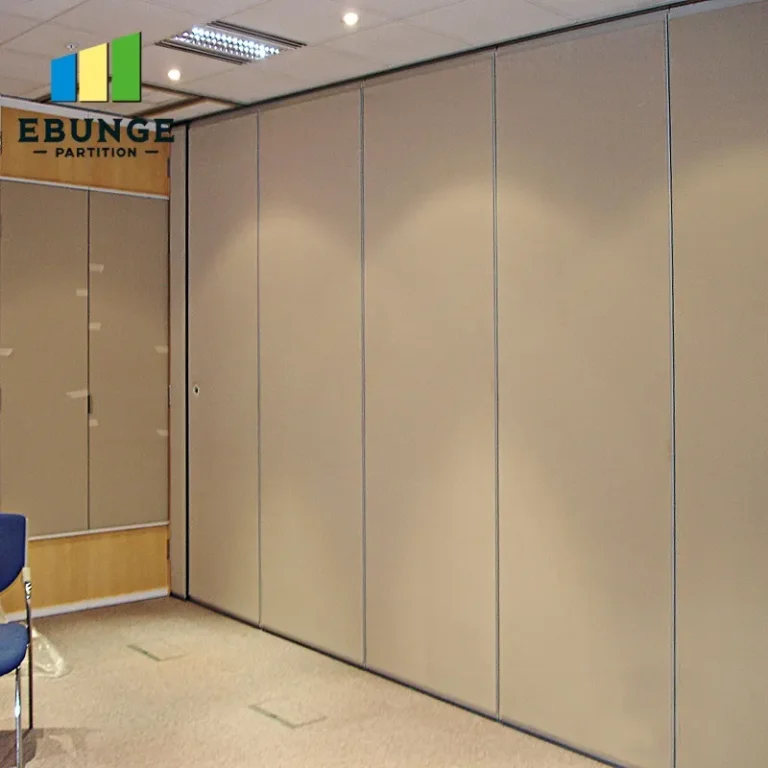
Send the opening size and drawings to discuss a differentiated movable walls solution.