
When you are responsible for equipping a training center with flexible spaces, the specification of movable walls is a decision that carries significant project risk. A poorly specified partition can lead to installation delays, budget overruns, and a space that fails to meet acoustic and operational needs. This specification guide is designed to help you prepare a quotation-ready document that minimizes uncertainty and aligns with your contractor-led project. We focus on the critical details that affect cost, installation, and performance, ensuring that your movable walls specification is clear, measurable, and actionable.
Direct Answer: For a training center, a movable walls specification should prioritize opening size, acoustic target, finish preference, and detailed drawings. Working with a factory-direct supplier that offers technical support and installation guidance can reduce risk and ensure the partition wall system meets your project’s requirements. Start by defining the maximum opening dimensions, the required acoustic performance (e.g., STC or Rw rating), and the desired finish. Provide architectural drawings and coordinate with the supplier early to confirm track layout, ceiling support, and integration with existing services.
Movable Walls: Why a Detailed Specification Matters for Your Training Center
Training centers often host simultaneous sessions, requiring flexible division of space without compromising sound isolation. A movable wall specification that is vague or incomplete can lead to misinterpretation by contractors, resulting in a system that does not perform as expected. By detailing every aspect from track layout to acoustic seals, you reduce the risk of change orders and delays. This guide helps you create a specification that is both comprehensive and practical, addressing the unique challenges of a school environment.
Need help turning the movable walls requirements into a practical project layout?
Key Dimensions: Opening Size and Configuration
The first step in your specification is to define the exact opening sizes for each movable wall. This includes width, height, and the number of panels required. Consider the largest training room that needs subdivision and any structural constraints such as ceiling height and column placement. The opening size directly impacts the choice of partition wall system and its cost. Provide detailed floor plans and elevations to your supplier so they can confirm the feasibility and recommend the most efficient panel configuration.
For example, a training center with a 9-meter wide and 3-meter high opening will require a different system than one with multiple smaller openings. The track length, stacking space, and panel weight all vary. Ensure your specification includes a clear diagram or reference to drawings, as this is critical for accurate quotation.
Acoustic Performance: Setting a Realistic Target
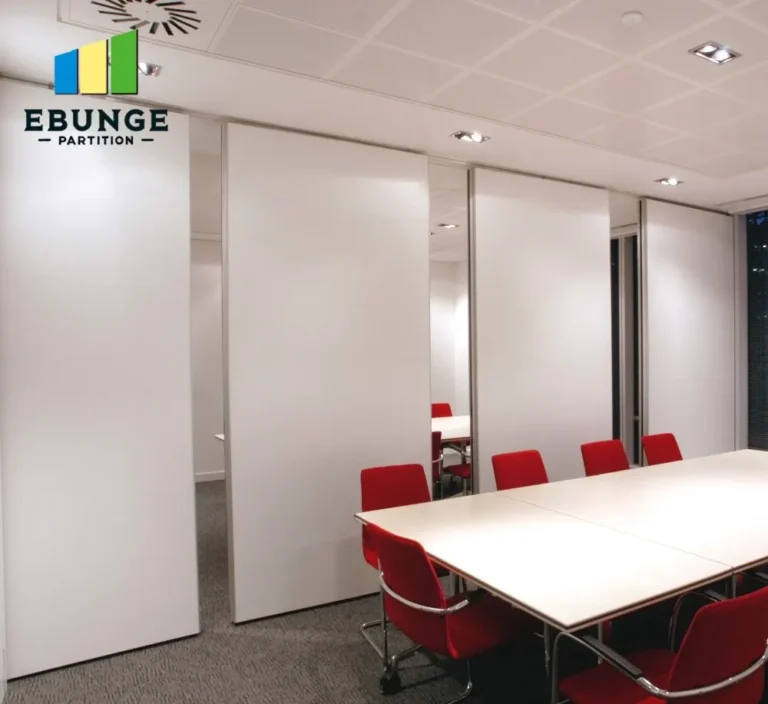
Acoustic performance is a top concern for training centers, as speech privacy and noise control are essential. Specify a target acoustic rating, such as STC or Rw, based on the intended use. For general training rooms, an STC of 40-45 may suffice, but if you have music or language labs, you may need higher ratings. Be cautious: acoustic performance depends not only on the wall panels but also on the perimeter seals, ceiling and floor interfaces, and flanking paths. Your specification should state the rating requirement and require the supplier to provide test data from an accredited laboratory for the specific system.
Remember that a movable wall cannot achieve its acoustic rating if the surrounding structure has gaps or if the installation is not airtight. Coordinate with your acoustician to define the target and ensure the specification includes a requirement for field testing or certification if needed.
Finish Preferences and Aesthetics
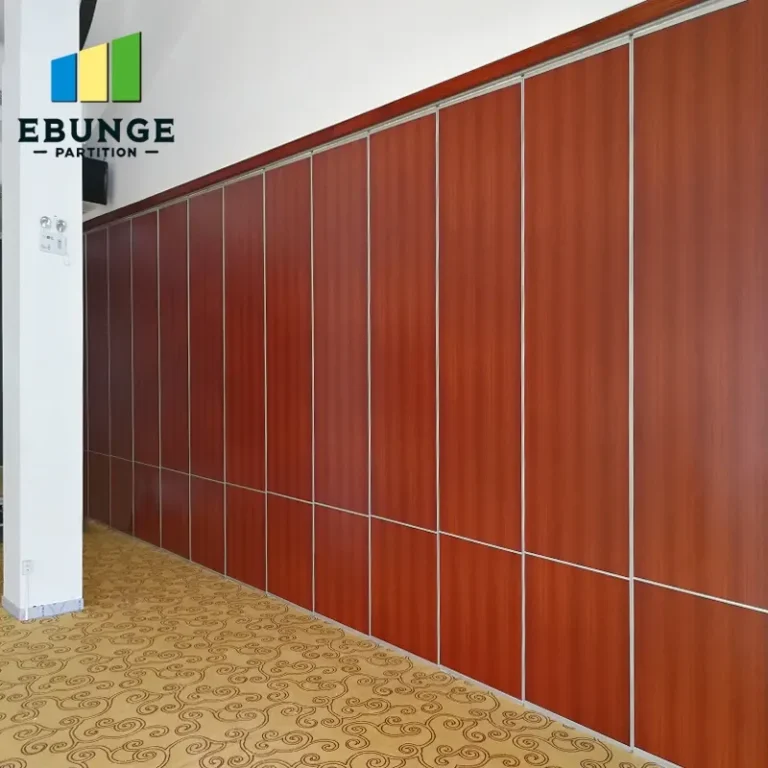
The finish of your movable walls should match the interior design of your training center. Specify the type of surface (e.g., tackable fabric, dry-erase, veneer, or laminate) and the color or pattern. This is not just about aesthetics; it also affects durability and maintenance. For a school, a scratch-resistant and easy-to-clean finish is often preferred. Include a sample or reference to a standard finish chart. Also, consider the integration of writing surfaces or projection screens, which can be factory-installed to save on-site labor.
Operational Ease: Manual vs. Motorized
How often will the walls be moved? In a training center, partitions may be operated daily. Manual systems are cost-effective but require physical effort, especially for larger panels. Motorized systems offer push-button convenience but add cost and maintenance. Your specification should state the expected frequency of operation and whether motorization is required. Also, consider the ease of sealing and unsealing the panels; a simple, reliable mechanism reduces wear and tear and ensures consistent acoustic performance.
Installation and Disruption to School Schedule
One of the biggest risks is installation disruption. Specify that installation must be planned to minimize impact on school operations. This may include working outside school hours or during holidays. The supplier should provide a detailed installation plan, including the sequence of work, duration, and any requirements for ceiling reinforcement or electrical work. Clarify who is responsible for preparing the site and providing access. A factory-direct team often has more control over scheduling and can coordinate better with your project manager.
Compliance and Building Codes
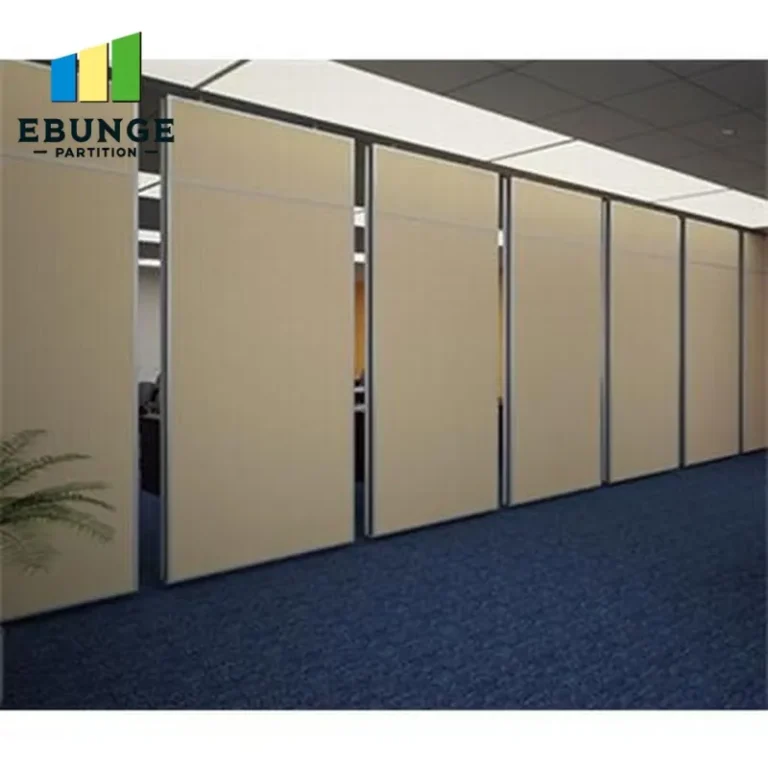
Your movable walls must comply with local building codes, including fire safety, accessibility, and structural requirements. Specify that the system must meet the relevant standards and provide certificates or documentation. For instance, fire-rated partitions may be required in certain areas. Ensure your specification includes a clause that the supplier must confirm compliance with all applicable codes and provide evidence. This protects you from liability and ensures the walls are safe for occupants.
Share the opening, drawings, finish direction, and privacy target for a project-specific review.
Durability, Warranty, and Maintenance
Products in a school environment face heavy use. Specify that the movable walls must be durable, with a warranty that covers parts and labor for a defined period. Ask for details on warranty terms, including what is excluded. Also, outline maintenance requirements: how often should tracks be cleaned, seals be replaced, or panels be serviced? A low-maintenance system reduces long-term costs. Your specification should require the supplier to provide a maintenance manual and training for your facilities staff.
Cost vs. Budget: Getting a Transparent Quotation
The cost of movable walls varies based on size, acoustic performance, finish, and features. To compare quotations effectively, your specification must be detailed enough to allow suppliers to price accurately. Ask for a breakdown of costs, including panels, track, hardware, installation, and any optional features. Be wary of quotations that omit important elements. A factory-direct supplier can often provide better value because they eliminate middlemen and offer custom solutions tailored to your project.
Supplier Reliability and Factory-Direct Support
Choosing a reliable supplier is crucial. Look for a manufacturer with experience in educational projects and a track record of on-time delivery and installation. A factory-direct supplier can offer more flexibility in customization and direct technical support. Your specification should include a requirement for the supplier to provide references or case studies. Also, ensure they offer comprehensive drawings and installation guidance, as this reduces the risk of errors on site.
Practical Specification Checklist
Before sending your specification for quotation, use this checklist to ensure you have covered all critical aspects:
| Item | Details to Include |
|---|---|
| Opening size | Width, height, and number of openings, with reference to drawings |
| Acoustic target | STC or Rw rating, test data requirements |
| Finish | Material, color, pattern, any special features (e.g., tackable, dry-erase) |
| Operation | Manual or motorized, frequency of use |
| Installation | Schedule constraints, site prep, responsibilities |
| Compliance | Building codes, fire ratings, accessibility |
| Warranty | Duration, coverage, exclusions |
| Maintenance | Requirements, manual, training |
| Cost breakdown | Itemized quotation, including installation |
| Supplier references | Project examples, testimonials |
Conclusion: Reducing Installation Risk with a Clear Specification
A well-prepared movable walls specification is your best defense against installation risk and budget overruns. By defining opening sizes, acoustic targets, finishes, and installation requirements, you ensure that all contractors and suppliers are on the same page. This clarity enables accurate quotations and smooth execution. When you partner with a factory-direct supplier like EBUNGE, you gain access to custom movable partition wall solutions that are tailored to your training center’s needs, with drawings and installation guidance to support your project from start to finish. Start your specification today to move forward with confidence.
Frequently Asked Questions
What is the typical lead time for custom movable walls?
Lead times vary based on complexity and order size. It is best to discuss your project timeline with the supplier early to ensure delivery aligns with your construction schedule.
Can movable walls be installed without a floor rail?
Yes, many systems, including EBUNGE’s, use a top-hung track without a floor rail, which is ideal for training centers that require a flush floor surface for safety and flexibility.
How do I determine the acoustic rating I need?
Consider the activities in adjacent spaces. For speech privacy, an STC of 40-45 is often sufficient. For music or audio recording, a higher rating like STC 50+ may be necessary. Consult with an acoustician for a precise recommendation.
What maintenance do movable walls require?
Regular maintenance includes cleaning tracks, inspecting seals, and checking hardware. The supplier should provide a maintenance schedule and manual. Some components, like seals, may need periodic replacement.
Can the finish be customized to match our branding?
Yes, most manufacturers offer a range of finishes, including custom colors and patterns. You can also incorporate tackable surfaces or dry-erase panels. Provide your design specifications to the supplier for a tailored solution.
For more information on movable partition costs and options, explore our Movable Partition Cost category. To see how our systems work, visit our movable partition wall page. If you have specific questions, our team is ready to assist you at our contact page. For insights and tips, check out our blog.
Send the opening size and drawings to discuss a differentiated movable walls solution.