
When a government or public building project involves a recording studio, the acoustic and spatial demands are unlike those of typical offices. The partition wall system you select must satisfy strict procurement rules, withstand decades of heavy use, and deliver a controlled acoustic environment for audio production. This article focuses on the decision risks and quotation readiness for such projects, helping you prepare the precise information needed to obtain accurate pricing and avoid costly surprises.
Direct answer: For a government recording studio, the partition wall system should be selected based on verified acoustic performance (specified as an STC or Rw target), durability in high-traffic areas, and compliance with procurement standards. To get a reliable quotation, you must provide the opening size, acoustic target, finish preference, and architectural drawings. Factory-direct support is essential for customization and installation guidance, ensuring long-term maintenance and warranty clarity.
Why Government Recording Studios Require a Different Approach
Public building projects face unique constraints: budget transparency, competitive bidding, and long-term accountability. A recording studio inside a government facility—whether for media production, legislative broadcasting, or archival recording—demands a partition wall system that delivers consistent acoustic isolation over decades. Unlike offices, where visual privacy is the primary goal, a studio must block sound transmission at specific frequencies, often requiring higher-performance partitions.
Moreover, the system must endure constant use by staff and visitors, with minimal wear. This means the top-hung track without a floor rail, a hallmark of EBUNGE systems, is advantageous because it eliminates floor obstructions, reduces trip hazards, and simplifies cleaning—a key consideration for public spaces.
But the real challenge lies in procurement: you must specify the system in a way that invites competitive quotes while ensuring all bidders meet your acoustic and durability needs. This article guides you through that process, from initial planning to final installation.
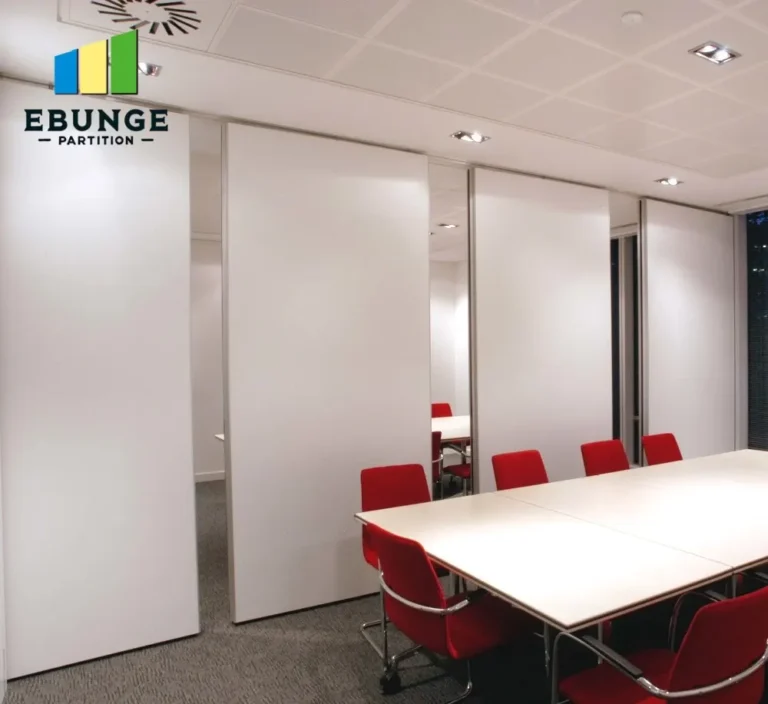
Need help turning the partition wall system requirements into a practical project layout?
Understanding the Acoustic Requirements for Recording Studios
Acoustic performance is the cornerstone of any recording studio partition. The partition wall system must achieve a specific Sound Transmission Class (STC) or Weighted Sound Reduction Index (Rw) to isolate sound between the studio and adjacent spaces. For critical recording, an STC of 50 or higher is often required, but the exact target depends on the ambient noise level and the studio’s intended use.
You must also consider flanking paths—sound leaking through gaps, ceiling plenums, or adjacent walls. A well-designed partition includes perimeter seals and acoustic gaskets to minimize these leaks. When requesting quotes, provide the acoustic target and the expected ambient noise level so suppliers can recommend the right panel thickness, insulation, and sealing system.
Remember: acoustic performance is not just about the partition itself but the entire assembly, including the ceiling and floor connections. Ensure your drawings show these interface details.
Key Considerations for High-Traffic Public Areas
Public buildings experience constant foot traffic, and the partition wall system must resist impacts, scratches, and daily wear. Durable finishes like laminate, metal, or high-pressure plastic are preferable to painted surfaces that chip easily. The track system should be robust, with sealed ball bearings for smooth operation, and the panels should be reinforced to prevent sagging over time.
Maintenance is another critical factor. In a government facility, maintenance budgets are often limited, so choose a system that requires minimal upkeep. Top-hung tracks with no floor rail reduce debris accumulation and are easier to clean. Also, consider the ease of replacing panels or seals if damaged—modular systems are advantageous.
When evaluating suppliers, ask about their track and hardware warranty, and request a maintenance schedule. A system that is simple to service will save money over its lifecycle.
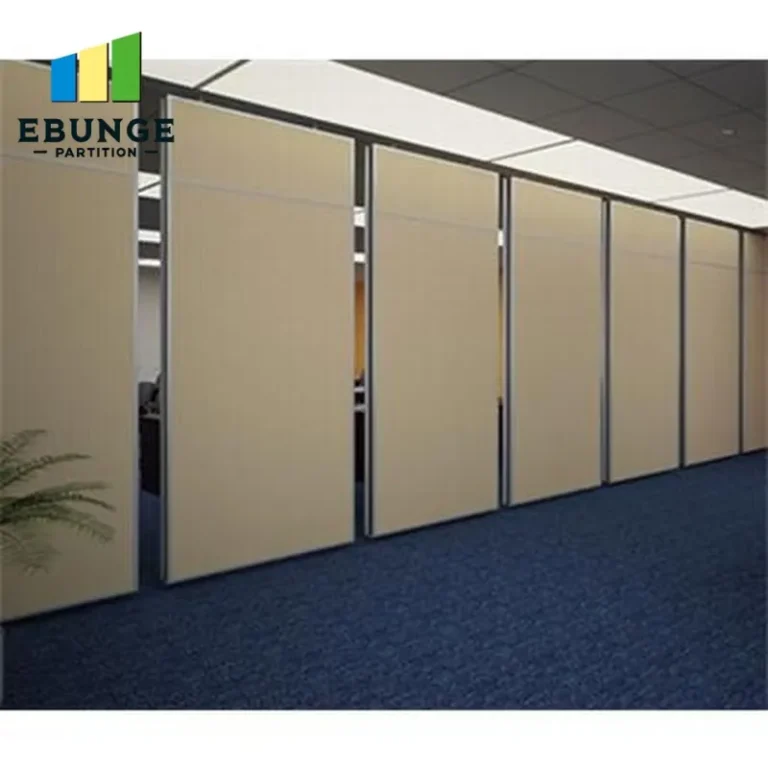
Compliance with Government Procurement Standards
Government projects must adhere to strict procurement regulations, including competitive bidding, transparency, and equal opportunity. Your partition wall system specification must be performance-based, not brand-specific, to allow multiple suppliers to bid. This means describing the required acoustic performance, durability, and installation method without referencing a particular manufacturer.
However, you can include approved equivalent language, such as “or equal” to permit substitutions, but ensure that the evaluation criteria are clear. For example, specify the STC rating, the track type (top-hung without floor rail), and the finish material. This approach encourages competition while ensuring the final product meets your needs.
Also, consider sustainability requirements: many government projects require materials with recycled content or low VOC emissions. Ask suppliers for documentation on these aspects.
Installation and Delivery: Planning for Success
Installation of a partition wall system in a recording studio must be precise to achieve the acoustic target. The installation team should be experienced with acoustic partitions and follow the manufacturer’s guidelines exactly. In your project plan, allocate time for site inspection, delivery, and installation, and coordinate with other trades to avoid conflicts.
Delivery timelines are critical in public projects. When requesting quotes, ask for lead times and factor in potential delays. A factory-direct supplier can often provide better delivery schedules and technical support during installation.
Also, consider the installation environment: is the space occupied or new construction? This affects the installation method and noise restrictions. Discuss these with the supplier to ensure a smooth process.
Customization: Adapting to Your Studio’s Unique Needs
Every recording studio has unique dimensions, door placements, and sightlines. A custom movable partition wall can be tailored to fit your exact opening size, with options for curved panels, integrated doors, or viewing windows. When specifying customization, provide detailed drawings that show the partition in relation to the room’s geometry.
Also, consider the finish: acoustic panels can be wrapped in fabric, wood veneer, or metal, depending on the aesthetic of the building. The finish affects both acoustics (sound absorption) and maintenance (cleanability). Choose a finish that meets your acoustic and durability requirements.
Factory-direct support is invaluable for customization. An experienced supplier can review your drawings and recommend solutions that balance performance, cost, and aesthetics.
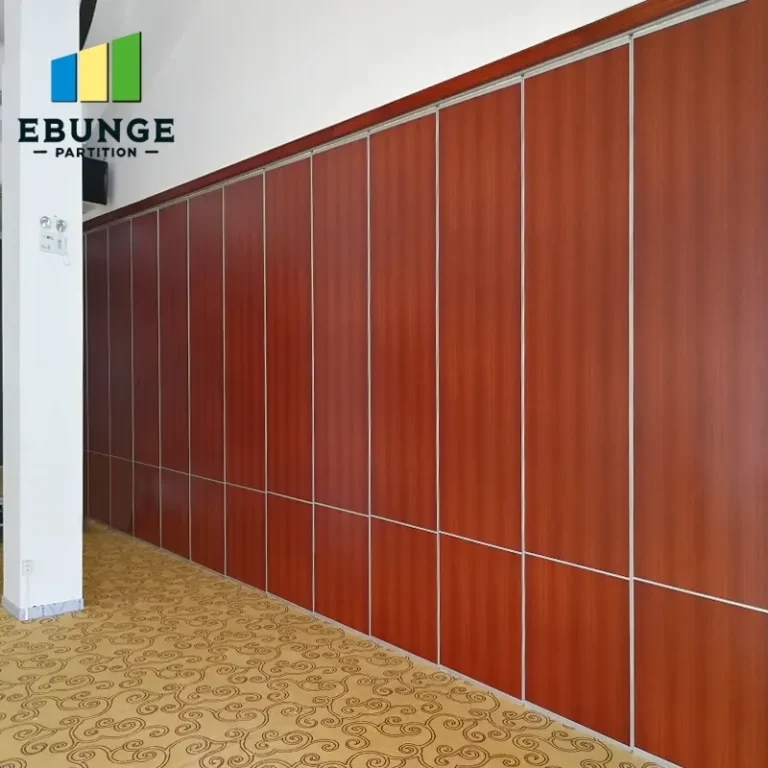
Share the opening, drawings, finish direction, and privacy target for a project-specific review.
Cost and Quotation Readiness: What to Prepare
To obtain an accurate quotation for your partition wall system, you need to provide comprehensive information. This includes:
- Opening size (width, height, and depth)
- Acoustic target (STC or Rw rating)
- Finish preference (material and color)
- Architectural drawings (floor plans, elevations, sections)
- Number of panels and configuration (folding, stacking, etc.)
- Any special requirements (fire rating, accessibility, etc.)
With this information, suppliers can provide a detailed quote that includes materials, hardware, installation, and delivery. Be wary of quotes that lack specifics; they may lead to change orders later.
Also, consider the total cost of ownership: maintenance, replacement parts, and energy efficiency. A slightly higher upfront cost may be justified if the system lasts longer and requires less upkeep.
Maintenance and Long-Term Durability
Long-term maintenance is a major concern for government buildings. Your partition wall system should have a documented maintenance plan, including regular inspections of tracks, seals, and panels. Choose a system with replaceable components, such as seals and gaskets, to extend its lifespan.
Ask the supplier about the expected service life and any warranties on moving parts. A top-hung system with fewer moving parts generally requires less maintenance than floor-mounted systems.
Also, train your facilities staff on proper operation to prevent damage. Simple practices, like not forcing panels, can significantly reduce wear.
Checklist for Selecting a Partition Wall System
Use this checklist when evaluating suppliers and systems:
| Criteria | Questions to Ask |
|---|---|
| Acoustic performance | What STC/Rw rating does the system achieve? Are test reports available? |
| Durability | What materials are used for panels and tracks? What is the warranty? |
| Installation | Is installation included? What is the timeline? Are there any site requirements? |
| Compliance | Does the system meet fire, safety, and environmental standards? |
| Maintenance | What is the recommended maintenance schedule? Are spare parts available? |
| Cost | What is the total cost, including delivery and installation? Are there hidden fees? |
| Customization | Can the system be customized to my opening size and finish preference? |
By answering these questions, you can compare suppliers fairly and make an informed decision.
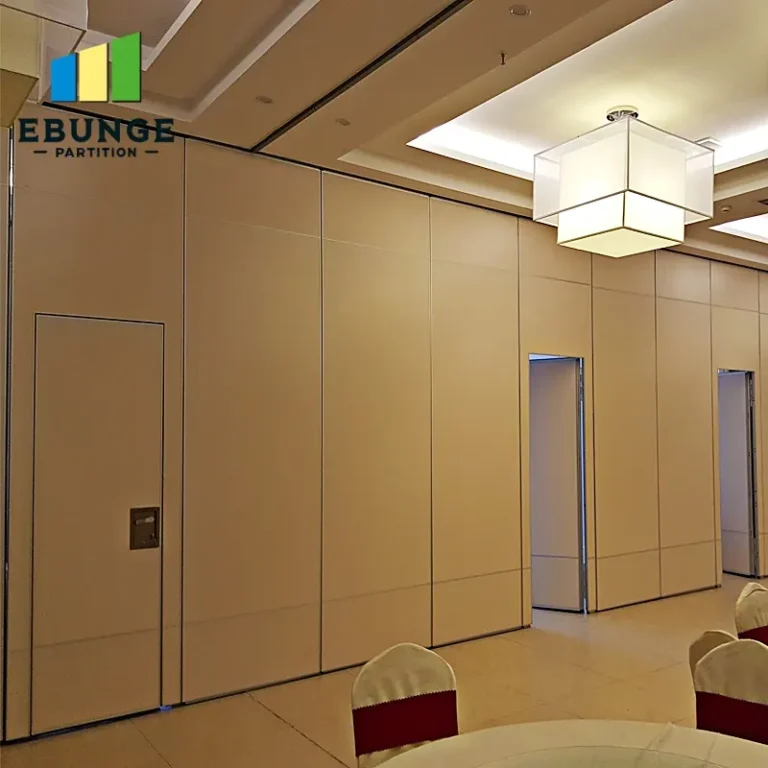
Conclusion: Making a Confident Decision
Selecting a partition wall system for a government recording studio is a complex process, but with the right preparation, you can avoid common pitfalls. Focus on acoustic performance, durability, and compliance, and provide suppliers with detailed information to get accurate quotes. Remember to consider maintenance and long-term costs, and seek factory-direct support for customization and installation guidance. By following this guide, you’ll be well-equipped to make a decision that meets your project’s needs and budget.
For more insights on movable partitions, explore our movable partition wall resources, or check our blog for technical articles. If you’re ready to discuss your project, contact us for factory-direct support.
Frequently Asked Questions
What STC rating do I need for a recording studio partition wall?
The required STC rating depends on the ambient noise level and the studio’s intended use. For most recording studios, an STC of 50 or higher is recommended, but you should consult an acoustic engineer to determine the exact target for your space.
Can a partition wall system be customized for a non-standard opening?
Yes, most manufacturers, including EBUNGE, offer custom movable partition walls that can be tailored to your exact opening size, shape, and finish preferences. Provide detailed drawings to ensure accurate fabrication.
How long does installation typically take?
Installation time varies based on the size and complexity of the system. A simple installation may take a few days, while larger or more complex projects can take weeks. Discuss the timeline with your supplier before finalizing the contract.
What maintenance is required for a top-hung partition wall system?
Top-hung systems typically require minimal maintenance, but regular inspections of the track, hangers, and seals are recommended. Keep the track clean and lubricated as per the manufacturer’s instructions. Replace worn seals promptly to maintain acoustic performance.
Do you provide installation guidance or drawings?
Yes, EBUNGE provides detailed installation drawings and guidance to ensure correct installation. Factory-direct support is available to assist your team throughout the project.
Send the opening size and drawings to discuss a differentiated partition wall system solution.