
Choosing a school partition wall for a church hall project is rarely a simple product selection. It is a coordination exercise that ties together acoustics, structural loading, fire safety, and the visual character of the worship space. Builders who approach this without a structured specification often face budget overruns, schedule delays, and disputes over performance. This buying guide focuses on what you need to prepare before requesting quotations, so you can compare offers on equal terms and reduce project decision risk.
Direct answer: To choose a school partition wall for a church hall, you must first define the opening size, acoustic target, finish preference, and provide architectural drawings. Then, work with an operable wall manufacturer that offers factory-direct support, top-hung track without floor rail, and custom project coordination. Obtain a quotation that itemizes track system, panels, seals, and installation guidance, and confirm exact values from project documents before committing.
School Partition Wall: Why the Track System Decides Success for High Movable Partition Walls
In church halls, ceilings are often higher than in standard classrooms, which means the partition wall must be taller and heavier. The track system is the backbone of the entire assembly. A top-hung track without floor rail is preferred because it leaves the floor clear, reduces trip hazards, and simplifies cleaning. However, for high walls, the track must be engineered to carry the panel weight and resist lateral deflection. Ask your supplier for the maximum panel height and weight their track system can support, and verify this against your drawings.
Do not assume that a track rated for 3 meters can be extrapolated to 5 meters. The structural load path, the number of hangers, and the deflection limits change significantly. Request a structural calculation or a manufacturer’s engineering statement for your specific opening size. This is not a minor detail; it affects safety and long-term durability.
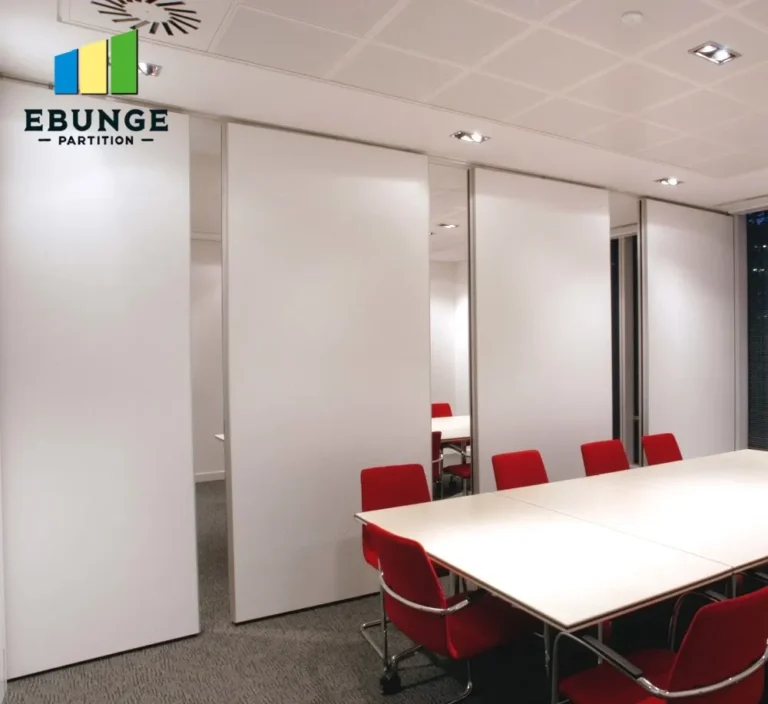
Need help turning the school partition wall requirements into a practical project layout?
Soundproofing Performance: Set a Realistic Acoustic Target
Church halls are used for worship, community meetings, children’s activities, and sometimes concerts. The acoustic requirement varies by activity. A school partition wall for a church hall might need to contain choir practice while another group runs a youth club. Instead of specifying a vague “good soundproofing,” define a target Rw (weighted sound reduction index) value. Common targets range from Rw 40 to Rw 50, but the actual performance depends on the wall construction, perimeter seals, and flanking paths.
Be cautious: published Rw values are laboratory measurements. On-site performance can be lower due to gaps, penetrations, or poor installation. When reviewing quotations, ask whether the acoustic rating is based on a specific test standard and whether the manufacturer provides installation guidance to achieve the rated performance. Do not accept a rating without supporting documentation.
Ease of Operation: Manual, Spring-Assist, or Motorized?
Church volunteers are not always trained riggers. The partition should be easy to operate for an average adult, even with high panels. For walls over 3.5 meters, manual operation may require significant effort. Some manufacturers offer spring-assist mechanisms that reduce the force needed to move panels. Motorized systems are an option but add cost and maintenance complexity.
Consider the frequency of use. If the partition is moved daily, invest in higher-quality hangers and seals. If it is used only on Sundays, a simpler manual system may suffice. Your quotation should state the operating mechanism, the force required, and any special tools needed. Ask for a demonstration or a reference project where the same system is in use.
Installation Complexity: What Does Factory-Direct Support Mean?
Installation of a top-hung track system requires precision. The track must be level, the header must be reinforced, and the panels must align perfectly. A manufacturer that offers factory-direct support can provide drawings, installation manuals, and even on-site supervision. This reduces the risk of errors that lead to poor acoustics or operational issues.
When comparing suppliers, ask what exactly is included: delivery only, delivery with installation guidance, or full installation by their crew. For a church hall project, the builder may have their own installation team. In that case, the manufacturer’s role is to provide clear documentation and remote or on-site support. Clarify this before signing.
Durability for Frequent Use: Materials and Hardware
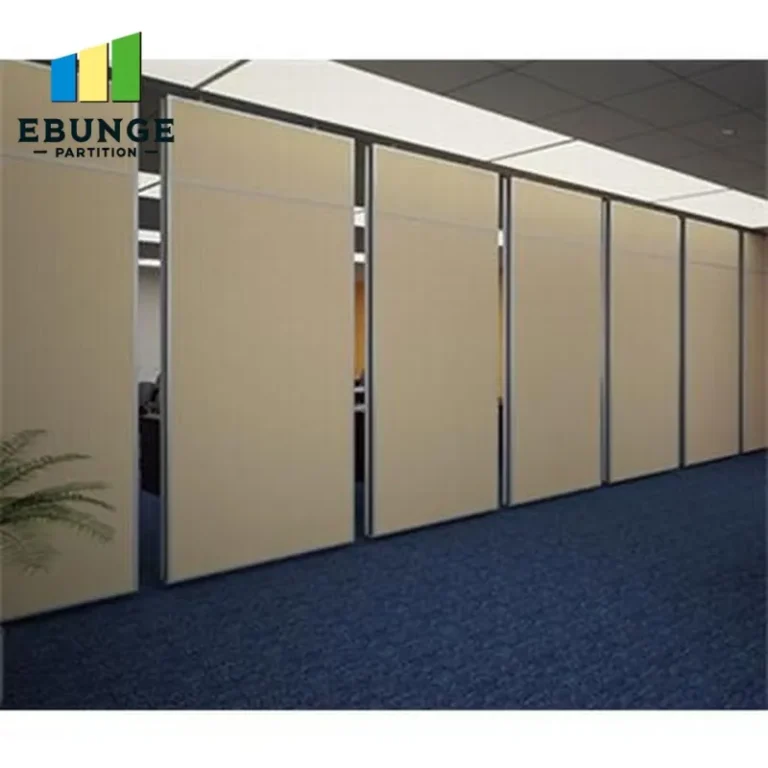
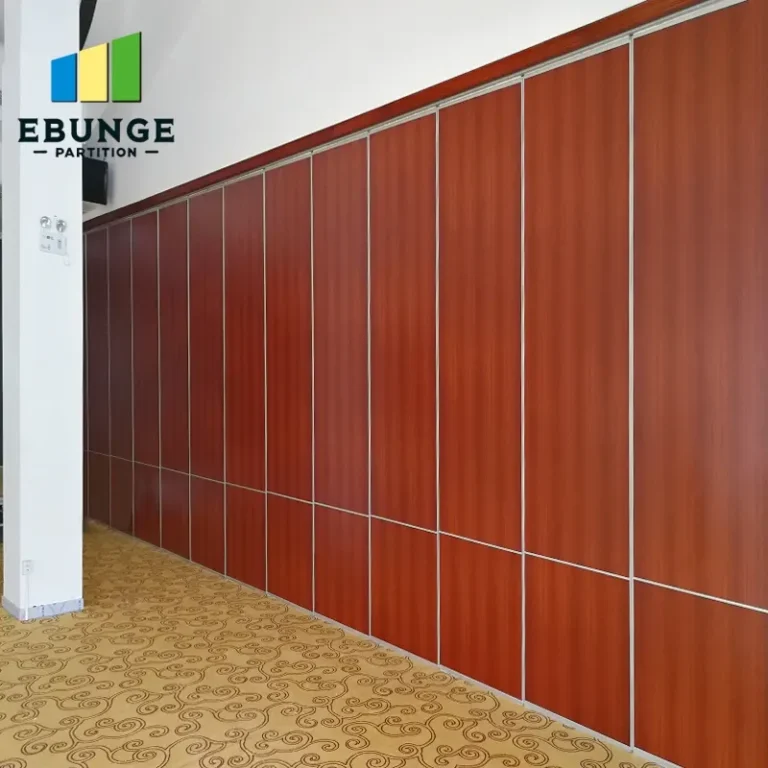
Church halls often host community events, and the partition will be handled by many people. Panels should have a robust surface that resists scratches and dents. Common finishes include vinyl-faced gypsum, laminate, or wood veneer. The edge protection and the seals are prone to wear. Ask about the expected lifespan of the seals and whether they are replaceable.
Hardware such as hangers, guides, and locks should be made of corrosion-resistant materials. Since the track is exposed, it should be finished to match the interior. Aesthetic matching with the church interior is important, but do not sacrifice durability for looks. The finish should be specified in your request for quotation, and the manufacturer should confirm the exact material and coating.
Cost-Effectiveness: Beyond the Initial Price
The cheapest quotation is not always the most cost-effective. Consider the total cost of ownership: initial purchase, installation, maintenance, and potential replacement. A higher-quality track system may last 20 years, while a cheaper one might fail in 10. For a church hall, replacement is disruptive and expensive.
Ask for a breakdown of costs: panels, track, seals, hardware, delivery, and any optional services. Compare these line items across suppliers. Also, consider the lead time. A longer delivery time might delay your project, increasing site costs. Balance the delivery time with your schedule.
Delivery Time and After-Sales Support: What to Confirm
Before ordering, confirm the production lead time and the shipping method. Some manufacturers offer expedited production for an extra fee. Also, clarify the warranty terms: what is covered, for how long, and who is responsible for labor costs. After-sales support is critical if you need spare parts or adjustments after installation.
Ask for a contact person who can answer technical questions during and after installation. A manufacturer that is responsive to your queries is more valuable than one that offers a longer warranty but is hard to reach.
Share the opening, drawings, finish direction, and privacy target for a project-specific review.
Checklist for Quotation Readiness
Before contacting an operable wall manufacturer, prepare the following:
- Architectural drawings showing the opening size, ceiling height, and structural support points.
- A clear acoustic target (e.g., Rw 45) based on the intended uses.
- Finish preference: vinyl, laminate, wood veneer, or paintable surface.
- Operating mechanism preference: manual, spring-assist, or motorized.
- Frequency of use and expected number of operations per week.
- Site access constraints for delivery and installation.
- Project timeline and required delivery date.
With this information, you can request comparable quotations. Ensure each supplier provides a written specification that matches your requirements. Do not accept verbal promises.
Comparison Table: Key Factors to Evaluate
| Factor | What to Ask | Why It Matters |
|---|---|---|
| Track system | Maximum height/weight capacity, top-hung without floor rail? | Safety and floor clearance |
| Acoustic rating | Test standard, Rw value, installation guidance | Performance vs. laboratory |
| Operation | Mechanism, force required, motorized option | Ease of use for volunteers |
| Installation | What support is included? | Risk of errors |
| Durability | Materials, seal lifespan, hardware quality | Long-term cost |
| Cost | Itemized breakdown, lead time, warranty | Budget and schedule |
The Role of Custom Movable Partition Wall Design
Every church hall has unique dimensions and architectural style. A custom movable partition wall may be necessary to fit an irregular opening or to match specific finishes. Customization affects cost and lead time. Work with a manufacturer that offers custom project coordination, including producing shop drawings and confirming dimensions before fabrication.
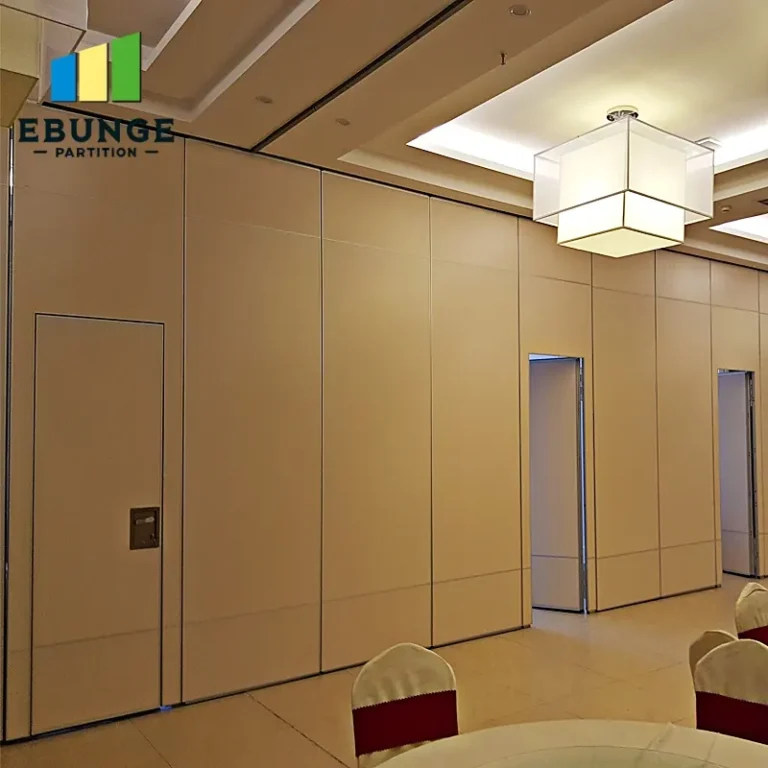
If you need to integrate doors, windows, or pass-throughs, these must be specified early. The manufacturer should provide a detailed drawing for your approval. This reduces the risk of mismatched components on site.
Internal Links for Further Reading
For more on movable partition walls, see our movable partition wall overview. To understand cost factors, visit our Movable Partition Cost category. For technical articles, browse our blog. If you have specific questions, contact us.
Conclusion
Selecting a school partition wall for a church hall is a decision that affects acoustics, safety, and usability for years. By preparing a detailed specification and comparing quotations on equal terms, you reduce project risk. Always confirm exact values from drawings, specifications, and quotations. A reliable operable wall manufacturer will provide factory-direct support, custom coordination, and clear documentation. With the right approach, you can achieve a partition that serves the church hall effectively without unexpected surprises.
Frequently Asked Questions
What is the maximum height for a top-hung track partition?
It depends on the manufacturer’s engineering. Some systems support up to 6 meters, but you must verify with the supplier and confirm that the track and hangers are rated for your specific height and weight. Never assume a standard rating applies to your project.
How do I know the acoustic performance will be as specified?
Ask for the test report and the installation guidelines. Ensure that the perimeter seals are correctly installed and that there are no gaps. On-site performance may vary, so consider a higher lab rating to achieve the desired real-world result.
Can the partition be motorized for easier operation?
Yes, motorized systems are available. They add cost and require electrical supply and maintenance. Discuss with the manufacturer whether motorization is necessary based on the panel weight and frequency of use.
What finish options are available to match a church interior?
Common options include vinyl in various colors, laminate, wood veneer, and paintable surfaces. Provide a finish sample or color code to the manufacturer to ensure a match. Custom finishes may increase cost and lead time.
How long does delivery take?
Delivery time varies by manufacturer and customization. Standard products may ship in 2-4 weeks, while custom orders can take 6-8 weeks or more. Confirm the lead time in writing and plan your schedule accordingly.
Send the opening size and drawings to discuss a differentiated school partition wall solution.